Court seeks status reports on beat patrolling, Shishtachar Squads, transport verification, CCTV and lighting audits, and citizen grievance mechanisms
New Delhi: In a significant suo motu intervention over recent rape incidents in Delhi NCR, the Supreme Court on October 5, 2026, directed the Delhi government and police to strengthen preventive policing, improve real-time monitoring, and ensure stricter accountability in public safety systems across the capital.
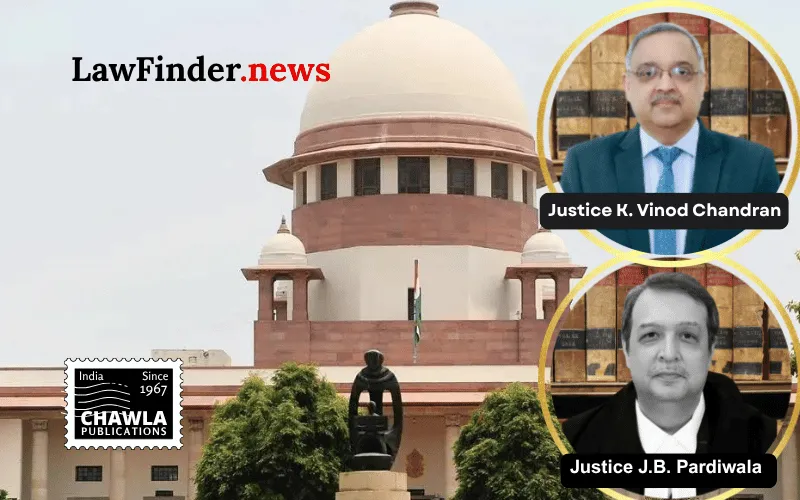
A bench of Justices J.B. Pardiwala and K. Vinod Chandran stressed that public safety cannot be viewed only as a response to crime after an incident occurs. The Court said visible signs of civic neglect — such as broken streetlights, non-functional CCTV cameras, dark stretches, and unattended complaints — can create insecurity and conditions conducive to crime. It observed that deficiencies capable of being identified and remedied should not be left unattended until they culminate in an actual criminal incident.
The Court referred to the “Broken Windows” theory to explain that visible disorder can foster further neglect and criminal behaviour. It said preventive policing must involve constant surveillance, quick response, accountability, and field-level intervention.
The bench directed the Commissioner of Police, Delhi, and the Chief Secretary of the Government of NCT of Delhi to submit a joint report on whether dedicated control-room command centres or “war rooms” exist in Delhi, their area coverage, and the protocols for real-time coordination and emergency deployment. The Court also suggested regular citizen-engagement meetings under designated officers so that grievances related to local safety concerns can be received directly and monitored effectively.
Emphasising the need for visible police presence, the Court ordered enhanced beat patrolling across Delhi, especially around educational institutions and vulnerable zones. It said senior officers must hold regular review meetings with beat personnel and strengthen existing protocols governing beat duty and PCR van deployment.
The Court also issued strict directions for public transport regulation. It ordered verification of all drivers and assistants engaged in government buses, private buses, taxis, cabs, rickshaws, and app-based aggregator vehicles. Only duly registered and verified persons may operate such vehicles, and their names and photographs must be displayed prominently for passengers. The Court said unauthorised substitution or sub-letting to unverified drivers must be prohibited, and violations should invite prompt action including suspension, dismissal, and seizure of vehicles where applicable.
The bench further directed authorities to examine implementation of Vehicle Tracking System directions issued earlier in S. Rajaseekaran v. Union of India and to ensure proper integration with police emergency response systems. It also asked for awareness measures on SOS mechanisms, including clear communication of response protocols and expected response times.
Among other measures, the Court directed authorities to identify and remove illegally parked heavy vehicles that create blind spots, and to act against unauthorised liquor shops and unlawful crowding around such establishments.
The Supreme Court noted that Delhi Police already has existing frameworks such as Standing Order No. L&O/25/2024 and Circular No. 15/2025, which created district-wise anti-eve-teasing “Shishtachar Squads.” However, it said the real issue is whether these measures are being implemented effectively on the ground. The Court directed the Commissioner of Police to place weekly reports of the last three months on record, along with a consolidated analysis of the squads’ functioning, areas covered, frequency of drives, and action taken.
The Court also sought a detailed status report on Operation Nirbheek and the Nazuk Scheme, particularly on how the identity and safety of complainants are protected and how retaliation or intimidation is prevented.
At the same time, the bench cautioned that preventive policing cannot become a justification for arbitrary, excessive, or disproportionate police action. It said police must act within the bounds of legality, proportionality, and accountability.
The Court further directed that training modules for Shishtachar Squads be produced and reviewed by the Delhi Police’s Research and Development Branch to assess whether they adequately prepare personnel for preventive intervention and public engagement.
The matter has been treated as part-heard and listed for further hearing on November 16, 2026. The Court also issued notice to the Ministry of Home Affairs and the Transport Department of GNCTD. Chief Secretary, GNCTD, and the Commissioner of Police, Delhi, have been made responsible deponents for compliance affidavits.
Statutory provision(s): Punjab Police Rules, 1934, Bharatiya Nyaya Sanhita, 2023, Bharatiya Nagarik Suraksha Sanhita, 2023, Protection of Children from Sexual Offences Act, 2012, Motor Vehicles Act, 1988
In Re: Recent Rape Incidents in Delhi NCR, (SC) : Law Finder Doc id # 2992702