Supreme Court rules resistance to medical examination does not constitute obstruction of public servant duties under IPC.
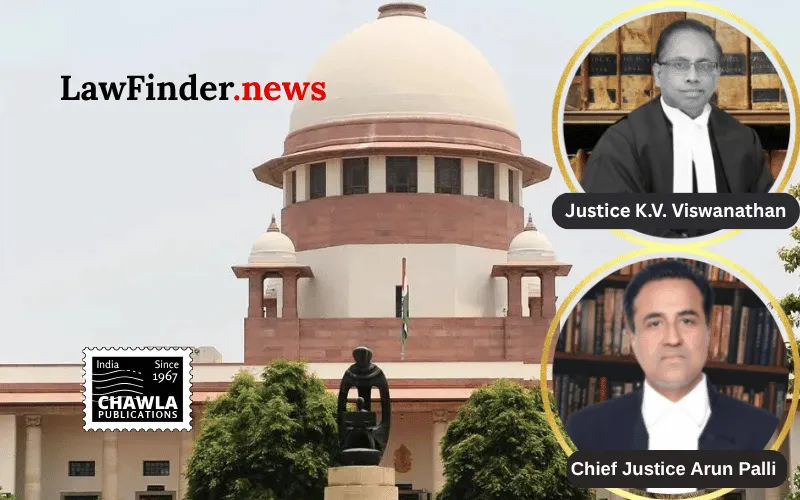
In a significant ruling, the Supreme Court of India quashed the FIR and chargesheet filed against Ashwini Anantrao Deshpande, a Lekhapal at the Forest Range Office, for allegedly causing a disturbance and resisting a medical examination. The bench comprising Justices K.V. Viswanathan and Arun Palli delivered this decision, setting aside the earlier judgment of the Bombay High Court, Nagpur Bench, which had refused to quash the proceedings.
The case stemmed from an incident on May 4, 2021, when Deshpande was reported to be in an intoxicated state and causing a disturbance at the Forest Range Office. The police, acting on a letter from the Forest Range Officer, took her to a sub-district hospital for a medical examination. Deshpande allegedly resisted the examination, leading to charges under Sections 186 and 189 of the Indian Penal Code (IPC) and Sections 110 and 117 of the Maharashtra Police Act, 1951.
However, the Supreme Court found that Deshpande's actions did not amount to "voluntarily obstructing a public servant in the discharge of public functions" under Section 186 IPC. The court noted that Deshpande ultimately complied and underwent the medical examination. Furthermore, there was no evidence to suggest that she had threatened any public servant, a necessary condition to invoke Section 189 IPC.
The court also found no grounds to apply Sections 110, 112, and 117 of the Maharashtra Police Act, which deal with disorderly conduct and the use of indecent language. The judgment emphasized that the statutory requirements for these provisions were not met.
This ruling underscores the judiciary's careful scrutiny of allegations related to obstruction of public duties and reinforces the need for clear evidence before invoking such serious charges.
Bottom Line :
The act of resisting medical examination by the appellant does not amount to voluntarily obstructing a public servant in the discharge of public functions under Section 186 IPC. Requirements for invoking Sections 189 IPC and Sections 110, 112, and 117 of the Maharashtra Police Act, 1951, were not fulfilled.
Statutory provision(s): Bharatiya Nagarik Suraksha Sanhita, 2023 Section 528, Indian Penal Code, 1860 Sections 186 and 189, Maharashtra Police Act, 1951 Sections 110, 112, and 117.
Ashwini Anantrao Deshpande v. State of Maharashtra, (SC) : Law Finder Doc id # 2967839