Court Denies Quashing of FIRs and Charge Sheets Against Madhabi Biswas Chakraborty, Orders Further Investigation
The Tripura High Court has dismissed writ petitions filed by Madhabi Biswas Chakraborty, who sought the quashing of FIRs and charge sheets lodged against her for allegedly posting defamatory and derogatory content on social media against high-profile figures, including the Prime Minister of India. The court emphasized that freedom of speech is not absolute and does not protect defamatory or malicious content.
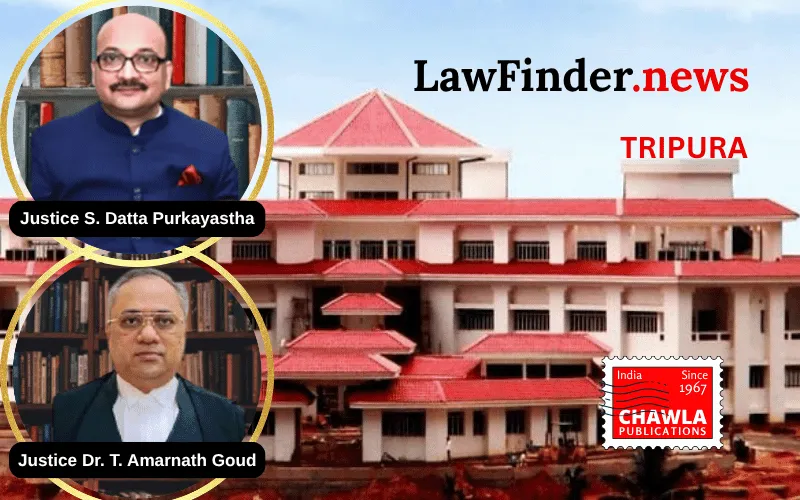
The bench, comprising Dr. T. Amarnath Goud and S. Datta Purkayastha, considered the petitions challenging the criminal proceedings initiated under Sections 356(2), 356(3) of the Bharatiya Nagarik Suraksha Sanhita, 2023, and Section 67 of the IT Act, 2000. The petitioner was accused of using social media to malign the reputation of the Prime Minister, the Mayor of Agartala, and a religious figure, Mata Tripureshwari.
The petitioner's counsel argued that the FIRs were politically motivated and lacked specific defamatory statements. They contended that the FIRs did not disclose any cognizable offense and should be quashed. However, the court found that prima facie ingredients of defamation were present, and further investigation was warranted.
The judgment highlighted the balance between freedom of speech and the right to reputation, underscoring that defamatory statements are not protected under Article 19(1)(a) of the Constitution. The court noted that the police have the statutory right to conduct further investigation and submit a supplementary charge sheet, which could potentially bring additional evidence to light.
While the petitioner claimed that her expressions were made in good faith and constituted opinion rather than defamation, the court held that the allegations, as outlined in the FIRs, were sufficient to proceed with the case. The bench directed the investigating officer to conduct further investigation under Section 193 of the BNSS, 2023, and submit a supplementary charge sheet.
The court's decision not to quash the FIRs at this stage reflects a broader legal principle that at the initial stage, the court must determine whether a prima facie case exists, without delving into the merits of the allegations. The court reiterated that the investigation is a process aimed at uncovering the truth and ensuring justice.
The ruling serves as a reminder of the legal constraints on free speech, especially concerning defamatory content on social media platforms, and underscores the judiciary's role in balancing individual rights with societal interests.
Bottom line:-
Freedom of speech under Article 19(1)(a) of the Constitution does not protect defamatory, abusive, or malicious content on social media. Posting derogatory remarks against high constitutional authorities or public figures can be penalized under laws such as defamation and public mischief.
Statutory provision(s): Article 19(1)(a), 19(2) of the Constitution of India, Sections 356(2), 356(3) of Bharatiya Nagarik Suraksha Sanhita, 2023, Section 67 of IT Act, 2000, Section 193 of BNSS, 2023, Section 482 CrPC
Madhabi Biswas Chakraborty v. State of Tripura, (Tripura)(DB) : Law Finder Doc id # 2960562