Supreme Court cracks down on illegal coaching centres, unauthorized land use and selective sealing by civic authorities, Court orders priority action against commercial activity in residential zones, warns against pick-and-choose enforcement, and issues contempt notice to Uttarakhand for non-compliance
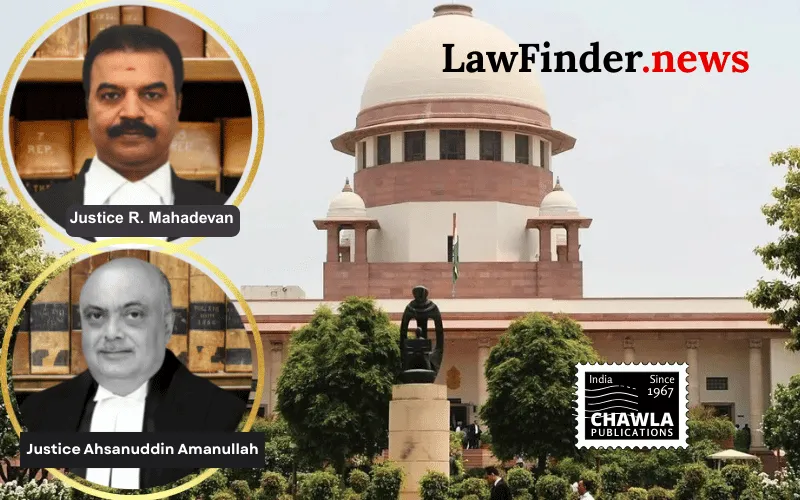
The Supreme Court on September 22, 2026, intensified its scrutiny of unauthorized commercial use of residential premises and illegal constructions, directing authorities across States to act firmly and without discrimination. A Bench of Justice Ahsanuddin Amanullah and Justice R. Mahadevan said that in areas specifically earmarked as residential, no commercial activity should be permitted, and if such activity is found, the premises must be sealed in the first instance.
The Court was hearing a wide-ranging matter concerning land use violations, coaching centres operating from commercial areas, master plan compliance, and alleged selective enforcement by urban authorities. During the hearing, senior advocate Rajdeep Rastogi, appearing as an officer of the Court, informed the Bench that after illegal coaching centres were brought to the Court’s notice, he had received threatening calls. The matter was reported to police and an FIR was registered on September 12, 2026, but no substantial action had followed, he said.
Taking serious note of the threats, the Supreme Court observed that any officer of the Court or person assisting it must be able to perform duties without fear or apprehension. It directed the Chief Secretary and Director General of Police, Rajasthan, to appear personally before the Court to explain the delay in action. However, after an assurance that strict action would be taken within 24 hours, their personal appearance was later dispensed with for the present.
The Bench also noted that local inspections had been carried out in Delhi and Lucknow, and reports had been filed by the amicus curiae and IIT Delhi. At the same time, the Court expressed concern over non-cooperation by the New Delhi Municipal Council (NDMC) during inspections, warning that any further lack of cooperation would invite a strict view.
In another development, the Court accepted the unconditional apology of Animesh Parashar, the former Municipal Commissioner of Patna Municipal Corporation and present BUDCO official, and dispensed with his personal appearance.
The Bench then laid down important interim directions on land use enforcement. It said that where land or buildings are shown as residential in the approved plan and permission is only for residential use, no commercial activity should be allowed. If such use is found, sealing must follow. In areas where land use is not clearly specified, the issue of mixed use may be examined, but the status quo should not be disturbed for now.
The Court further clarified that the pendency of disputes over title or other civil issues would not prevent authorities from sealing premises if the actual use violates the sanctioned purpose of the land or building. It also held that wholly unauthorized structures, built without any approval from the competent authority, may be sealed or demolished in accordance with law.
Warning against selective enforcement, the Bench said all authorities must act without discrimination. If any pick-and-choose approach is brought to its notice, the Court will take a strict view. It also noted allegations that in Bhopal, some properties were being sealed and then unsealed within hours or days without any real change in circumstances, suggesting possible misuse of the orders.
On the issue of Bhopal’s Master Plan, the Court permitted publication of the draft State Master Plan for inviting objections, but made it clear that it cannot be finalized without the Court’s permission. It said the legality of any property or construction would be judged by whether it conforms to the existing Master Plan and applicable building bye-laws.
The Court also took a strong view of the State of Uttarakhand’s failure to enter appearance, deposit the required amount of Rs. 50,000, or file an affidavit despite earlier directions. It issued notice of contempt to the Chief Secretary of Uttarakhand and directed his personal presence on the next date.
Meanwhile, the Bench appreciated the work of the amicus curiae, noting that the exercise was time-consuming and taxing. It directed that a cheque of Rs. 10 lakh be issued in his name from funds deposited by the States, as honorarium and to meet secretarial expenses for the team assisting him.
The matter has been listed for further hearing on November 23, 2026, and the States and authorities have been directed to file updated status reports before the next date.
Bottom Line:
Unauthorized and impermissible commercial use in residential areas - Supreme Court directed authorities to give priority to stopping commercial activities in areas earmarked exclusively for residential use and held that pendency of title or other disputes would not prevent sealing of premises where user is contrary to sanctioned purpose; wholly unauthorized structures may also be sealed/demolished in accordance with law.
Statutory provision(s):
Master Plan regulations, Building bye-laws, Municipal law provisions relating to sealing/demolition of unauthorized constructions, Contempt of Courts Act, 1971
Loganathan v. State of Tamil Nadu, (SC) : Law Finder Doc id # 2987201