Supreme Court Mandates Liberal Interpretation for Railway Compensation Claims, Landmark Judgment Overturns Previous Denials, Awards Rs. 8 Lakh to Widow of Deceased Train Passenger
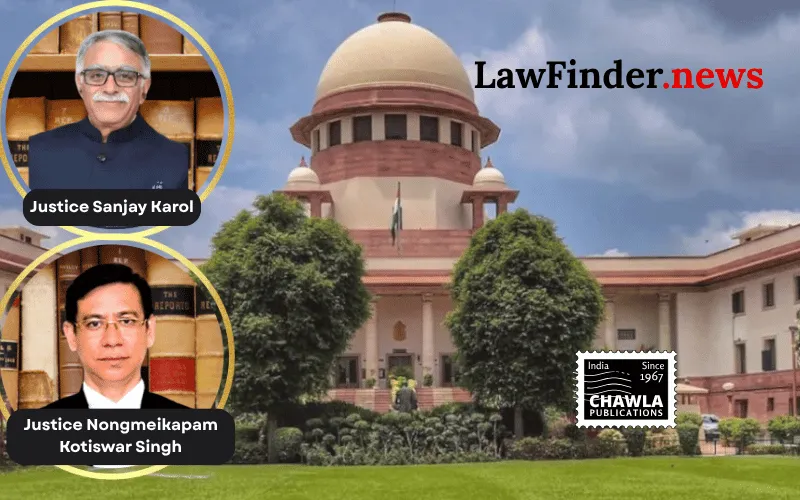
In a significant ruling, the Supreme Court of India has overturned previous decisions by the Railway Claims Tribunal and the Madhya Pradesh High Court, awarding Rs. 8 lakh in compensation to Lata, the widow of Chandrakant Thakkar, who died in an untoward incident while traveling on a train from Raipur to Ahmedabad. The judgment, delivered by Justices Sanjay Karol and Nongmeikapam Kotiswar Singh, emphasized the necessity for a liberal interpretation of the Railways Act, 1989, particularly concerning claims under Section 124A which deals with compensation for untoward incidents.
The case centered around the unfortunate death of Thakkar, who fell from the Ahmedabad-Howrah Mail in November 2015. The Railway Claims Tribunal and the High Court had previously dismissed the compensation claim due to the absence of a ticket on Thakkar's person at the time of the incident. However, Lata contended that the ticket was misplaced along with Thakkar's travel bag, which was never recovered, and filed an affidavit affirming his bona fide status as a passenger.
The Supreme Court underscored that the provisions of the Railways Act should be interpreted to facilitate accessible compensation, focusing on the welfare principle enshrined in Article 38 of the Constitution. The Court clarified that the absence of a ticket should not automatically negate the claim of being a bona fide passenger, shifting the burden of proof onto the railways once an affidavit is filed by the claimant.
Justice Karol, writing for the Bench, highlighted past judgments supporting liberal interpretations of beneficial legislations, such as the landmark decisions in Union of India v. Rina Devi and Doli Rani Saha v. Union of India. These cases established precedents that mere absence of a ticket does not undermine the eligibility for compensation, provided initial proof is presented.
Moreover, the judgment pointed out systemic issues within railway operations, such as overcrowding and inadequate ticket checking mechanisms, which contribute to such incidents. The Court suggested improvements in railway staffing and protocol adherence to mitigate future occurrences.
The directive mandates the Union of India to process the compensation payment within four weeks, failing which interest at the rate of 8% would apply from the date of the initial claim filing in March 2016. This decision not only provides relief to Lata but also sets a precedent for future claims, urging railways to adopt more humane and proactive measures in passenger safety and claim handling.
Bottom Line:
Railway Claims - Compensation claim for death due to untoward incidents - Mere absence of ticket with the deceased does not negate the claim of being a bona fide passenger - Beneficial provisions of Railways Act must be interpreted liberally to provide accessible compensation.
Statutory provision(s): Railways Act, 1989 Sections 123, 124A; Railway Accidents and Untoward Incidents (Compensation) Rules, 1990