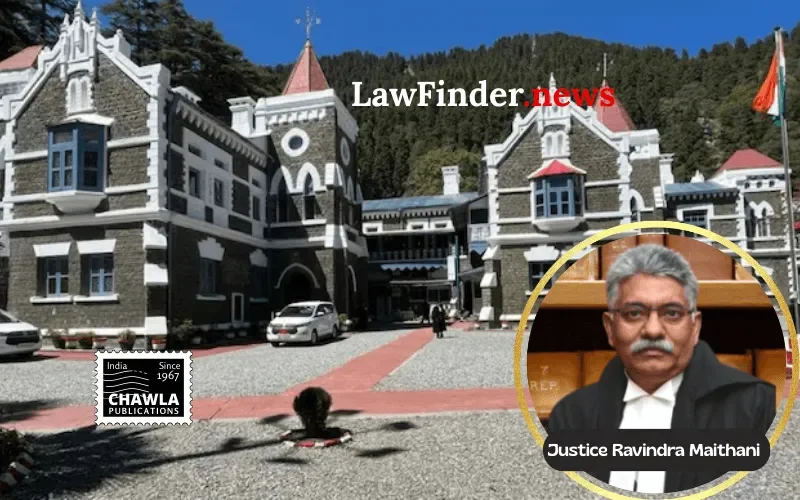
Court Emphasizes Anti-Dissection Rule, Finds Marks Deceptively Similar; Respondent Barred from Using "SWARNIKA" Pending Suit Resolution
In a significant decision on October 7, 2026, the Uttarakhand High Court, presided over by Justice Ravindra Maithani, set aside a trial court order rejecting an interim injunction and restrained the respondent from using the trademark "SWARNIKA" or any deceptively similar mark, in favor of the appellant's registered trademark "SUNAREKA." The dispute arose between Deepanshu Bansal (appellant) and Poonam Bhatt (respondent), both operating in the jewelry business in Udham Singh Nagar district.
The appellant, Deepanshu Bansal, had registered the trademark "SUNAREKA" on July 28, 2023, with the registration dating back to the application made in September 2022. The appellant's business involves marketing gold, silver, diamond, platinum, and other jewelry items with 100% hallmark certification. The respondent, Poonam Bhatt, started using the mark "SWARNIKA" for her jewelry business, which the appellant claimed was deceptively similar and likely to cause confusion among consumers.
The trial court had dismissed the appellant's application for an interim injunction, apparently focusing on dissecting and comparing the spellings of "SUNAREKA" and "SWARNIKA" individually. However, on appeal, the High Court observed that such dissection of marks is impermissible at the interlocutory stage. Instead, the overall commercial impression created by the marks must be considered, particularly from the perspective of an average consumer with imperfect recollection.
The court heavily relied on the anti-dissection rule, as elucidated in the Delhi High Court's judgment in Under Armour Inc. v. Anish Agarwal (2025), and the Supreme Court's observations in Amritdhara Pharmacy v. Satya Deo Gupta (1963). It reiterated that minor spelling differences or dissecting marks into parts to find differences do not preclude a finding of deceptive similarity. The marks "SUNAREKA" and "SWARNIKA," when viewed in entirety, were found prima facie deceptively similar, especially since both parties operated in the same line of business and locality, selling similar goods.
The High Court further noted that the respondent commenced the gold jewelry business using the mark "SWARNIKA" only after the appellant had applied for and later obtained the registration for "SUNAREKA." The proximity of the business locations (within 500 meters) heightened the likelihood of consumer confusion.
The court also addressed the balance of convenience and irreparable loss, holding that the appellant had a stronger case. The appellant's long-standing business and registered trademark rights outweighed the respondent's recent adoption of the "SWARNIKA" mark. The appellant was likely to suffer irreparable harm due to trademark infringement if the injunction was not granted.
In view of these findings, the High Court allowed the appeal, set aside the trial court's order dated July 18, 2026, and granted an ad-interim injunction restraining the respondent, her agents, distributors, and others from using the mark "SWARNIKA" or any deceptively similar mark until the disposal of the suit.
This judgment underscores the importance of protecting registered trademarks and the application of the anti-dissection rule in determining deceptive similarity. It also illustrates the judiciary's approach to safeguarding the interests of trademark proprietors against infringement and passing off, especially when confusion among consumers is likely.
Bottom Line:
Trade Marks Act - Interim injunction in trademark infringement/passing off action - Registered mark "SUNAREKA" and defendant's mark "SWARNIKA" held prima facie deceptively similar when compared as a whole - Trial court erred in dissecting words and emphasizing spelling differences - Anti-dissection rule and test of overall impression of an unwary purchaser of average intelligence and imperfect recollection applied - Balance of convenience and irreparable loss found in favour of registered proprietor - Order refusing temporary injunction set aside.
Statutory provision(s):
Trade Marks Act, 1999 Sections 23, 27(2), 29, 134, 135; Code of Civil Procedure, 1908 Order 39 Rules 1 and 2, Section 151
Deepanshu Bansal v. Poonam Bhatt, (Utt) : Law Finder Doc Id # 2995411



