Court dismisses petition challenging reservation methodology for SC/ST seats in Legislative Assemblies
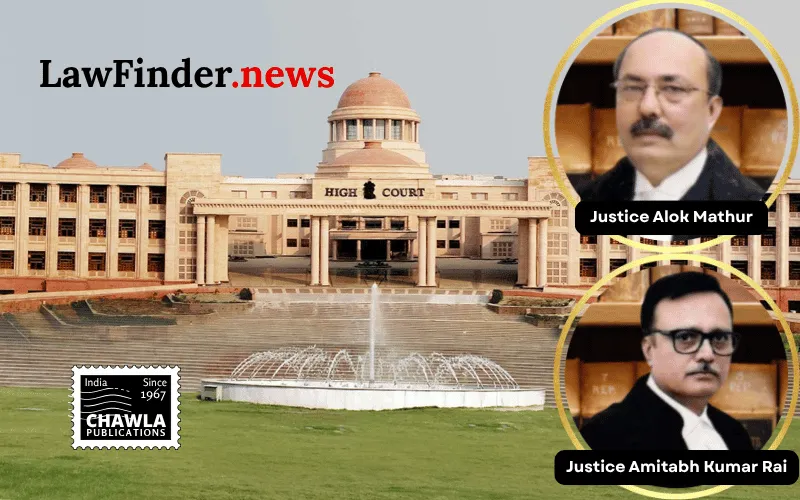
In a significant ruling, the Allahabad High Court, in its Lucknow Bench, has upheld the constitutionality of Section 9(1)(c) of the Delimitation Act, 2002, dismissing a petition that challenged the provision as being violative of various constitutional articles. The judgment, delivered by Justices Alok Mathur and Amitabh Kumar Rai, found that the methodology provided in the Act for reserving seats in Legislative Assemblies for Scheduled Castes (SC) and Scheduled Tribes (ST) does not infringe upon the constitutional framework.
The petitioner, Jagdish Singh, had contended that the reserved status of the Kadipur Assembly Constituency for SC candidates was discriminatory and violated his fundamental rights under Articles 14, 15, 19, 330, and 332 of the Constitution of India. The petitioner argued that the continuous reservation of seats without rotation was against the principles of equality and electoral fairness.
However, the court ruled that the reservation of seats in areas with a larger SC/ST population is not unconstitutional. The bench emphasized that Articles 330 and 332 mandate the reservation of seats and that the methodology for such reservations is a legislative function, not subject to judicial intervention. The court further stated that the right to vote does not include dictating constituency allocation or challenging the legislative wisdom behind seat reservations.
The judgment referenced multiple Supreme Court cases, including Rajbala v. State of Haryana, to affirm that a statute cannot be declared unconstitutional on the grounds of being arbitrary unless it violates a specific constitutional provision. It also reiterated that judicial review is permissible only if legislative actions are found to be manifestly arbitrary or in contravention of constitutional mandates.
The court declined to issue a writ of mandamus to enforce a rotational policy for reserved seats, highlighting that such policy decisions fall within the purview of the legislature. The decision underscores the separation of powers, reaffirming that courts cannot compel legislative bodies to enact or modify laws.
This ruling has important implications for electoral law and the ongoing discourse on caste-based reservations in India, reinforcing the established legal boundaries within which reservation policies operate.
Bottom line:-
Reservation of seats in the Legislative Assembly for Scheduled Castes and Scheduled Tribes is a constitutional mandate under Articles 330 and 332 of the Constitution of India. The provision in Section 9(1)(c) of the Delimitation Act, 2002, providing for reservation in constituencies where SC/ST populations are comparatively large, is not unconstitutional and does not violate fundamental rights or constitutional provisions.
Statutory provision(s): Articles 14, 15, 19, 226, 243D, 243T, 330, 332, 327, 329, Representation of the People Act, 1950, Delimitation Act, 2002