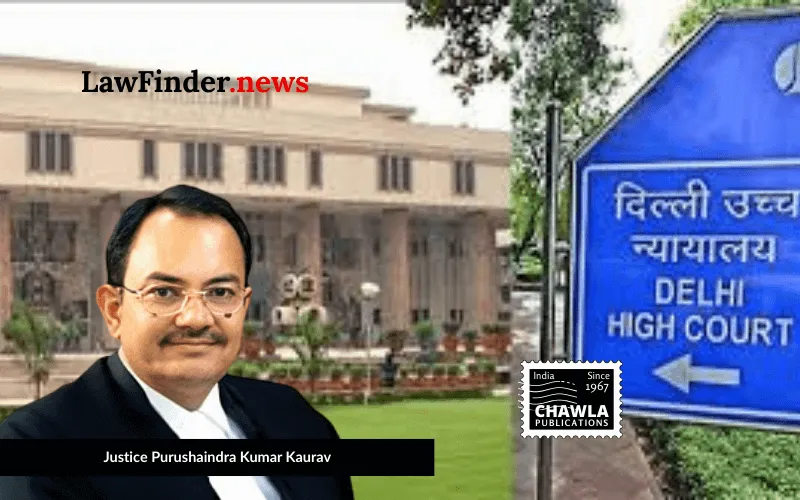
New Delhi, May 1 Constitution of a parallel fact-finding body in place of or before constituting an internal complaints committee to look into allegations of sexual misconduct at workplace is against the PoSH law, the Delhi High Court has held.
Justice Purushaindra Kumar Kaurav stated that the Sexual Harassment of Women at Workplace (Prevention, Prohibition and Redressal) Act, 2013 (PoSH Act) has created a "self-contained mechanism" to deal with such complaints through the internal complaints committee (ICC) or local committee, and any contrary approach offends the express provisions of the law as well as principles of natural justice.
"Once the legislature has expressly designated the ICC/Local Committee as the authority which shall inquire into such complaints, the constitution of any parallel or pre-ICC fact-finding body would be outside the statutory scheme," the court said in a judgement passed on April 24.
"The creation of a fact finding committee in order to determine whether a given complaint is to be sent to the ICC/Local Committee is de hors the provisions of the PoSH Act, and impermissible in law," it held.
The court passed the judgement while setting aside a suspension order passed against a principal in a Delhi University college, who was accused of sexual misconduct by three assistant professors in 2025.
Following the complaints, the DU Deputy Registrar (Colleges) first constituted a fact-finding committee to examine the allegations, which subsequently recommended that the complaints be referred to the ICC.
The petitioner assailed the constitution of the committee as well as a September 2025 order of his suspension.
In the verdict, the court stated that at the stage of inquiry, the employer's role is limited to determining whether the continuance of the employee in service will prejudice the inquiry or is otherwise undesirable in the public interest.
The court explained that while the employer has the inherent right to suspend as an interim measure in light of a complaint alleging sexual harassment, he cannot adjudicate or publicly affirm character of the allegations in the suspension order by making any "editorial judgment".
The court held that the suspension order in this case deserved to be set aside as it was "stigmatic" in nature, observing, "No person deserves to be met with such treatment, while an inquiry is pending in relation to its conduct/actions."
"Any individual who reads the said order would form a negative opinion of the petitioner. A colleague, or prospective employer, before whose eyes passes the words 'serious misconduct and harassment, shall cause only an unfavourable and prejudicial impression to be made of the petitioner.. But for this, if the bare words of the suspension order itself become a punishment for a given accused/answering respondent, the constitutional guarantee of presumption of innocence shall get compromised," it said.
The court clarified that the college was at liberty to pass a fresh order of suspension in this case.
Prof. Rasal Singh v. University of Delhi, (Delhi) : Law Finder Doc Id # 2888609