Insolvency Code - Rights arising from the agreement did not constitute "assets" of the corporate debtor
Supreme Court Upholds Termination of Redevelopment Agreement, Validates Housing Society's Right to Appoint New Developer Apex Court Affirms that Terminated Development Agreements Aren't Protected Assets under IBC Moratorium
In a significant ruling, the Supreme Court of India has upheld the termination of redevelopment agreements by the Kher Nagar Sukhsadan Co-Operative Housing Society Ltd., allowing the society to proceed with appointing a new developer for the redevelopment project. The apex court held that the termination of the agreements with A A Estates Private Limited was valid and lawful, as it was due to persistent defaults and inaction by the developer.
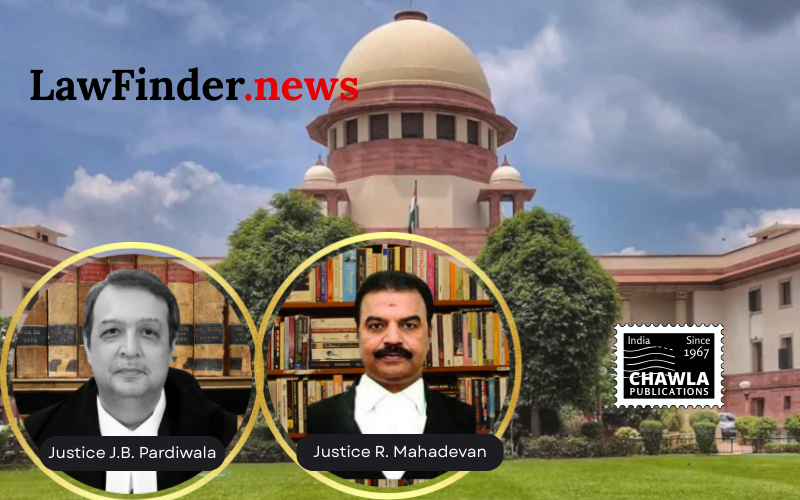
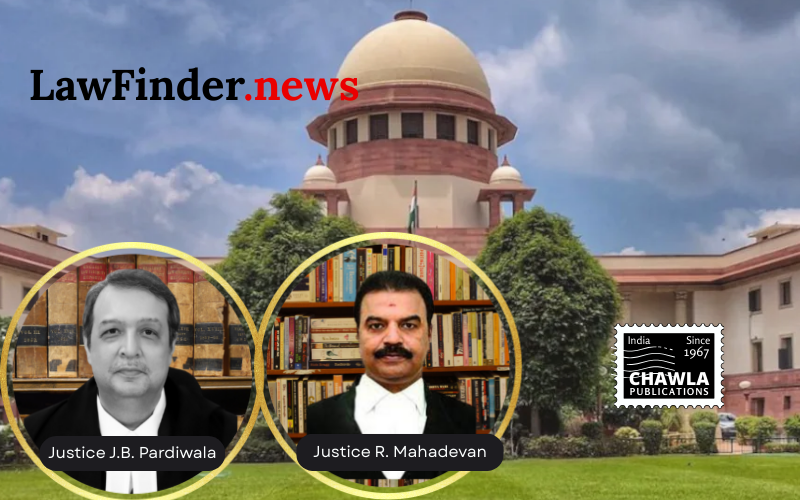
The judgment, delivered by a bench comprising Justices J.B. Pardiwala and R. Mahadevan, clarified that the rights arising from the terminated agreements did not constitute "assets" or "property" of the corporate debtor under Section 14 of the Insolvency and Bankruptcy Code (IBC). Therefore, these rights were not protected by the moratorium during the Corporate Insolvency Resolution Process (CIRP).
The case arose from a prolonged dispute between the housing society and the developer, A A Estates, which failed to complete the redevelopment project within the stipulated timeline. Despite multiple extensions and substantial financial contributions from the developer, the project remained stalled, prompting the housing society to terminate the agreements and appoint a new developer.
The Supreme Court emphasized that the termination of the agreements was not related to the insolvency of the corporate debtor but was due to its persistent non-performance. The court further noted that the redevelopment rights under the terminated agreements did not survive as assets of the corporate debtor since they were lawfully terminated before the initiation of the CIRP.
The court also dismissed the appeal by A A Estates, which contended that the High Court of Bombay had erred in allowing the writ petition filed by the housing society. The Supreme Court found that the High Court had acted within its jurisdiction by directing the statutory authorities to process and grant redevelopment approvals in favor of the new developer, Tri Star Development LLP.
This ruling underscores the principle that the moratorium under the IBC is designed to protect existing and enforceable rights and does not revive terminated contracts. The judgment is a significant precedent in balancing the rights of housing societies in urban redevelopment projects with the provisions of the IBC.
Bottom Line:
Termination of redevelopment agreements by a cooperative housing society due to prolonged inaction and defaults by the developer was held to be valid and lawful. The rights arising from the agreement did not constitute "assets" of the corporate debtor under Section 14 of the IBC, as no enforceable or proprietary rights subsisted on the insolvency commencement date.
Statutory provision(s): Insolvency and Bankruptcy Code, 2016 Section 14, Constitution of India Article 226, Indian Easements Act, 1882 Section 52
Trending News
Women below 35 years of age are not completely barred from accessing prenatal diagnostic techniques
SC refuses to extend time limit for uploading of Waqf property details on UMEED portal
Constructions in temples to be undertaken with restraint and due regard to 'Vasthu': Kerala HC