Court affirms that prima facie case under SC/ST Act bars anticipatory bail, emphasizing the impact of public view interpretation.
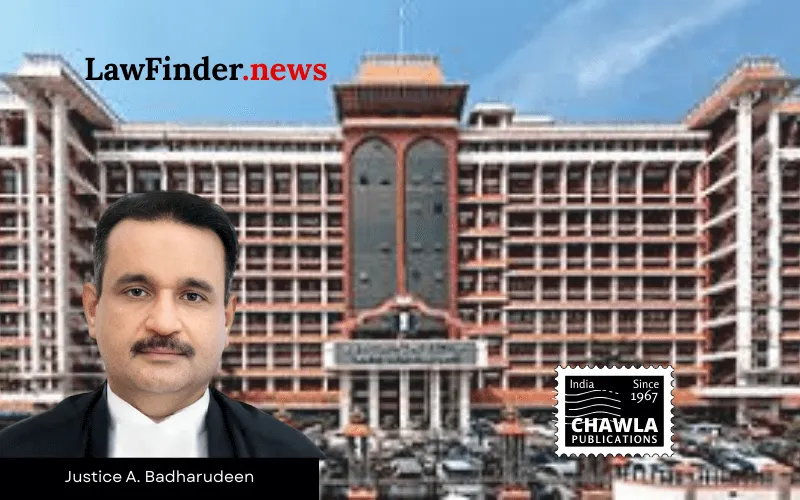
In a significant ruling, the Kerala High Court has dismissed the appeal filed by Bhageesh Pooradan and another, challenging the denial of their anticipatory bail application under the Scheduled Castes and Scheduled Tribes (Prevention of Atrocities) Amendment Act, 2018. The judgment, delivered by Justice A. Badharudeen, underscores the statutory bar on anticipatory bail when prima facie evidence suggests an offense under the SC/ST Act, reaffirming the legal stance that such cases require stringent scrutiny.
The appellants, accused in Crime No. 420/2026 of Valappad Police Station, faced charges under multiple statutory provisions, including Sections 3(1)(s) and 3(2)(va) of the SC/ST (PoA) Amendment Act, 2018. The Court observed that when a prima facie case is established under these sections, the statutory bar under Section 18 of the Act precludes the granting of anticipatory bail. The judgment highlighted that the prima facie abuse of the caste name in a public view setting was established, warranting a dismissal of the appeal.
Central to the case was the interpretation of "public view." The Court clarified that "public view" does not necessarily mean a public place; rather, the presence of third parties or multiple accused during an incident in a private place can constitute "public view" for the purposes of the Act. This nuanced interpretation broadens the scope for identifying offenses under the Act, ensuring that caste-based discrimination is addressed even in private settings where multiple individuals are present.
The prosecution alleged that the appellants, along with others, trespassed into the complainant's property, used explosive substances, and verbally abused the complainant using caste-specific derogatory terms. Despite arguments from the defense that the appellants were unaware of the complainant's caste, the Court found that the parties were familiar with each other through political affiliations, making the claim of ignorance untenable.
The judgment also noted the appellants' criminal antecedents, further justifying the denial of anticipatory bail. The Court emphasized that the presence of multiple offenses, combined with the prima facie establishment of a violation under the SC/ST Act, necessitated a strict interpretation of the law.
This decision reaffirms the judiciary's commitment to upholding the SC/ST Act's provisions, ensuring that the legal framework robustly addresses caste-based atrocities. The ruling serves as a stern reminder of the legal consequences of such actions and the rigorous standards applied by the courts in these matters.
Bottom line:-
Scheduled Castes and Scheduled Tribes (Prevention of Atrocities) Amendment Act, 2018 - Anticipatory bail cannot be granted when prima facie case is made out under the SC/ST (PoA) Amendment Act, 2018, owing to the bar under Section 18 of the Act.
Statutory provision(s): Scheduled Castes and Scheduled Tribes (Prevention of Atrocities) Amendment Act, 2018 Sections 3(1)(s), 3(2)(va), Section 18; Bharatiya Nyaya Sanhita, 2023; Indian Explosives Act, 1884
Bhageesh Pooradan v. State of Kerala, (Kerala) : Law Finder Doc id # 2928981