Court sets guidelines for accepting additional documents post-evidence stage, balancing procedural discipline with substantive justice in Mona Shukla v. Gyanendra Katiyar case
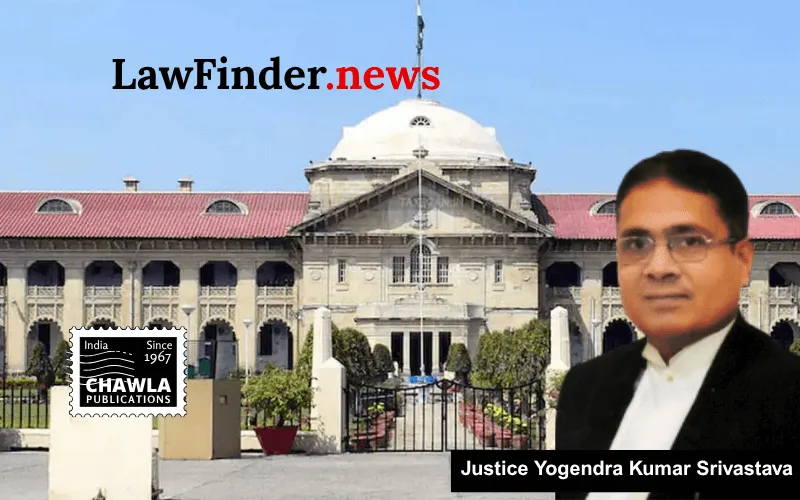
In a significant judgment delivered on September 15, 2026, the Allahabad High Court, presided over by Justice Dr. Yogendra Kumar Srivastava, clarified the scope of judicial discretion under Order VII Rule 14(3) of the Civil Procedure Code (CPC) regarding the late production of documents in civil litigation. The Court allowed petitioners, Km. Mona Shukla and others, to introduce additional documents at the stage of final arguments in their eviction and rent recovery suit against respondent Gyanendra Katiyar, overturning the lower court's rejection of the same.
The suit, instituted in 2014 and pending for over a decade, involves a dispute over the applicability of the U.P. Urban Buildings (Regulation of Letting, Rent and Eviction) Act, 1972, hinging on the date of construction of the disputed premises. The petitioners sought to admit the first tax assessment document issued by the Kanpur Municipal Corporation, obtained only in February 2026 after persistent efforts and a formal complaint through a government portal. This document was deemed crucial to establish the construction date and thereby challenge the applicability of the said Act.
The Additional District Judge had dismissed the petitioners' application to admit these documents on grounds that the evidence phase had concluded and the suit was at the final arguments stage, citing concerns over delay, potential prejudice, and court directives for expeditious disposal.
However, the High Court critically examined the trial court's rationale and underscored that Order VII Rule 14(3) CPC does not impose an absolute bar on late submission of documents if leave is granted by the Court. The Court enumerated a three-fold test for exercising discretion: (i) whether the delay in producing the document was bona fide, (ii) relevance and necessity of the document for adjudication, and (iii) whether its admission would cause irreparable prejudice to the opposing party.
Applying this test, the High Court found that the petitioners had genuinely obtained the document late due to unavailability, the document was directly related to an existing pleaded issue, and that the respondents could be protected from prejudice through procedural safeguards such as inspection, objections, cross-examination, and possible recall of witnesses. The Court emphasized that procedural rules must serve the cause of substantive justice rather than hinder it and that directions for expeditious disposal should not compromise fair adjudication.
Consequently, the Court set aside the lower court's order, directing that the new documents be admitted subject to proof and admissibility. It further mandated the trial court to afford the respondents reasonable opportunities to respond and contest the documents, with strict time-bound measures to prevent unnecessary delay. The suit was to proceed thereafter, balancing expedition with fairness.
This judgment reiterates the principle that courts must judiciously balance procedural discipline with substantive justice, especially in long-pending cases where new relevant evidence emerges late but bona fide. It provides clarity on the exercise of discretion under Order VII Rule 14(3) CPC and highlights the importance of ensuring that litigation is decided on merits rather than procedural technicalities.
Bottom Line:
Discretion under Order VII Rule 14(3) of the CPC must be exercised judicially, balancing procedural discipline with the need for fair adjudication, even at the stage of final arguments, if the documents sought to be introduced are relevant and their late production is bona fide.
Statutory provision(s):
Civil Procedure Code, 1908, Order VII Rule 14(3), Section 151; U.P. Urban Buildings (Regulation of Letting, Rent and Eviction) Act, 1972
Km. Mona Shukla v. Gyanendra Katiyar, (Allahabad) : Law Finder Doc Id # 2980613