Court Balances Public Infrastructure Needs with Environmental Safeguards, Mandates Strict Compliance with Restoration and Compensatory Plantation Measures
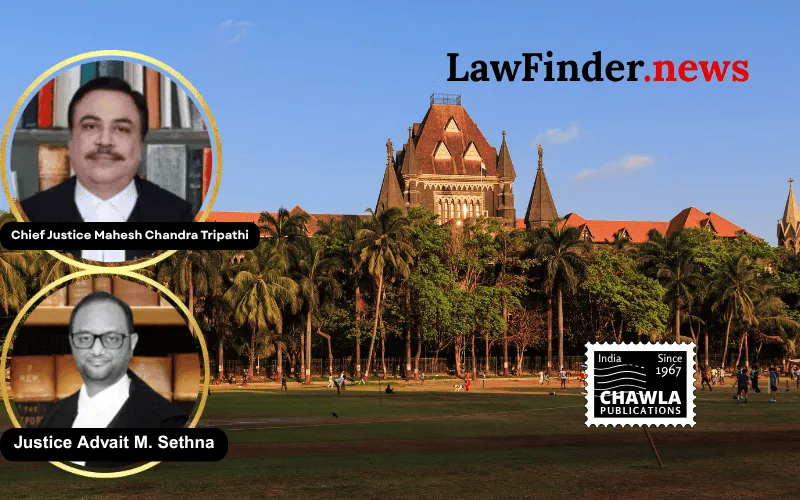
In a landmark judgment delivered on 17th September 2026, the Bombay High Court (Division Bench comprising Chief Justice Mahesh Chandra Tripathi and Justice Advait M. Sethna) granted permission to the Brihanmumbai Municipal Corporation (BMC) to cut 1237 mangrove trees covering an area of approximately 2.75 hectares for the construction of a crucial 2064-meter-long bridge over Malad Creek, connecting Versova and Madh Island. The Court's decision underscores a balanced approach between environmental conservation and the urgent public infrastructure requirements of Mumbai's burgeoning population.
The petition, filed under Article 226 of the Constitution of India, sought the Court's prior approval for mangrove cutting in compliance with earlier orders relating to environmental protection of mangroves in Mumbai. The bridge aims to create a missing link in the city's transport network, significantly reducing travel distance from 22 km to 1.5 km and cutting travel time from 1.5 hours to about 5 minutes. This infrastructure is anticipated to ease traffic congestion on existing roads, lower vehicular accidents, and reduce CO2 emissions by an estimated 93%, thereby contributing positively to sustainable urban mobility.
The Court noted the ecological sensitivity of mangroves, which serve as natural buffers against coastal erosion, tidal surges, and flooding. However, it acknowledged that the project serves a greater public interest by improving connectivity, benefiting residents, emergency services like the Air Force and Navy, and supporting local fishermen by designing the bridge alignment to avoid obstructing boat movement.
Environmental safeguards have been meticulously incorporated. The BMC submitted a comprehensive Environmental Impact Assessment (EIA) report, initially estimating a 2.80-hectare impact. Following directions from the Maharashtra Coastal Zone Management Authority (MCZMA), a revised EIA was prepared. The final assessment showed only 0.20 hectares of mangroves would be permanently lost (the area covered by bridge piers), with around 2.5 hectares proposed for in situ restoration.
Importantly, the Court emphasized the principle of sustainable development - allowing infrastructure growth without compromising environmental integrity. The petitioner committed to planting approximately 39,000 mangroves over 9 hectares of degraded forest land as compensatory afforestation, with a financial outlay exceeding Rs. 1.42 crore dedicated to plantation, protection, and maintenance for ten years. The Mangrove and Marine Biodiversity Conservation Foundation of Maharashtra, an autonomous government body, will oversee this restoration.
The Court observed that the project does not encroach upon any protected or eco-sensitive zones, with the nearest protected area (Sanjay Gandhi National Park) located over 8 kilometers away. All statutory clearances were obtained, including from the Ministry of Environment, Forest and Climate Change (MoEFCC), MCZMA, Maharashtra Forest Department, and Maharashtra Maritime Board.
While the environmental NGO opposing the project raised concerns about ecological damage and inadequate compensatory measures, the Court found that the project's public utility, environmental assessment, mitigation plans, and statutory approvals justified allowing the project to proceed. The Court mandated strict compliance with all conditions and undertakings, cautioning that non-compliance would attract both civil and criminal liabilities.
This judgment aligns with previous rulings where the Court has allowed limited environmental intrusions strictly for public good projects that demonstrate rigorous environmental safeguards and restoration plans. It reflects the evolving jurisprudence on balancing development with ecological preservation under the public trust doctrine and sustainable development principles enshrined in Indian environmental law.
Bottom Line:
The Bombay High Court permitted the Brihanmumbai Municipal Corporation to cut mangroves for the construction of a public infrastructure project, balancing public interest with environmental conservation, while mandating strict compliance with restoration and compensatory measures.
Statutory provision(s):
Article 226 of the Constitution of India, Environment (Protection) Act, 1986, Coastal Regulation Zone Notification 2019.
Brihanmumbai Municipal Corporation v. Union of India, (Bombay)(DB) : Law Finder Doc Id # 2980592