Court rules that lessees of shops at Sitapur Eye Hospital cannot be evicted without due process, rehabilitation, or compensation despite land transfer for public interest hospital project
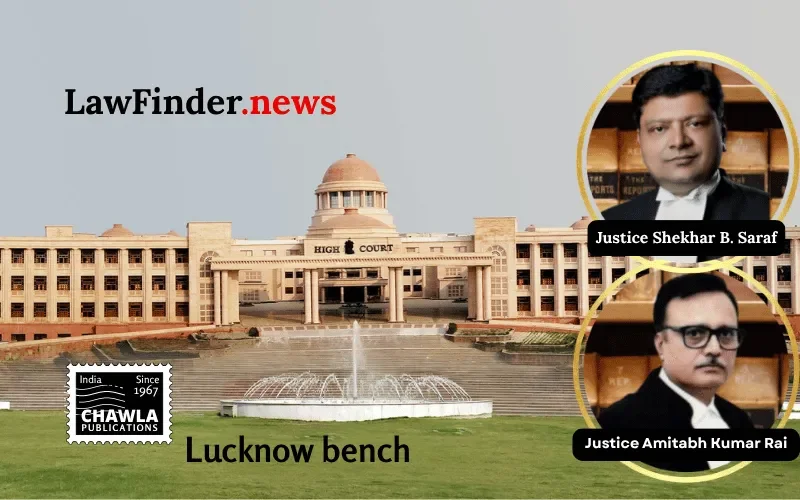
In a significant judgment dated October 12, 2026, the Allahabad High Court (Division Bench, Lucknow) upheld the constitutional rights of small shopkeepers leased shops under the Sitapur Netra Chikitsalaya Complex Niyamawali, ordering that they cannot be evicted or have their shops demolished without proper determination of their leases. The court issued directions restraining the State of Uttar Pradesh and other respondents from taking coercive action against the petitioners, who are lessees of shops allotted to them on a 30-year lease basis since the year 2000.
The case arose when the land on which the petitioners' shops stood was transferred to the Department of Health and Family Welfare for the construction of a 300-bed super speciality hospital. Subsequently, the petitioners were served notices to vacate the shops within 15 days, despite no formal termination of their leases or any arrangements for rehabilitation or compensation.
The petitioners challenged this eviction notice through a writ petition before the Allahabad High Court, arguing that their right to livelihood under Articles 19 and 21 of the Constitution of India was being violated. The court acknowledged that while the construction of the hospital serves a public interest, it cannot override the fundamental rights of the lessees without due process.
The court observed that the District Magistrate, acting as President of the Sitapur Netra Chikitsalaya Samiti, admitted that the shops were leased under the Niyamawali but denied the petitioners' right to continue solely on the basis of the land transfer. The court held that mere transfer of land to another department does not justify dispossession without following due procedure for lease determination.
Highlighting the absence of any proposal for rehabilitation or compensation, the court condemned the arbitrary eviction and demolition of the petitioners' shops. It directed the respondents to file a counter affidavit within three weeks, detailing steps for rehabilitation or compensation for the affected shopkeepers. The affidavit must be submitted by an officer not below the rank of Secretary in the Medical and Health Department, with rejoinders allowed within two weeks thereafter.
This ruling reinforces the principle that even in the pursuit of public interest projects, the rights of individuals, especially those dependent on leased commercial premises for livelihood, must be safeguarded through lawful procedures. The court's intervention ensures that eviction without lease termination and without rehabilitation or compensation will not be permitted, setting a precedent for balancing development with fundamental rights.
Bottom Line:
Lessees/allottees of shops cannot be evicted and their shops demolished without determination of lease and without any rehabilitation or compensation, even if land is required for construction of a super speciality hospital in public interest; such action affects livelihood and is violative of Articles 19 and 21 of the Constitution of India.
Statutory provision(s):
Articles 19, 21 of the Constitution of India
Mohd. Naeem v. State of U.P., (All)(DB)(Lucknow) : Law Finder Doc Id # 3001667