Court holds cancellation of voluntary retirement and disciplinary proceedings against Ashok Kumar Agarwal unlawful; directs bank to reconsider service benefits and refund recovery amount.
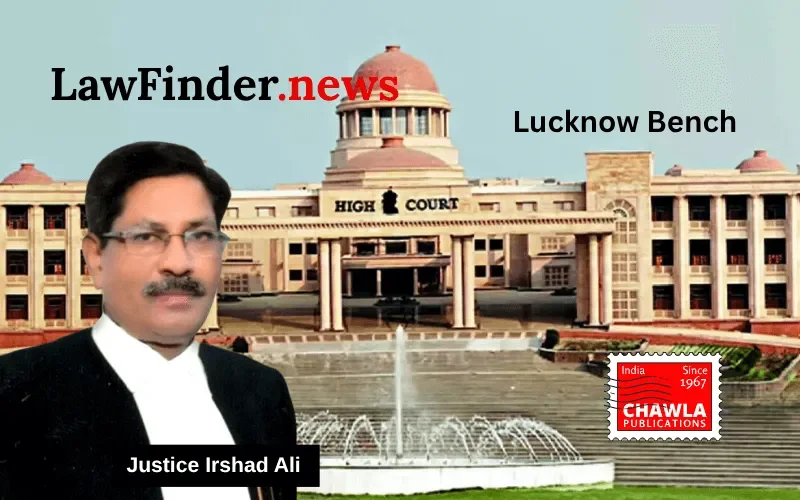
In a significant judgment delivered on November 16, 2026, the Allahabad High Court (Lucknow Bench) quashed the dismissal order and appellate order passed against Ashok Kumar Agarwal, a long-serving officer of UCO Bank, citing gross procedural irregularities in the departmental inquiry and violation of principles of natural justice. Justice Irshad Ali presided over the case, which challenged the legality of the dismissal and subsequent appeal orders dated June 28, 2003, and December 12, 2003, respectively.
The petitioner, Ashok Kumar Agarwal, who had served UCO Bank since 1968 and held the post of Middle Management Grade-C (Scale-II), had applied for voluntary retirement under the UCO Bank Employees' Voluntary Retirement Scheme, 2000. His application was accepted on June 16, 2001, with an initial relieving date of June 30, 2001, later extended to July 31, 2001. However, the bank placed him under suspension on July 16, 2001, and canceled his voluntary retirement without issuing any show-cause notice or providing an opportunity of hearing.
Subsequently, a charge-sheet containing vague and unsubstantiated allegations relating to financial irregularities and fraudulent transactions was served on the petitioner. Despite repeated requests, crucial original documents such as account-opening forms, signature cards, and vouchers, which were essential to the petitioner’s defense, were not provided. The inquiry officer failed to ensure the petitioner’s right to inspect these materials thoroughly, and the inquiry report was prepared without examining relevant witnesses or adequately addressing the petitioner’s defense.
The disciplinary authority passed the dismissal order without considering the petitioner’s objections and replies, including a detailed representation submitted after the inquiry report. The appellate authority dismissed the statutory appeal in a cryptic and non-speaking order without independent scrutiny of the grounds raised. The petitioner was also subjected to recovery proceedings of Rs. 1,44,616/- alongside dismissal, which the court found unjustified given the infirmities in the inquiry.
The bank contended that the petitioner became ineligible for voluntary retirement upon suspension and that procedural fairness was maintained. However, the court observed that at the time of acceptance of voluntary retirement, no disciplinary proceedings were contemplated or pending, nor was the petitioner under suspension, making the cancellation of retirement arbitrary and unsustainable under the scheme.
Citing precedents such as Managing Director, ECIL v. B. Karunakar and Chairman and Managing Director, United Commercial Bank v. P.C. Kakkar, the court underscored the necessity of procedural fairness, reasoned decisions, and adherence to natural justice in disciplinary proceedings. It found the inquiry report and dismissal order vitiated by non-supply of material documents, denial of effective opportunity to defend, failure to independently consider objections, and lack of cogent reasons for findings and punishment.
The court held that dismissal was disproportionate considering the lack of sufficient evidence and the petitioner’s long unblemished service record. It further ruled that the recovery direction could not survive independently due to procedural infirmities.
Accordingly, the Allahabad High Court quashed both the dismissal and appellate orders and directed the bank to undertake a fresh exercise to determine the petitioner’s service and monetary benefits in light of the accepted voluntary retirement. It also ordered refund of any amount recovered pursuant to the invalid recovery order. The bank was given a three-month timeline to complete this exercise and a further one month to release the benefits.
This judgment reinforces the vital importance of fair inquiry procedures and the right to a reasoned decision in service disciplinary matters, particularly in cases involving long-serving employees facing serious allegations.
Bottom Line:
Service Law - Procedural irregularities in departmental inquiry - Employee dismissed despite procedural lapses, non-supply of material documents, and denial of adequate opportunity to defend - Disciplinary authority failed to provide a fair and reasoned decision-making process - Dismissal order and appellate order quashed.
Statutory provision(s):
UCO Bank Employees' Voluntary Retirement Scheme, 2000 (Clauses 5.2(c), 10.6), UCO Bank Employees' (Discipline and Appeal) Regulations, 1976, Article 226 of the Constitution of India, Article 14 of the Constitution of India
Ashok Kumar Agarwal v. Uco Bank Ltd., (Allahabad)(Lucknow) : Law Finder Doc Id # 3131878