Court holds complaint filed before expiry of 15-day statutory period post legal notice is legally untenable; grants liberty to file fresh complaint within two months
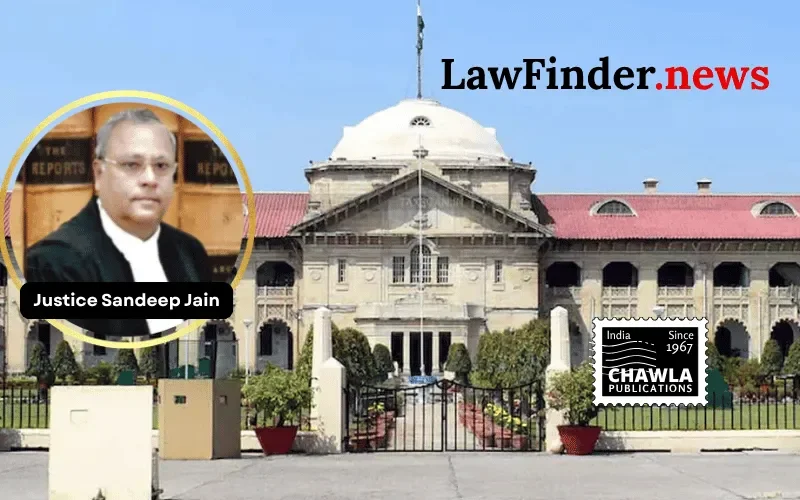
In a significant judgment dated November 2, 2026, the Allahabad High Court, presided over by Justice Sandeep Jain, quashed the summoning order and the subsequent proceedings against Arun Gautam in a complaint filed under Section 138 of the Negotiable Instruments Act, 1881. The court held that the complaint was prematurely filed before the expiry of the mandatory 15-day period provided to the accused to make payment after receipt or deemed receipt of the statutory legal notice.
The case arose from a dispute involving a cheque dishonoured due to insufficient funds. The complainant, Amit Kumar Tripathi, had issued a legal notice on April 20, 2016, which was allegedly refused by the accused on the same day. Despite this, the complaint was filed on May 2, 2016, before the lapse of the 15-day period prescribed under Section 138(c) of the Negotiable Instruments Act. The Magistrate had taken cognizance and summoned the accused to face trial. However, Arun Gautam challenged this order under Section 482 Cr.P.C., contending that the complaint was not maintainable since it was filed prematurely.
Justice Jain, relying on binding Supreme Court precedents including Yogendra Pratap Singh v. Savitri Pandey (2014) and Gajanand Burange v. Laxmi Chand Goyal (2022), reiterated the settled legal position that a complaint under Section 138 cannot be filed before the expiry of the 15-day statutory period from the date of receipt of the legal notice. The Court emphasized that a complaint filed prior to this period is "no complaint at all in the eye of the law" and the trial court is barred from taking cognizance on such a complaint. The Court further clarified that the mere fact that the 15-day period has expired by the time the court takes cognizance does not cure the defect of premature filing.
The judgment also discussed the remedy available to the complainant. Since the initial complaint was not maintainable, the complainant cannot revive the same complaint later. Instead, the proper course is to file a fresh complaint within the time prescribed under Section 142(b) of the Negotiable Instruments Act. The Court granted liberty to the complainant to file a fresh complaint within two months from the date of the order, with a direction that if filed, the trial court shall dispose of the complaint within six months. The complainant may also seek condonation for any delay by satisfying the trial court of sufficient cause as per the proviso to Section 142(b).
This judgment serves as a strong reminder of the strict procedural safeguards embedded in the Negotiable Instruments Act to protect the rights of the accused, ensuring that complaints under Section 138 are filed only after the complainant has complied with the mandatory statutory requirements. It underlines the necessity of adhering to the statutory timelines in cheque dishonour cases and clarifies that premature complaints are liable to be quashed outright, thereby preventing misuse of the legal process.
Bottom Line:
Negotiable Instruments Act - Complaint under Section 138 filed before expiry of 15 days from receipt/deemed receipt of statutory notice is not maintainable in law - Such complaint is no complaint in the eye of law - Cognizance taken on such complaint is liable to be quashed - Remedy of complainant is to file fresh complaint and seek benefit of proviso to Section 142(b).
Statutory provision(s): Section 138, Section 142(b) of the Negotiable Instruments Act, 1881; Section 482 of the Code of Criminal Procedure, 1973
Arun Gautam v. State of UP, (All) : Law Finder Doc Id # 3008847