Court Orders Amendment of Bye-laws for Future Elections; Nomination Process to be Regularized Following Supreme Court Guidelines
In a significant ruling, the Allahabad High Court has addressed the compliance of Bar Association elections with the Supreme Court's directive to ensure a minimum of 30% representation for women lawyers in governing bodies. The court was hearing a public interest litigation filed by Advocate Bhavna Pandit challenging the 2025-26 elections of the Civil Bar Association, Bulandshahr, on the grounds of non-compliance with the Supreme Court's order.
The Supreme Court, in its order dated March 13, 2026, mandated that all Bar Associations must ensure at least 30% representation for women in their executive bodies. The order was further clarified on April 16, 2026, allowing for the nomination of women where they do not contest elections, to meet the representation shortfall.
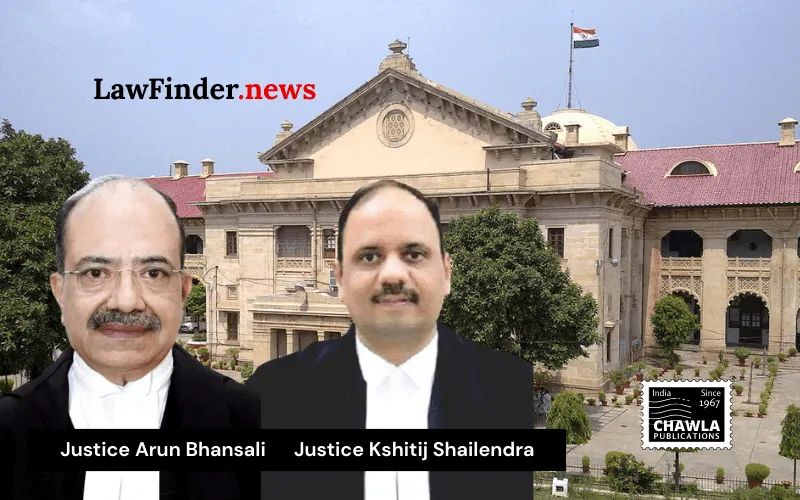
The Allahabad High Court, presided over by Chief Justice Arun Bhansali and Justice Kshitij Shailendra, found that the Bar Association had failed to initially provide for the required representation. However, it noted that the association nominated four women advocates shortly after the Supreme Court's clarification, thereby fulfilling the representation requirement.
The court directed the Bar Association to amend its bye-laws within a month to ensure future compliance with the Supreme Court's mandate. The amended bye-laws should include provisions for 30% representation of women lawyers, reflecting the retrospective effect of the recent elections and nominations.
Additionally, the court ordered that the nomination of the four women advocates be regularized by consulting the Administrative Judge, District and Sessions Judge, elected office bearers, and the senior-most woman member of the Bar Association, as per the Supreme Court's guidelines.
The court emphasized that the existing elected body, along with the nominated members, would continue to function unless directed otherwise by the Administrative Judge. It also reserved the right for future examination by the Registrar General if any breach of the Supreme Court's directions is reported.
This ruling underscores the judiciary's commitment to promoting gender equality in legal associations, ensuring that women lawyers have a significant role in the decision-making processes within Bar Associations across the country.
Bottom Line:
Bar Association elections must ensure at least 30% representation of women lawyers in the governing or executive body as directed by the Supreme Court. Where women do not contest elections, the shortfall must be addressed through appropriate nominations in consultation with designated authorities.
Statutory provision(s): Article 142 of the Constitution of India, Supreme Court's orders dated 13.03.2026 and 16.04.2026, Directions in Deeksha N Amruthesh v. State of Karnataka
Bhavna Pandit v. State of U.P., (Allahabad)(DB) : Law Finder Doc id # 2976602