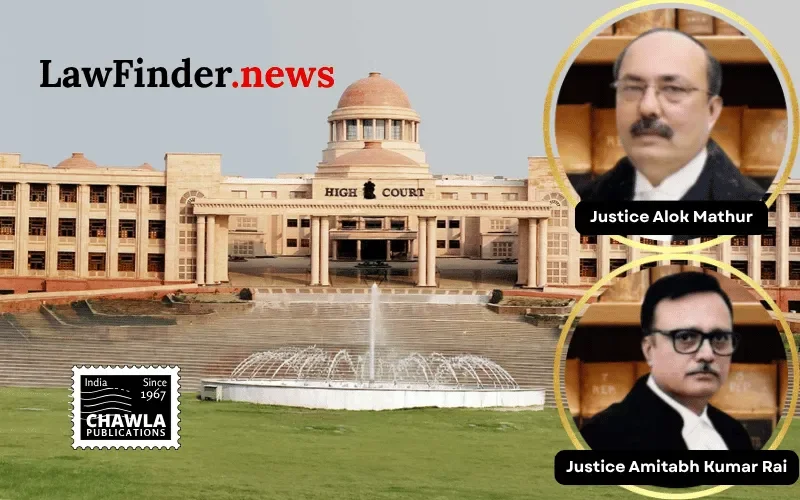
Court affirms that compulsory retirement under Fundamental Rule 56(c) is administrative, not punitive, and can be imposed based on overall service record and public interest, even amid ongoing departmental proceedings.
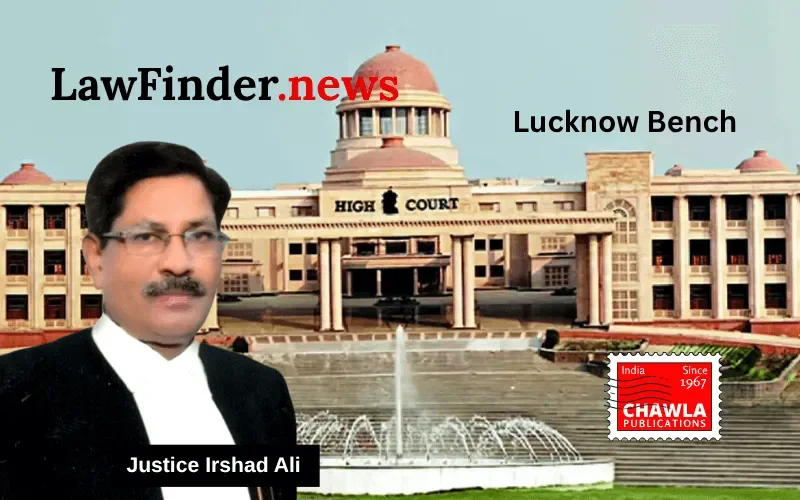
In a significant judgment dated November 12, 2026, the Allahabad High Court (Division Bench, Lucknow) dismissed the writ petition filed by Praveen Sonkar, a judicial officer challenging his compulsory retirement order issued by the Government of Uttar Pradesh. The Court reaffirmed the legal principle that compulsory retirement of judicial officers under Fundamental Rule 56(c) is an administrative measure aimed at serving public interest and is not punitive in nature.
Praveen Sonkar, appointed as a Civil Judge in 2006 and promoted to Higher Judicial Services in 2019, faced compulsory retirement through an order dated November 29, 2021. The petitioner contended that the retirement was ordered to circumvent three pending departmental inquiries against him, making the order punitive and illegal. Furthermore, Sonkar argued that the recommendations for retirement by the Screening Committee of the High Court were stigmatic and that his promotion despite existing complaints negated any question about his integrity.
The petitioner also highlighted that one of the complaints, lodged by a female judicial officer alleging improper behavior, was later closed by the Internal Complaints Committee after considering his apology and assurance of changed conduct. He contended that such exoneration vitiated the basis of his compulsory retirement.
However, the High Court, after a detailed analysis of the facts and extensive precedents, held that the pendency of departmental inquiries does not preclude the employer from issuing an order of compulsory retirement. The Court noted that compulsory retirement is distinct from disciplinary action and does not require the conclusion of departmental proceedings before it can be effected.
The Court emphasized that the Screening Committee, Administrative Committee, and the Full Court of the High Court had considered the entire service record, including adverse entries and complaints, before recommending compulsory retirement. It referred extensively to Supreme Court precedents, particularly the landmark judgment in Baikuntha Nath Das v. Chief District Medical Officer (1992) 2 SCC 299, which established that compulsory retirement orders are based on the subjective satisfaction of the government and are not punishments implying stigma or misconduct.
Further, the Court rejected the "washed-off theory," which suggests that adverse entries recorded before promotion lose their significance. It held that even a single adverse remark relating to a judicial officer's integrity, whether communicated or not, is sufficient ground for compulsory retirement, given the high standards of probity expected from judicial officers.
The judgment also relied on recent Supreme Court rulings such as Ram Murti Yadav v. State of U.P. (2020) 1 SCC 801 and High Court of Judicature for Rajasthan v. Bhanwar Lal Lamror (2021) 8 SCC 377, which upheld that courts cannot substitute their judgment for the administrative body's subjective satisfaction unless the order is arbitrary, mala fide, or based on no evidence.
The Court further clarified that the promotion of the petitioner during the pendency of complaints did not negate the material adverse to him and that the subsequent closure of one complaint after his apology did not invalidate the overall assessment leading to his retirement.
In conclusion, the Allahabad High Court dismissed the writ petition, affirming the legality and propriety of the compulsory retirement order. The Court reiterated that the integrity and conduct of judicial officers are paramount, and public interest requires that officers who have "outlived their utility" may be retired compulsorily even if departmental inquiries are pending.
This judgment underscores the narrow scope of judicial review in compulsory retirement cases of judicial officers and reinforces that such administrative decisions, when made bona fide and on sufficient material, will be upheld even if disciplinary proceedings are ongoing.
Bottom Line:
Judicial officers can be compulsorily retired without the necessity of concluding pending departmental inquiries, provided the decision is based on an overall assessment of their service record and is in public interest.
Statutory provision(s): Fundamental Rule 56(c), U.P. Fundamental Rule 56 (Amendment and Validation) Act, 1976, Civil Services Regulations (Articles 465 and 465-A - repealed)
Praveen Sonkar v. State of U.P., (All)(DB)(Lucknow) : Law Finder Doc Id # 3102154