Court Clarifies Discretionary Powers of Disciplinary Authority in Light of Amendments to U.P. Government Servants’ Conduct Rules
In a significant ruling, the Allahabad High Court has dismissed a writ petition filed by Vinita Kumari, a constable in the U.P. Police, challenging the initiation of departmental proceedings against her under Rule 14(1) of the U.P. Police Officers of Subordinate Ranks (Punishment and Appeal) Rules, 1991. The proceedings were initiated for her alleged bigamous marriage, which constitutes a violation of Rule 29 of the U.P. Government Servants' Conduct Rules, 1956.
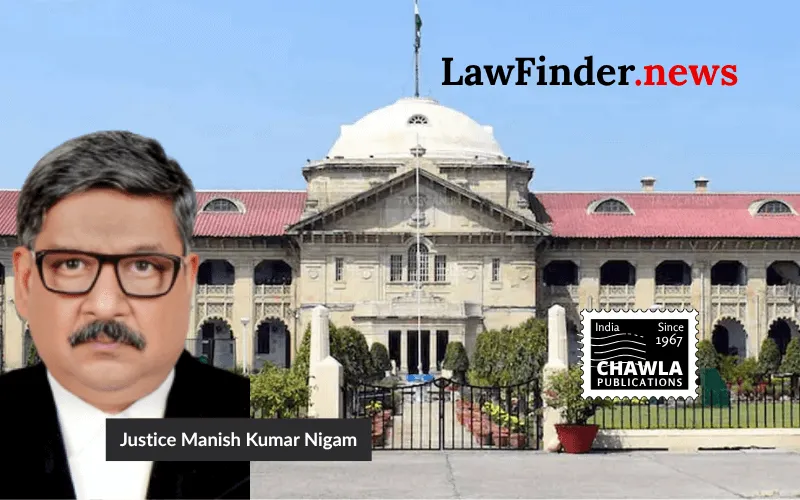
Presiding Judge, Mr. Manish Kumar Nigam, clarified that following the deletion of Sub-rule (3) of Rule 29 in 1976, the disciplinary authority holds the discretion to impose either a major or minor penalty based on the specifics of the case. This amendment nullifies the previous mandatory minimum punishment of withholding increments for three years for contraventions of the rule.
The petitioner argued that the proceedings were unwarranted as the alleged violation only merited a minor penalty, citing precedents that considered the unamended rule. However, the court noted that these precedents failed to account for the 1976 amendment and emphasized that the disciplinary authority is not bound to impose a major penalty even when proceedings are initiated under Rule 14(1), which outlines the procedure for major penalties.
The court further remarked that the procedural requirements for a major penalty are more comprehensive, allowing the disciplinary authority to decide on the appropriate penalty based on evidence and case circumstances, not solely on the procedural rule under which the inquiry was conducted.
The judgment also addressed the interpretation of minimum punishment provisions, drawing on Supreme Court rulings that clarify that minimum prescribed punishments are mandatory unless otherwise stated by the legislature.
In light of these clarifications, the court dismissed Kumari's petition, upholding the departmental proceedings initiated against her. The decision highlights the discretionary power of disciplinary authorities in imposing penalties post-amendment, setting a precedent for similar cases in the future.
Bottom Line :
Rule 29 of U.P. Government Servants' Conduct Rules, 1956 - Departmental proceedings for bigamous marriage - Initiation under Rule 14(1) of U.P. Police Officers of Subordinate Ranks (Punishment and Appeal) Rules, 1991 for major penalty upheld - Post-1976 amendment, Sub-rule (3) deleted, enabling discretion to disciplinary authority to impose major or minor penalty based on case facts.
Statutory provision(s): U.P. Government Servants' Conduct Rules, 1956 Rule 29, U.P. Police Officers of Subordinate Ranks (Punishment and Appeal) Rules, 1991 Rule 14(1)
Vinita Kumari v. State of U.P., (Allahabad) : Law Finder Doc id # 2987549