Court reiterates settled Supreme Court principles of 'equal pay for equal work' for daily wagers, declares administrative guidelines restricting such pay illegal, and dismisses State's appeals with heavy costs.
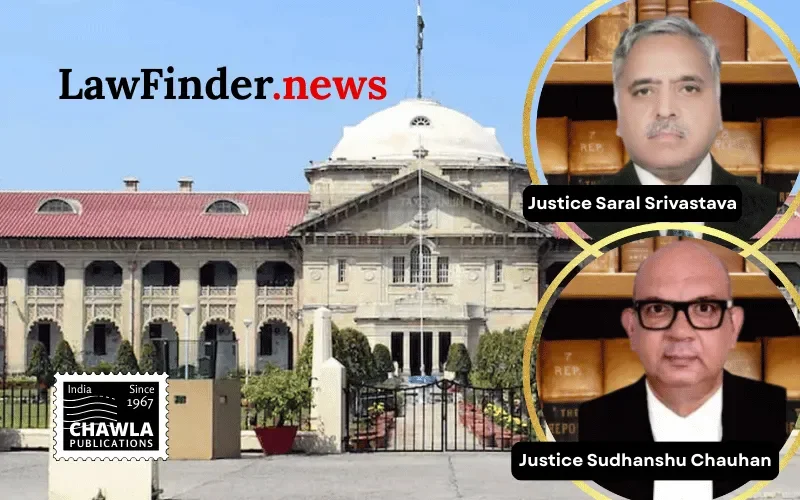
In a landmark judgment delivered on October 27, 2026, the Allahabad High Court (Division Bench) emphatically affirmed that daily wagers employed in the Uttar Pradesh Forest Department and performing duties similar to regular Class-IV employees are entitled to receive the minimum pay scale applicable to such regular employees. The Court dismissed appeals filed by the State of Uttar Pradesh and others challenging earlier orders which granted this relief to daily wagers, including the respondents Ramesh and Umesh.
The ruling reiterates the binding Supreme Court precedents established in the seminal Putti Lal case (2002) and subsequent judgments such as Jagjit Singh (2017) and Sabha Shankar Dube (2019), which unequivocally uphold the constitutional mandate under Article 39(d) of the Constitution of India for equal pay for equal work. The Court underscored that denial of minimum pay scale to daily wagers on grounds such as eligibility for regularisation, length or continuity of service, or temporary/seasonal nature of employment is impermissible and constitutes arbitrary discrimination violating Articles 14 and 16 of the Constitution.
The facts leading to the judgment revealed that the petitioner-respondent Ramesh had been working intermittently since 2009 as a Chowkidar/Watcher/Prabhari in the Forest Department but was paid a meagre Rs. 6,162 per month instead of the minimum pay scale of Rs. 18,000 applicable to regular Class-IV employees. Despite repeated directions from courts and clear Supreme Court rulings, the State had persisted in denying this minimum pay scale, relying on administrative guidelines issued on September 24, 2024, which were held to be illegal and contrary to settled law.
The Court found that the State's selective extension of benefits to some daily wagers, while denying others, amounted to unlawful arbitrariness and mala fide conduct. It also rejected the State's claim that the petitioner was not entitled to relief due to intermittent or seasonal employment, noting that the nature of duties performed was identical to regular employees and that the duration of engagement could not be a factor to deny equal pay.
Critically, the Court upheld the grant of minimum pay scale as an interim relief, recognizing the exceptional circumstances where the law is settled and denial would perpetuate injustice and hardship. The Court also dismissed the State's contention regarding lack of hearing, noting ample opportunity had been afforded to the State to present its case, and the failure to file counter affidavits was self-imposed.
Expressing strong displeasure at the State's continued resistance to compliance despite longstanding judicial directives, the Court imposed costs of Rs. 1,00,000 on the State, directing payment equally to the two respondents. The judgment is expected to provide relief to thousands of daily wagers in the Forest Department and sets a stern precedent against arbitrary denial of minimum pay to temporary workers performing regular duties.
This decision reinforces the constitutional doctrine that all employees performing similar work deserve equal remuneration and that administrative policies cannot override binding Supreme Court rulings. It also signals the judiciary's resolve to protect the dignity and rights of vulnerable daily wage workers against exploitative State practices.
Bottom Line:
Daily wagers working in Forest Department and discharging duties similar to regular Class-IV employees are entitled to minimum of pay scale without allowances and increments; administrative guidelines contrary to law laid down in Putti Lal, Jagjit Singh and Sabha Shankar Dube are illegal; in exceptional circumstances, such relief can be granted at interim stage where claim is clearly covered by settled law.
Statutory provision(s):
Constitution of India Article 14, Article 16, Article 39(d)
State of UP v. Ramesh, (All)(DB) : Law Finder Doc Id # 3004172