Court censures administrative non-compliance and mandates regularization benefits for deceased employee's legal heirs.
In a significant judgment, the Allahabad High Court has ruled in favor of Hasan Ahmad, granting him the right to a compassionate appointment following the death of his father, a work-charge employee, before the completion of his regularization process. The court condemned the repeated administrative rejection of the claim on the same grounds, terming it contemptuous and indicative of a blatant disregard for judicial authority.
The case revolved around Rifakat Hussain, who served as a Junior Assistant in the Work Charge Establishment of the Rural Engineering Department, U.P., for over 18 years before his untimely death in 2012. Despite a seniority list established in 2005 for regularization, Hussain’s demise preempted the completion of his regularization, though others in similar positions were regularized shortly thereafter.
Petitioner's mother, Zahida Begum, initially sought legal recourse for her husband's regularization and a subsequent claim under the Uttar Pradesh Recruitment of Dependants of Government Servants Dying in Harness Rules, 1974. Multiple judicial directives mandated the consideration of Hussain’s regularization and Begum’s claim. However, the authorities repeatedly dismissed the claims, citing Hussain's death as a barrier.
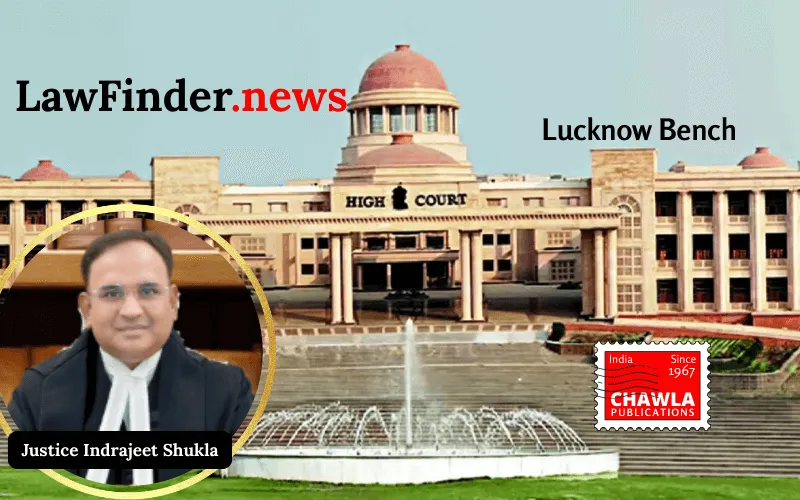
Justice Indrajeet Shukla, presiding over the case, criticized the administrative authorities for their "stubborn attitude" and failure to adhere to judicial mandates, labeling their actions as "prima facie contemptuous." Emphasizing the doctrine of malice in law, the court noted that the authorities acted without lawful justification, disregarding the statutory scheme.
The court reiterated that an employee’s right to regularization, once crystallized, should not be extinguished by their death. It directed that all consequential entitlements, both monetary and otherwise, be extended to Hussain's legal heirs. The judgment also highlighted the prolonged litigation and hardships faced by the petitioner's family due to administrative inaction.
In a rare move, the court ordered that Hussain be deemed regularized from the date he became eligible, and awarded costs of Rs. 50,000 to Ahmad for the prolonged harassment caused by the authorities. Additionally, the court instructed the Secretary of the Rural Engineering Department to ensure compliance with the order within two months, highlighting the need for fairness, equality, and compassion in government employment practices.
This judgment underscores the judiciary's role in upholding the rights of employees and their families, particularly in ensuring that administrative processes do not negate accrued rights due to unforeseen circumstances such as death.
Bottom Line:
Compassionate appointment cannot be denied merely because the deceased employee died before the completion of the regularization process; the right to regularization survives through legal heirs, and authorities must act in accordance with the principles of fairness, equality, and statutory mandates.
Statutory provision(s):
- Uttar Pradesh Recruitment of Dependents of Government Servants Dying in Harness Rules, 1974
- Article 226 of the Constitution of India
- U.P. Regularization of Daily Wages Appointments on Group 'D' Posts Rules, 2001
- Doctrine of Malice in Law
Hasan Ahmad v. State of U.P., (Allahabad)(Lucknow) : Law Finder Doc id # 2955353