In a landmark judgment, the court awards Rs.11.94 lakh to victims' family, underscores implementing Supreme Court guidelines on compensation, and calls for revising advocate fee rules to curb frivolous litigation.
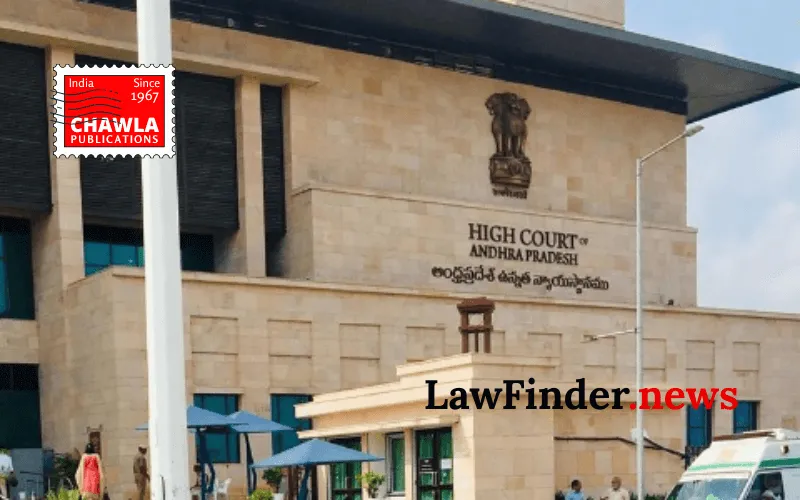
In a significant decision dated September 11, 2026, the Andhra Pradesh High Court, through Justice Alapati Giridhar, has upheld and enhanced compensation awarded in a motor accident claim involving the Andhra Pradesh State Road Transport Corporation (APSRTC) and the family of the deceased, Vellanki Venkateswara Rao. The judgment not only revisits the quantum of compensation but also extensively deliberates on the necessity for realistic costs and advocate fees, aiming to strengthen judicial administration and discourage frivolous litigation.
The case stemmed from a tragic road accident on November 24, 2001, where the deceased, employed as a college clerk, was fatally injured due to rash and negligent driving by the driver of an APSRTC bus. The Claimants - mother, wife, son, and daughter - initially sought Rs.7.10 lakh as compensation before the Motor Accident Claims Tribunal (MACT).
The Tribunal had awarded Rs.7.10 lakh, relying on salary certificates and witness testimony to assess the deceased's monthly income at Rs.5,900 and applying a multiplier of 15. However, APSRTC challenged the award, contending that the multiplier should be 14 based on the deceased's age of 41 years and criticized the evidence supporting the income assessment.
Upon review, the High Court affirmed the Tribunal's finding on liability and the monthly income but applied the Supreme Court's guidelines from the landmark National Insurance Company v. Pranay Sethi (2017) case for calculating compensation. The Court accepted a 30% addition to the income as future prospects, considering the permanent nature of the deceased's employment and adjusted the deduction for personal expenses to one-fourth (instead of one-third), given four dependents.
Applying a multiplier of 14, the Court enhanced the loss of dependency compensation to Rs.9,66,420. Additionally, pursuant to the Pranay Sethi and United India Insurance Co. v. Satinder Kaur (2020) rulings, the Court increased the amounts for loss of consortium (Rs.48,000 per claimant), loss of estate (Rs.18,000), and funeral expenses (Rs.18,000), culminating in a total enhanced compensation of Rs.11,94,420.
Significantly, the Court addressed the prolonged pendency of the Appeal-nearly 20 years-attributable to the APSRTC's delays, noting the negative impact on the Claimants and the judiciary's image.
The judgment also delved deeply into the law on costs and advocate fees, referencing Full Bench decisions such as Salem Advocate Bar Association v. Union of India (2005) and Sanjeev Kumar Jain v. Raghubir Saran Charitable Trust (2012). The Court highlighted the mismatch between outdated advocate fee rules and the contemporary need for realistic cost awards to reimburse successful parties adequately and deter frivolous litigation.
While the Court was constrained to fix advocate fees at Rs.25,000 under the existing Andhra Pradesh Advocates' Fee Rules, 2010, it urged a revision of these rules. It recommended introducing provisions for enhanced fees-potentially up to three times the standard amount-in cases involving frivolous or vexatious pleas, prolonged litigation, or misuse of procedural orders, thereby promoting judicial efficiency and fairness.
Further, the Court emphasized the responsibility of public sector litigants to avoid unnecessary delays and comply with procedural norms, warning of departmental action against officers responsible for protracted appeals.
In sum, the Andhra Pradesh High Court's judgment is a comprehensive directive for ensuring just compensation in motor accident claims aligned with Supreme Court precedents, alongside robust judicial administration reforms to enhance cost awards and advocate fee structures, ultimately fostering expedited and equitable justice.
Bottom Line:
Motor Accident Claims - Compensation enhanced by the High Court considering future prospects, deduction for personal expenses, and applicable multiplier as per the guidelines laid down by the Supreme Court in Pranay Sethi case.
Statutory provision(s): Motor Vehicles Act, 1988, Code of Civil Procedure, 1908 (Section 35, 35-A, 95), Advocate Fee Rules, 2010 (Andhra Pradesh)