Court rules that monetary penalties and seigniorage fees imposed by executive officers under amended Rules 26 and 34 of Andhra Pradesh Minor Mineral Concession Rules, 1966, do not contravene the Mines and Minerals (Development and Regulation) Act, 1957; imprisonment provisions require court proceedings.
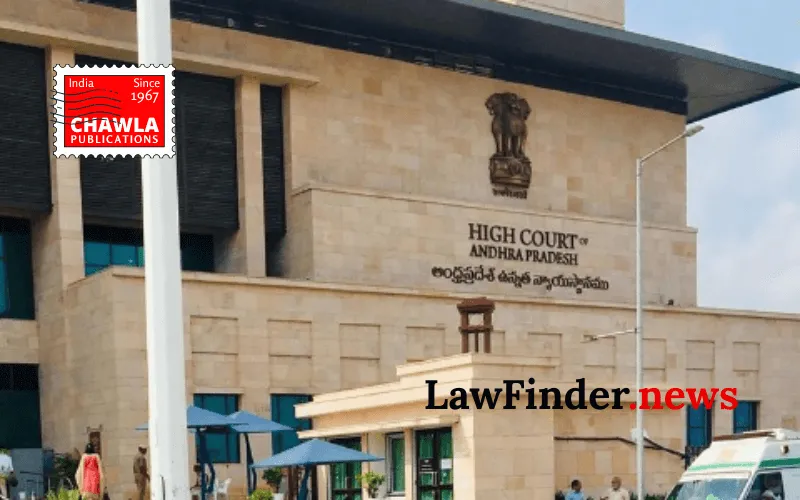
In a significant decision impacting the regulation of minor minerals in Andhra Pradesh, the Division Bench of the Andhra Pradesh High Court, led by Chief Justice Lisa Gill and Justice Ravi Cheemalapati, on July 29, 2026, upheld the validity of amendments made to Rules 26 and 34 of the Andhra Pradesh Minor Mineral Concession Rules, 1966 (APMMC Rules). The judgment confirms the State Government's authority to impose monetary penalties, seigniorage fees, and other charges through executive officers for illegal mining, transportation, and storage of minor minerals.
The case arose from a series of writ petitions and appeals challenging the amendments introduced by the Government Order (G.O.Ms.No.35) dated July 1, 2020, which removed the provision for imprisonment in Rule 26 and enhanced the imposition of penalties by executive officers, such as Assistant Directors of Mines & Geology. Petitioners contended that penal actions, particularly imprisonment and fines, could only be imposed by a court of competent jurisdiction as per Sections 21 and 22 of the Mines and Minerals (Development and Regulation) Act, 1957 (MMDR Act), and that the amendments were ultra vires the parent Act.
Key Issues Addressed:
1. Scope of Executive Authority vs. Court Jurisdiction: The court examined whether executive officers had jurisdiction to impose penalties or whether such action was solely within the purview of criminal courts. It clarified that while imprisonment requires a trial and conviction by a competent court, imposition of monetary penalties, seigniorage fees, and related charges by authorized officers under the amended rules is valid and serves as a deterrent against illegal mining.
2. Validity of Amendments to Rules 26 and 34: The amendments, which shifted from criminal penalties including imprisonment to enhanced monetary penalties and administrative sanctions such as suspension or termination of leases, were scrutinized for consistency with the MMDR Act. The court found these amendments to be within the statutory powers of the State under Sections 15 and 23C of the MMDR Act, which empower the State to regulate minor minerals and prevent illegal mining.
3. Interpretation of Statutory Provisions: The court emphasized that rules framed under a statute must align with the parent Act and not exceed its scope. It held that the APMMC Rules, including the amendments, were not ultra vires the MMDR Act but were designed to effectively curb illegal mining activities through administrative penalties.
4. Environmental and Societal Concerns: The court underscored the seriousness of illegal mining's impact on the environment and society and recognized the rules as necessary deterrents to prevent exploitation of natural resources.
Background:
The legal challenge began with writ petitions filed by various lessees and mineral concession holders contesting demand and show cause notices issued under Rule 26(3)(ii) for alleged unauthorized mining activities. Earlier, the 2016 amendment to Rule 26 included provisions for imprisonment, which the court ruled could only be imposed by a criminal court. Following that, the 2020 amendment removed imprisonment from the rule but enhanced monetary penalties.
The State argued that the amendments were a necessary measure to empower executive officers to act swiftly and effectively against illegal mining, which is a major issue affecting resource management and environmental sustainability.
Judicial Reasoning:
The court referred extensively to the MMDR Act provisions, including Sections 4 (license and lease requirements), 15 (State's power to make rules for minor minerals), 21 (penalties), and 23C (power to make rules preventing illegal mining). The bench noted that Section 21(2) expressly permits rules to provide for punishment of contraventions, and Section 23C authorizes the State to make rules to prevent illegal mining, including administrative mechanisms.
Citing precedent cases such as Karnataka Rare Earth v. Senior Geologists and a Full Bench decision in L. Venkateswara Rao v. M/s. Singareni Collieries, the court held that monetary penalties and seigniorage fees could be levied by the executive, while imprisonment must be imposed by courts.
The judgment also dismissed the argument that the rules were inconsistent with the MMDR Act or beyond the legislative competence of the State. It highlighted that the amendments serve a crucial deterrent function and help avoid placing wrongdoers beyond accountability.
Outcome:
- - The writ petition challenging the amendments was dismissed.
- - The earlier single bench orders that had set aside demand notices on the ground of lack of jurisdiction were set aside.
- - The amendments to Rules 26 and 34 of the APMMC Rules, 1966, as per G.O.Ms.No.35 dated July 1, 2020, were upheld.
- - Executive officers are authorized to impose monetary penalties and seigniorage fees for illegal mining activities.
- - Imprisonment provisions, when applicable, require complaint and trial before a court of competent jurisdiction.
- - Appeals against demand notices will be entertained within the statutory framework.
Significance:
This ruling reinforces the State Government's regulatory power over minor minerals and clarifies the scope of executive authority to impose penalties. It also balances administrative enforcement with judicial oversight concerning criminal sanctions. The judgment is expected to strengthen efforts to combat illegal mining and protect environmental interests while providing clear procedural guidance for enforcement agencies and stakeholders.
Bottom Line:
Amendment of Rules 26 and 34 of the Andhra Pradesh Minor Mineral Concession Rules, 1966, upheld. Imposition of monetary penalties, seigniorage fees, and other charges for illegal mining, transportation, and storage of minerals by executive officers is valid and does not contravene the provisions of the Mines and Minerals (Development and Regulation) Act, 1957.
Statutory provision(s): Mines and Minerals (Development and Regulation) Act, 1957 Sections 4, 15, 21, 22, 23C; Andhra Pradesh Minor Mineral Concession Rules, 1966 Rules 26, 34; Government Orders G.O.Ms.No.35 (01.07.2020), G.O.Ms.No.37 (14.03.2016)