New Delhi, Aug 4 Observing that State Bar Councils have increasingly become "men’s clubs", the Supreme Court on Tuesday directed the Chief Justices of the jurisdictional High Courts to nominate two co-opted women members to each State Bar Council.
The apex court said the two women members co-opted shall be nominated from among former women High Court judges or senior women members of the Bar.
The top court, in December 2023, had ordered that 30 per cent representation in State Bar Councils be provided to women lawyers. To address contingencies where an insufficient number of women is elected, the bench had allowed for a “co-option” mechanism to fill up to 10 per cent of those seats.
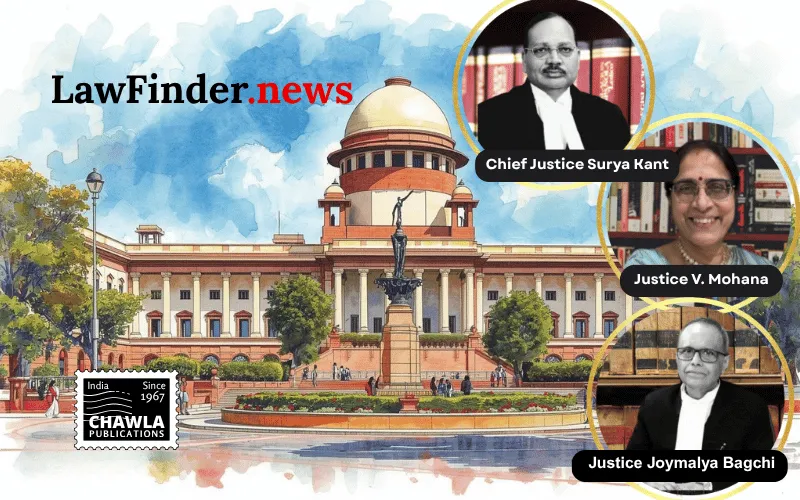
A bench comprising Chief Justice Surya Kant and Justices Joymalya Bagchi and V Mohana was hearing matters relating to the implementation of its earlier directions aimed at ensuring 30 per cent effective representation for women lawyers in executive committees of the State Bar Councils.
"In our considered opinion, it will infuse objectivity, independence and transparency in the working of the State Bar Council. We, accordingly, direct that two women candidates to be co-opted in the State Bar Councils shall be nominated from among former women judges of the jurisdictional High Court or senior woman members having a fair standing at the Bar," the bench said.
During the hearing, the CJI remarked that the monopoly associated with bar council representation has to be dismantled.
"Bar Councils have become men’s clubs. We may observe that people take it like a monopoly. This has to be completely dismantled,” the CJI observed orally.
The court also referred the issue of the methodology for transfer of votes in Bar Council elections to the high-powered election supervisory committee headed by former apex court judge Justice Sudhanshu Dhulia for fresh consideration.
Senior advocate Gopal Sankaranarayanan, appearing for the petitioners, raised the issue of the recent Bar Council of India resolution to increase the State Bar Council seats and said it could not change the statutory limit of seats.