Court holds that prima facie arbitration agreement exists and leaves contested issues of forgery and non-signatory involvement to Arbitral Tribunal for adjudication
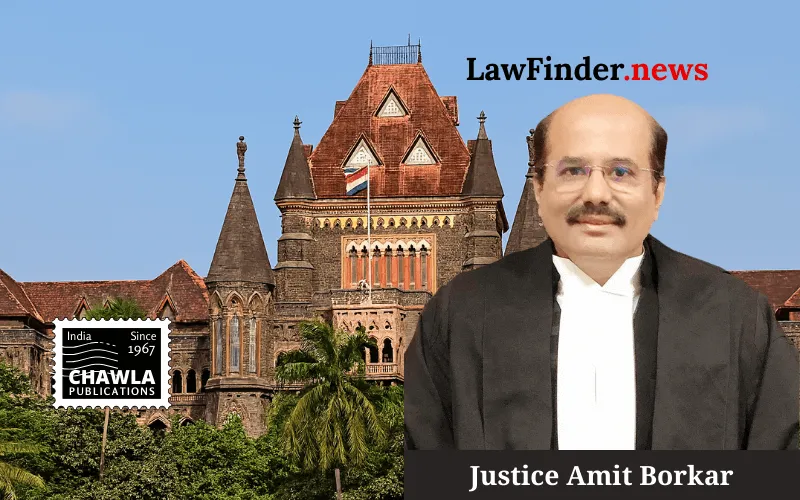
In a significant judgment dated August 27, 2026, the Bombay High Court, presided over by Justice Amit Borkar, allowed the appointment of a Sole Arbitrator to resolve disputes arising from a Development Agreement concerning the redevelopment of the ‘Patkar House’ property. The decision underscores the court’s approach in arbitration matters where allegations of forgery and disputes over the existence and validity of arbitration agreements are raised.
The dispute originated from a Development Agreement dated December 18, 2024, executed between the Applicant, Kiran Narendra Patkar, who was designated the Developer, and the Owners of Patkar House, including Respondent No.1, Milan Narendra Patkar. The agreement granted the Applicant exclusive and irrevocable redevelopment rights. However, Respondent No.1 allegedly breached these terms by executing a Gift Deed in favor of Respondent No.2, which purportedly infringed upon the Applicant’s redevelopment rights.
Following the invocation of the arbitration clause by the Applicant through a notice dated June 15, 2026, the Respondents declined to consent to the appointment of the Sole Arbitrator nominated by the Applicant. Consequently, the Applicant filed an application under Section 11 of the Arbitration and Conciliation Act, 1996, seeking the Court’s intervention in appointing the arbitrator.
The Respondents contested the existence of the arbitration agreement, alleging forgery and disputing the execution of the Development Agreement, citing the advanced age and ill health of the late Mr. Narendra Dattaram Patkar, who was a co-owner and signatory to the agreement. They also challenged the enforceability of the arbitration agreement on grounds that the Development Agreement was unregistered and insufficiently stamped. Additionally, Respondent No.2 claimed independent ownership rights under an earlier Gift Deed dated January 23, 2024, and contended that she was not a party to the arbitration agreement.
Justice Borkar undertook a careful prima facie examination of the documents and submissions. Importantly, the Court noted the existence of a registered Will dated April 11, 2025, which referenced the Development Agreement and supported the Applicant’s claim that the agreement was known and relied upon by the parties involved. Furthermore, the recital of the Gift Deed dated February 4, 2026, executed by Respondent No.1 in favor of Respondent No.2, referred to this Will, reinforcing the contention that the Development Agreement was recognized in subsequent transactions.
Applying established Supreme Court precedents, including Rajia Begum (2026) and Ajay Madhusudan Patel (2025), the Court held that while allegations of forgery and fraud are serious, they do not automatically preclude arbitration. The Court emphasized that the limited inquiry at the Section 11 stage is to determine if there is a prima facie arbitration agreement, leaving disputed factual and evidentiary issues, such as forgery and non-signatory involvement, to be adjudicated by the Arbitral Tribunal under Section 16 of the Act.
The Court further clarified that Respondent No.2’s status as a non-signatory and her claim over certain shops under an earlier Gift Deed raised complex jurisdictional questions best suited for the Arbitral Tribunal’s determination. The appointment of the Sole Arbitrator did not constitute a final decision on whether Respondent No.2 is bound by the arbitration agreement.
In conclusion, the Bombay High Court allowed the Section 11 application, appointing Mr. Ranjeev Carvalho, Advocate, as the Sole Arbitrator to adjudicate disputes between the Applicant and Respondent No.1. The Court directed that the Arbitrator should consider all objections relating to the arbitration agreement’s existence, validity, and enforceability. It also explicitly reserved all substantive issues, including allegations of forgery and title disputes, for the arbitration proceedings.
The judgment reinforces the principle that courts should adopt a limited and prima facie approach at the Section 11 stage, promoting arbitration as an effective dispute resolution mechanism while safeguarding parties’ rights to challenge jurisdiction and validity before the Arbitral Tribunal.
Bottom Line:
Arbitration and Conciliation Act, 1996 - Prima facie existence of arbitration agreement established - Appointment of Sole Arbitrator justified even when allegations of forgery and non-signatory involvement are raised - Objections regarding the existence and enforceability of the arbitration agreement can be adjudicated by the Arbitral Tribunal.
Statutory provision(s): Arbitration and Conciliation Act, 1996 - Section 11(6), Section 11(12)(a), Section 16, Section 21, Section 9, Section 17
Kiran Narendra Patkar v. Milan Narendra Patkar, (Bombay) : Law Finder Doc Id # 2968074