Court affirms policy decision emphasizing public safety, indigenization, and procedural compliance under General Financial Rules, dismissing challenge by petitioner challenging tender process and technical evaluation.
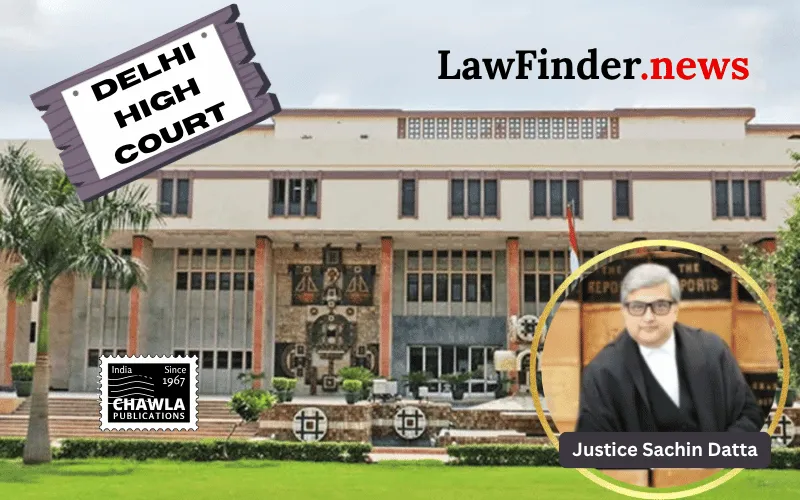
In a landmark judgment dated August 31, 2026, the Delhi High Court, presided over by Justice Sachin Datta, dismissed the writ petition filed by Utimaco Technologies Pvt Ltd. (formerly M/s Celltick), challenging the Union of India's decision to appoint the Centre for Development of Telematics (C-DOT) as the sole implementing agency for the nationwide Cell Broadcasting System (CBS) under the Common Alerting Protocol (CAP) based Integrated Alert System named "Sachet."
The petitioner, a provider of cell broadcast services, contended that the appointment of C-DOT bypassed the statutory primacy of the National Disaster Management Authority (NDMA), violated the General Financial Rules (GFR), 2017 by avoiding an open tender process, and ignored technical evaluation reports that found C-DOT's initial proposal non-compliant. The petitioner also raised concerns about breach of legitimate expectation, asserting that telecom service providers (TSPs) had the autonomy to select their implementation partners, a right curtailed by the government's decision.
The Court meticulously analyzed the factual matrix, noting that the Sachet project is a critical public safety initiative aimed at rapid dissemination of emergency alerts during disasters. The project's unique nature and sovereign character significantly influenced the scope of judicial review.
Key findings of the Court include:
1. No Enforceable Right in Petitioner:
The Court observed that the petitioner's involvement was limited to proof-of-concept trials at the behest of TSPs and under government supervision. No formal contractual commitment or Letter of Award was issued to the petitioner by the government, thus narrowing the scope of challenge.
2. Statutory Role of NDMA and Government Authority:
While NDMA had flagged concerns and recommended a multi-vendor or open tender approach, the Ministry of Home Affairs (MHA), vested with ultimate authority under the Government of India (Allocation of Business) Rules, 1961, took a considered policy decision to appoint C-DOT as the sole implementing agency. NDMA later aligned with and effectuated this decision, including issuing the Request for Proposal (RFP) to C-DOT and signing a Memorandum of Understanding (MoU).
3. Compliance with General Financial Rules, 2017:
The Court accepted that the procurement involved "non-consulting services," governed by Rule 204 of the GFR, which permits nomination in exceptional circumstances with proper justification and financial concurrence. The decision to appoint C-DOT satisfied these requirements, with the justification recorded and approvals obtained through the Appraisal Committee, the Sub-Committee of the National Executive Committee (SC-NEC), and the Union Home Minister.
4. Judicial Review Limits and Policy Decisions:
Emphasizing judicial restraint, the Court reiterated that courts do not substitute their own technical or strategic judgment in policy matters, especially those involving national security and public safety. The Court's role is confined to scrutinizing the decision-making process for arbitrariness, mala fides, or procedural impropriety. No such infirmities were found.
5. No Post facto Rationalization:
The Court clarified that justifications such as "natural continuation," "urgency," "national security," and promotion of "indigenous technology" were not afterthoughts but traceable from the contemporaneous record, including prior MoUs, technical certifications, and government communications, thus satisfying the principle from Mohinder Singh Gill and its subsequent interpretations.
6. Project Progress and Public Interest:
The Court observed that the project had advanced significantly, with the MoU executed, technical certifications granted, and the system launched in May 2026. Interference at this stage would disrupt an operational early-warning system, potentially endangering public safety.
7. Remedy for Petitioner:
The Court noted that if the petitioner suffered any quantifiable loss due to the decision, its remedy lies in seeking damages through appropriate civil proceedings and not through writ jurisdiction.
In conclusion, the Delhi High Court upheld the government's decision as lawful, bona fide, and in the larger public interest, dismissing the petition with strong observations urging future procurements by nomination to explicitly record the applicable GFR provisions and justifications to avoid ambiguity.
This judgment underscores the judiciary's approach of respecting executive discretion in national security and public safety projects, while ensuring adherence to procedural safeguards and financial rules.
Bottom Line:
Judicial review of policy decisions is limited to the decision-making process, not the merits of the decision, and courts should exercise restraint in matters of technical and strategic importance, particularly when public safety is involved.
Statutory provision(s):
Disaster Management Act, 2005, General Financial Rules, 2017 (Rules 194 and 204), Government of India (Allocation of Business) Rules, 1961
Utimaco Technologies Pvt Ltd. v. Union of India, (Delhi) : Law Finder Doc Id # 2971245