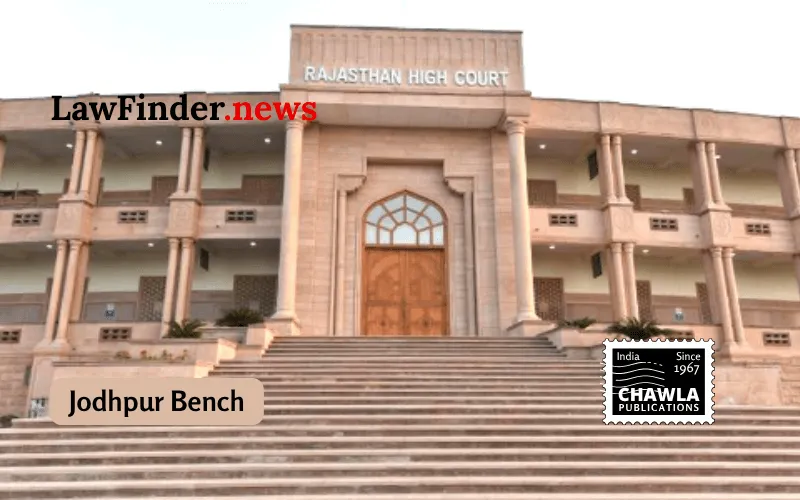
Jodhpur, Sep 6 The Rajasthan High Court has put in place a comprehensive regulatory framework for protecting the leopard habitat of Jawai in Pali district, including a one-km construction-control zone around identified caves, dens, breeding sites, corridors and other critical habitat features.
A division bench of Justices Pushpendra Singh Bhati and Rekha Borana, pronouncing its order on Saturday on a PIL, directed the authorities to strictly enforce the state government's March 31, 2015 order which bars new commercial activities such as hotels, resorts, besides industrial activity including mining and land conversion, within one km of the notified Jawai Leopard Conservation Reserves.
Importantly, the bench said the one-km distance would operate as an interim, evidence-based regulatory threshold, and not as a permanent ecological boundary.
The state has been asked to undertake geo-referenced mapping and ecological and carrying-capacity assessments before framing a comprehensive policy identifying areas requiring absolute protection and those where regulated activity may be permitted.
Under the directions, no new construction, hill cutting, blasting, excavation, roads or tracks, boundary walls or commercial structures will be allowed on identified leopard habitat features, irrespective of whether the land is privately owned, revenue land, community land or forest land. Restrictions will also apply to activities that block or materially disturb leopard movement or habitat.
The order, however, makes exceptions for bona fide residential construction within existing village abadi areas, repair or reconstruction of lawful houses without material expansion, and essential public facilities such as schools, Anganwadis, dispensaries and drinking-water infrastructure.
Traditional agriculture, grazing and customary livelihood activities have also been protected, subject to wildlife-friendly conditions.
The exercise will cover leopard caves and dens, breeding and resting sites, movement corridors, wetlands, water sources, settlements, roads and tourism clusters. The map is to be made public and displayed at the concerned gram panchayats.
The court has simultaneously tightened the regulation of wildlife tourism.
The existing Standard Operating Procedure (SOP) will continue across forest, revenue, community and private lands.
Night safaris, baiting, artificial illumination, drones, unauthorised entry into no-go areas and congregation of safari vehicles near leopard caves have been prohibited.
Safari vehicles and operators must be registered and GPS-enabled. Tourism establishments have also been barred from advertising or operating on the promise of guaranteed leopard sightings from rooms or private premises.
Mining restrictions imposed earlier will continue, while new barbed-wire fencing, solid walls or other compartmentalisation obstructing wildlife movement have also been prohibited. Existing fencing found to obstruct recognised wildlife corridors may be removed or modified after notice to the landholder.
The judgment came on the PIL filed by Apoorva Agrawat, seeking protection of leopard caves, dens, breeding sites and movement corridors and regulation of construction, tourism and safari activities in Jawai.
Earlier interim orders had restricted wildlife-spotting activities to specified hours and prohibited artificial devices such as spotlights and drones. On April 28, the court had also restrained construction without its permission, stayed mining and prohibited further barbed-wire fencing.
The bench has now merged the previous interim orders on three occasions dated March 23, April 20 and April 28 with the final judgment, making the new framework operative for the Jawai landscape.
The District Collector and Deputy Conservator of Forests, Pali, have been assigned responsibility for inter-departmental implementation.