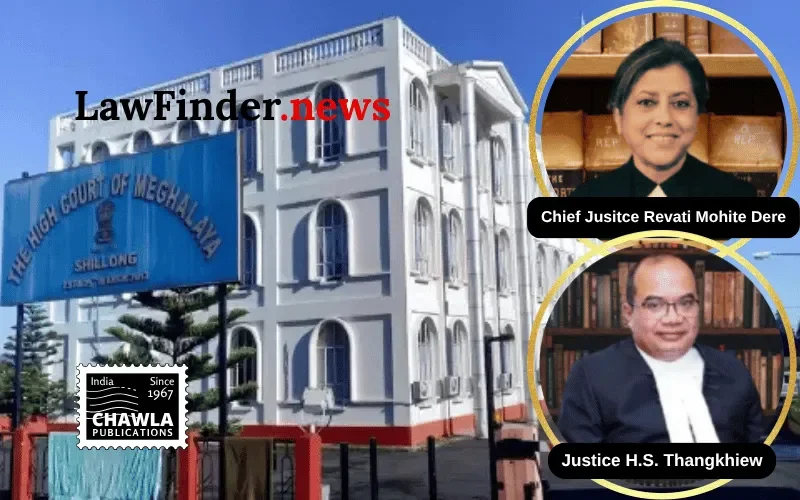
Call for Abstention from Judicial Work to Force Removal of Advocate General Held as Criminal Contempt; Court Warns Bar Councils to Take Disciplinary Action
In a landmark judgment dated October 8, 2026, the Meghalaya High Court (Division Bench) sternly reprimanded the Shillong Bar Association and the High Court of Meghalaya Bar Association for their call to abstain from judicial work across all districts until the Advocate General of Meghalaya was removed. The court held that such a strike or boycott is illegal, unprofessional, and constitutes criminal contempt under Section 2(c) of the Contempt of Courts Act, 1971.
The suo motu petition was registered after the Bar Associations' resolution dated September 30, 2026, which enforced a statewide judicial strike starting October 1, 2026. This abstention severely impacted judicial functioning, leaving litigants unrepresented and obstructing the administration of justice. The court noted with appreciation that the Baghmara Bar Association refused to support the strike, thereby upholding the rule of law.
Drawing extensively on the precedent set by the Supreme Court in Ex-Capt. Harish Uppal v. Union of India (2003) 2 SCC 45, the High Court reiterated that lawyers have no right to strike or boycott courts, even as a token protest. Advocates are officers of the court and owe duties not only to their clients but also to the judiciary to ensure smooth administration of justice. The court emphasized that refusal to attend court upon accepting a brief due to a strike call amounts to professional misconduct and contempt of court.
The judgment also underscored the role of Bar Councils under the Advocates Act, 1961, holding that the State Bar Council and Bar Council of India are mandated to take disciplinary action against advocates participating in such strikes. The court has accordingly impleaded the Bar Council of India as a party to the proceedings and summoned the Chairman of the Bar Council of Meghalaya to report on disciplinary measures taken against the protesting lawyers.
The High Court issued notices to the office bearers and executive members of the concerned Bar Associations under Section 15 of the Contempt of Courts Act, 1971, directing them to show cause why contempt proceedings should not be initiated for obstructing justice through the strike call. The court warned that if judicial work is not resumed immediately in other districts, contempt notices would also be issued against the presidents and secretaries of those District Bar Associations, excluding the Baghmara Bar Association.
The court further clarified that protests by lawyers, if any, must be peaceful and outside court premises, such as through press statements, marches, or symbolic protests like wearing bands. Judicial work cannot be halted or adjourned due to lawyer strikes, and courts must continue functioning irrespective of such abstentions.
This judgment reinforces the constitutional mandate under Article 215 and the Contempt of Courts Act, 1971, that safeguards the independence of the judiciary and ensures uninterrupted access to justice for the public. It sends a clear message that lawyers must adhere to professional ethics and cannot leverage strikes to pressurize the government or the judiciary.
Bottom Line:
Contempt of Court - Call for abstention from judicial work by Bar Associations to compel removal of Advocate General is illegal and amounts to obstruction of administration of justice - High Court held such abstention constitutes criminal contempt and issued notice to office bearers of Bar Associations and Bar Councils.
Statutory provision(s):
Contempt of Courts Act, 1971 Section 2(c), Section 15; Constitution of India, Article 215; Advocates Act, 1961.