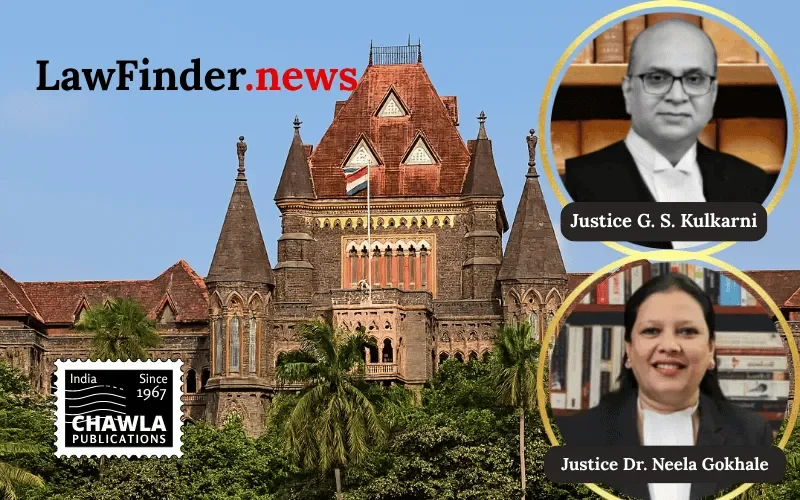
Court says right to a clean and healthy environment under Article 21 overrides unregulated festive celebrations; orders awareness drives, complaint helplines and strict enforcement in silence zones
In a significant ruling on public health and environmental protection, the Bombay High Court has clarified that its earlier directions against noise and air pollution during festivals apply throughout the year and across all festivals in Maharashtra, and are not limited to the Ganpati season.
A Division Bench of Justice G.S. Kulkarni and Justice Dr. Neela Gokhale, hearing a suo motu public interest litigation along with connected matters, ordered a total ban on bursting firecrackers on public streets, roads, lanes, footpaths and other public places during festivities anywhere in the State. The court also directed complete restraint on the use of firecrackers in silence zones, including areas around hospitals, government offices, courts and schools.
The Bench said festive celebrations cannot come at the cost of the constitutional and legal rights of citizens, especially senior citizens, children, students, and those who are ill. Stressing that the right to life under Article 21 includes the right to a clean and healthy environment, the court held that no citizen can claim a right to deprive others of a pollution-free environment.
The court expressed serious concern over worsening air quality in cities such as Mumbai, Pune, Thane, Navi Mumbai and Kalyan-Dombivli, particularly during the post-monsoon season when haze and smog persist. Referring to alarming Air Quality Index levels, including readings touching 425 in parts of Mumbai, the Bench observed that firecrackers add dangerous levels of smoke, toxic gases, heavy metals and particulate matter to already polluted urban air.
The judgment noted that firecrackers release substances such as lead, barium, strontium, copper compounds, cadmium and antimony, all of which carry serious health risks ranging from respiratory irritation and organ damage to neurological harm and carcinogenic effects. The court said that while bursting firecrackers may be seen as celebration or amusement, it cannot be permitted at the cost of societal health.
Relying on the Supreme Court’s decision in Noise Pollution (V), In re (2005) 5 SCC 733, the High Court reiterated that noise pollution is a health hazard and a public nuisance, and that citizens have a right to sleep, leisure, silence and a pollution-free life. It also referred to the principle that freedom of expression includes, by implication, the freedom not to listen.
The Bench rejected any suggestion that the earlier order dated 22 September 2026 was festival-specific. It made clear that there can be no selective enforcement depending on the season or occasion. According to the court, the regulatory framework under the Noise Pollution (Regulation and Control) Rules, 2000 must operate uniformly throughout the year.
To ensure compliance, the court directed the Municipal Corporation and the Maharashtra Pollution Control Board to jointly publish notices in newspapers, electronic media and social media informing the public that burning firecrackers in public places will not be permitted. These notices must also educate citizens about the harmful effects of toxic emissions and appeal to them to refrain from using crackers that generate noise and smoke.
The State Government, Municipal Corporation and Pollution Control Board have been asked to set up an awareness mechanism within one week. This is to include school-level awareness programmes, public announcements, and display messages on buses, bus stops, trains and other public places ahead of festivals. The authorities have also been told to encourage the use of green crackers and compliance with prescribed time limits under applicable rules.
In addition, the court ordered the creation of a complaint redressal system with dedicated telephone numbers and ward-wise email addresses. The Collector, Municipal Commissioner and Commissioner of Police must each appoint nodal officers for coordination and enforcement, while the Chief Secretary has been directed to nominate a Principal Secretary for inter-departmental coordination. Field staff are also to be equipped with decibel meters and other devices to measure noise and air pollution, and complaints must be acted upon promptly.
The court underlined that the issue is not about stopping festivals, but about regulating celebrations in a manner consistent with public health, environmental norms and constitutional duties. Referring to Articles 51A(g) and 51A(j), the Bench reminded citizens of their fundamental duty to protect and improve the natural environment and to strive for collective excellence.
The matter has been posted for further hearing on 25 November 2026.
Bottom Line:
Noise and environmental pollution - Firecrackers during festivals - Total ban on bursting of firecrackers on public streets, roads and public places during festivities held applicable throughout the year and to all festivals across Maharashtra - Complete restraint in silence zones - Right to clean and healthy environment under Article 21 held to prevail over unregulated celebratory activities causing noise and air pollution - Authorities directed to create awareness, complaint and enforcement mechanisms.
Statutory provision(s): Article 21 of the Constitution of India, Article 51A(g) of the Constitution of India, Article 51A(j) of the Constitution of India, Environment (Protection) Act, 1986, Noise Pollution (Regulation and Control) Rules, 2000, Rules 3, 5A, 6, 7 and 8 of the Noise Pollution (Regulation and Control) Rules, 2000, Bharatiya Nyaya Sanhita, 2023, Explosives Act, 1884, Section 2(a) of the Air (Prevention and Control of Pollution) Act, 1981