Court highlights gross violation of employees' fundamental rights, directs freezing of assets and appointment of administrators across 44 defaulting educational institutions
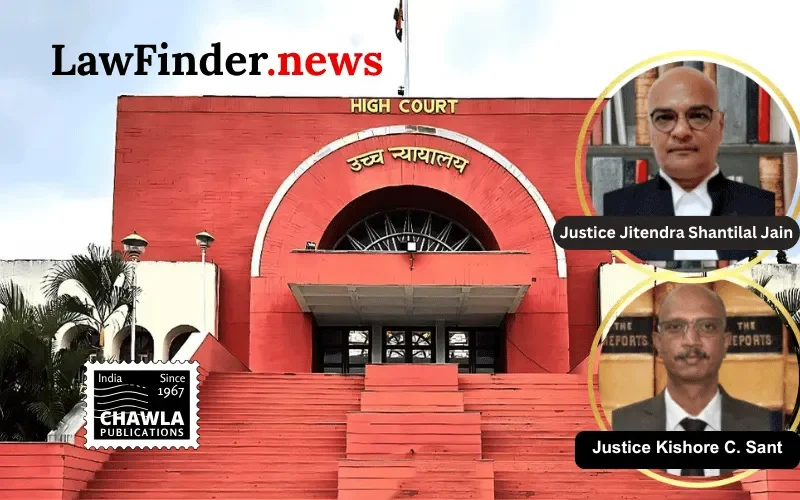
In a landmark decision dated November 10, 2026, a Special Bench of the Bombay High Court has taken a strong stand against the Sinhgad Technical Education Society (STES) for its prolonged failure to pay salaries and retirement dues to teaching and non-teaching employees of its 44 educational institutions. The case, involving approximately 220 writ petitions, exposes what the Court described as a "gross violation of fundamental rights" under Articles 14 and 21 of the Indian Constitution, highlighting the dire financial straits of employees, including tragic instances of suicides linked to non-payment.
The Court, led by Justices G.S. Kulkarni and Advait M. Sethna, noted that despite prior orders and solemn undertakings by the Managing Trustee, Mr. Maruti Navale, the promised release of over Rs. 60.65 crore towards outstanding dues was not honored. The Court expressed shock over the Society's conduct, which included filing false affidavits and undertaking sharp practices such as changing legal counsel mid-proceedings to avoid compliance.
Detailing the scale of the issue, the Court listed 44 institutions across various campuses in Pune and Lonavala, including engineering colleges, pharmacy colleges, management institutes, and schools, all of which have defaulted on salary payments for nearly eight years. The total outstanding dues were reported to exceed Rs. 400 crore. Despite regular student admissions and fee collections, the institutions failed to remunerate their employees, raising serious suspicions of diversion and siphoning off of funds by the trustees.
The Court criticized the inaction of state educational authorities, which allowed the crisis to escalate, leading to severe human suffering. It acknowledged the State Government's earlier steps, including de-recognition orders for 13 schools and appointment of administrators in some technical institutions, but found these insufficient given the magnitude of defaults.
In response, the Court ordered immediate investigations by the Central Bureau of Investigation (CBI), the Enforcement Directorate (ED) under the Prevention of Money Laundering Act, 2002, and Income Tax authorities into the affairs of STES and its trustees. The trustees' affidavits disclosed extensive shares and investments in various companies and banks, with suspiciously disproportionate income tax returns, suggesting possible money laundering and tax evasion.
The Court directed the freezing of all movable and immovable properties, bank accounts, and shareholdings of the STES and its trustees. It also ordered trustees to deposit their passports with the Court and imposed restrictions on their movements to ensure cooperation with investigations. Show cause notices for contempt of court were issued to Mr. Maruti Navale and other trustees for breaching the Court's prior orders.
Further, the Court instructed the State Education Department to either take over the institutions or facilitate the transfer of students to other schools to avoid disruption of education. It mandated continuation of administrators' control over technical institutions and invoked provisions of the Maharashtra Educational Institutions (Management) Act, 1976, and Maharashtra Educational Institutions (Transfer of Management) Act, 1971 for effective management and inquiry.
The Employees Provident Fund Authority was also directed to investigate compliance with statutory obligations. Meanwhile, the Charity Commissioner was asked to conduct an inquiry under the Maharashtra Public Trusts Act, 1950 to probe irregularities and breaches by the trustees.
This order sends a stern message to educational institutions about the sanctity of employee rights and the legal responsibilities of trustees, emphasizing that educational bodies cannot be run as commercial enterprises at the cost of employees' livelihoods. The Court's intervention underscores the judiciary's role in upholding the rule of law and protecting fundamental rights even in complex institutional cases.
The matter is scheduled for further hearing on November 19, 2026, to review progress on investigations and compliance with the Court's directions.
Bottom Line:
Non-payment of salaries and retirement dues by an educational institution amounts to a violation of the fundamental rights of employees under Articles 14 and 21 of the Constitution of India. Courts can direct investigations by CBI and Enforcement Directorate in cases involving large-scale fraud, money laundering, and misuse of funds by trustees of educational institutions.
Statutory provision(s):
Constitution of India Articles 14, 21, 215; Contempt of Courts Act; Prevention of Money Laundering Act, 2002; Delhi Police Establishment Act, 1946; Maharashtra Educational Institutions (Management) Act, 1976; Maharashtra Educational Institutions (Transfer of Management) Act, 1971; Maharashtra Public Trusts Act, 1950
Rohini Aniruddha Mohekar v. Maruti Nivruttti Navale, (Bombay)(DB) : Law Finder Doc Id # 3033586