Court Finds Punishment "Grossly Disproportionate," Orders Reinstatement with 50% Back Wages; Applies Doctrine of Proportionality
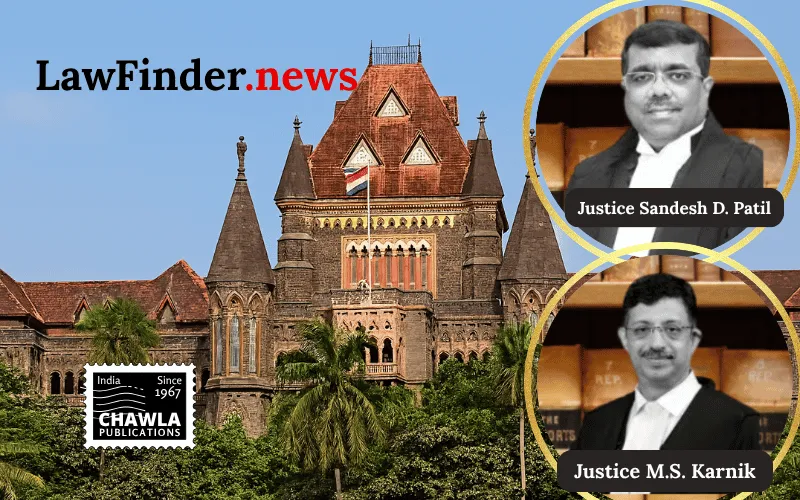
MUMBAI, September 16, 2026: In a landmark ruling that reaffirms the doctrine of proportionality in service law, the Bombay High Court on Tuesday quashed the compulsory retirement of Dr. Swapan Garain, a Professor at the prestigious Tata Institute of Social Sciences (TISS), who was penalised for creating a WhatsApp group for TISS alumni without institutional permission. A Division Bench comprising Justices M.S. Karnik and Sandesh D. Patil held that the punishment of compulsory retirement was "grossly disproportionate" to the alleged misconduct, invoking the celebrated legal maxim — "you cannot use a sledgehammer to crack a nut."
Background of the Case
Dr. Garain, who joined TISS on July 13, 1985, and served as a Professor in the School of Social Work for over three decades, was placed under suspension on March 29, 2016, after the institute alleged that he had created a WhatsApp group titled "TISSians Career Impact2" using the institute's official logo without prior permission. TISS contended that this amounted to operating a parallel placement service for personal gain, violating the Code of Conduct, misusing the institute's intellectual property, and breaching service rules under the Central Civil Services (Conduct) Rules, 1964.
Following a domestic inquiry conducted by a One Man Committee, Dr. Garain was compulsorily retired from service on September 6, 2017 — at just 58 years of age, seven years before his entitled retirement age of 65. His appeal was dismissed mechanically by the Appellate Authority on January 16, 2018, prompting him to approach the High Court.
Court's Key Findings
After a thorough review of the WhatsApp communications that formed the basis of the entire charge, the Division Bench found no evidence whatsoever of personal financial gain to Dr. Garain. The Court noted that the chats merely shared career opportunities, job postings, and information about government services — exclusively for TISS alumni and students. The Court further observed that the registered alumni association, TISS Alums Association (TISSAA), had neither filed any complaint nor appeared as a witness, making it difficult to establish what actual prejudice was caused to the institution.
Justice Sandesh D. Patil, writing for the Bench, observed:
"Merely starting a WhatsApp group by an employee without the permission of the organisation itself is not sufficient to put an end to a long-standing accomplished career of a person."
The Court found the Inquiry Officer's findings "perverse," noting that there was no finding that any funds raised were used for the Petitioner's personal benefit, no evidence of placement services being offered for consideration, and that the institute's logo, though briefly used, had subsequently been removed. The Court ruled that the punishment was "so strikingly excessive that it cannot be allowed to remain uncorrected."
Proportionality Doctrine Applied
The Bench extensively relied upon the Supreme Court's ruling in Ranjit Thakur v. Union of India (1987) and Omsairam Steels & Alloys (P) Ltd. v. State of Odisha (2024), reiterating that any penalty disproportionate to the gravity of misconduct would be violative of Article 14 of the Constitution. The Court emphasised that the doctrine of proportionality requires penalties to be commensurate with the gravity of the misconduct — "where a paring knife suffices, battle axe is precluded."
Relief Granted
The High Court allowed the Writ Petition and passed the following directions:
- - The orders of suspension (March 29, 2016), compulsory retirement (September 6, 2017), and dismissal of appeal (January 16, 2018) were quashed and set aside.
- - The Respondents — TISS and its authorities — were directed to pay 50% back wages from the date of termination till the date of superannuation, with continuity of service and all consequential benefits.
- - Retirement benefits are to be recomputed accordingly, and arrears paid within three months from the date of uploading of the order.
- - No costs were awarded.
The Court noted that the petitioner's counsel had fairly submitted, on instructions, that his client would be satisfied with 50% back wages — a pragmatic concession that the Court accepted in framing its relief.
Significance
This judgment sends a strong message to employers — both public and private institutions governed by service rules — that disciplinary authorities cannot impose extreme penalties for technical or minor infractions. It reinforces that Indian Constitutional Courts, while exercising judicial review, will intervene where punishment is shockingly excessive or where inquiry findings are demonstrably perverse, even if they generally defer to disciplinary authorities on factual findings.
Bottom Line:
Doctrine of proportionality applied to disciplinary punishment - Compulsory retirement for forming a WhatsApp group without permission deemed grossly disproportionate - Judicial review exercised due to perverse findings by Inquiry Officer.
Statutory Provisions:
CCS (Classification, Control and Appeal) Rules 1965, Rules 10, 14(19), 15(2) and 3(1); Central Civil Services (Conduct) Rules 1964, Rule 11; Information Technology Act 2000, Section 72.
Dr. Swapan Garain v. Tata Institute of Social Sciences, (Bombay)(DB) : Law Finder Doc Id # 2979921