Court rules posts held by deceased employees rightly classified as Group-C, cancellation notices based on outdated policy and pay-scale alone are unsustainable
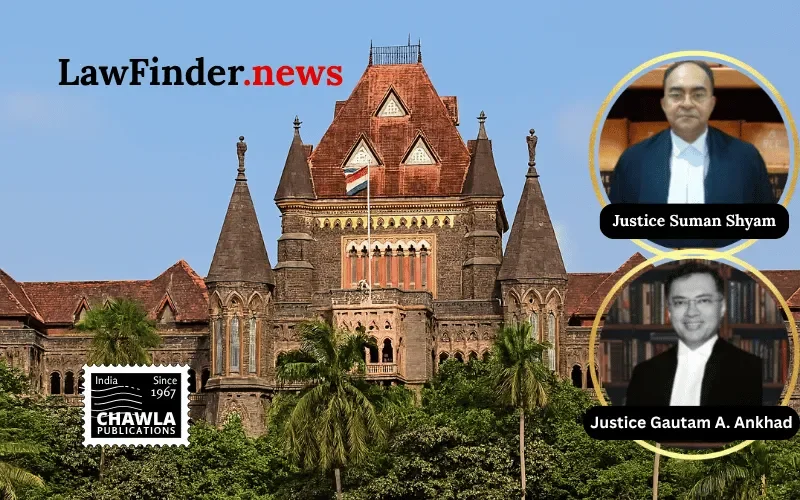
In a significant judgment delivered on October 30, 2026, the Bombay High Court (Division Bench comprising Justices Suman Shyam and Gautam A. Ankhad) quashed the Maharashtra Administrative Tribunal's dismissal of petitions challenging the cancellation of compassionate appointments made to dependents of deceased government employees. The court held that the petitioners, Shri Avinash Kondiram Wagh and Shri Abhay Chandrakant Khond, who had served continuously for nearly two decades after their appointments, could not be summarily removed based on an alleged misclassification of their fathers' posts.
The dispute arose when the State Government issued show-cause notices in 2010 proposing to cancel the compassionate appointments of the petitioners. The State contended that the posts held by their deceased fathers-carrying a pay-scale of Rs. 6,500-10,500/- were Group-B posts, making their dependents ineligible for compassionate appointment under the policy in force at the time. This classification was primarily based on a Government Resolution dated July 2, 2002, and a confidential departmental letter dated May 19, 2010.
However, the petitioners contested this classification by relying on subsequent Government Resolutions dated October 22, 2008; March 31, 2010; May 14, 2010; and August 31, 2010, which consistently categorized the post of Group Instructor (one of the posts held by the deceased employees) as a Group-C (Technical) post. The Court observed that these later resolutions had not been withdrawn, superseded, or set aside, and the departmental authorities failed to consider these while issuing the cancellation notices.
The Court underscored that the petitioners had joined service through due process, completed probation, and had been confirmed in service without any allegations of fraud, misrepresentation, or misconduct. It emphasized that compassionate appointments are a beneficial welfare measure intended to alleviate the sudden financial crisis faced by families of deceased employees. The drastic action of terminating the petitioners' services after such a long period, especially when they had crossed the usual entry age limits for government employment, would cause grave and disproportionate hardship and was contrary to principles of equity and fairness.
Relying on the Supreme Court's precedent in Md. Zamil Ahmed v. State of Bihar (2016) 12 SCC 342, the High Court held that the State could not take advantage of its own mistake after a long lapse of time. Furthermore, the Court noted that a Government Resolution dated September 27, 2021, had extended compassionate appointment eligibility to dependents of employees in Groups A and B as well, reflecting a policy shift in favor of the petitioners' cause.
Consequently, the Court set aside the impugned Tribunal judgment dismissing the petitioners' Original Applications and allowed the writ petitions. It directed that the petitioners continue in service without threat of termination on the grounds challenged, while clarifying that the order was passed based on the peculiar facts and should not be treated as a precedent.
This landmark ruling reaffirms the protective scope of compassionate appointments and the necessity for government authorities to adhere to consistent and updated policy frameworks, ensuring fairness and justice to employees and their families.
Bottom Line:
Compassionate appointment - Proposed cancellation after several years of confirmed service on the ground that deceased employees' posts were allegedly Group-B merely because of pay-scale held, unsustainable - Subsequent Government Resolutions specifically classifying posts as Group-C could not be ignored - In absence of fraud or misrepresentation and after long continuous service, termination would be inequitable and contrary to law.
Statutory provision(s):
Government Resolutions dated 2nd July 2002, 22nd October 2008, 31st March 2010, 14th May 2010, 31st August 2010, 27th September 2021; Maharashtra Administrative Tribunal Act (referred); Supreme Court judgment in Md. Zamil Ahmed v. State of Bihar (2016) 12 SCC 342