Court Holds Alternative Remedy Not Absolute Bar; Customs Authority Cannot Impose Subjective Morality to Declare Goods Prohibited
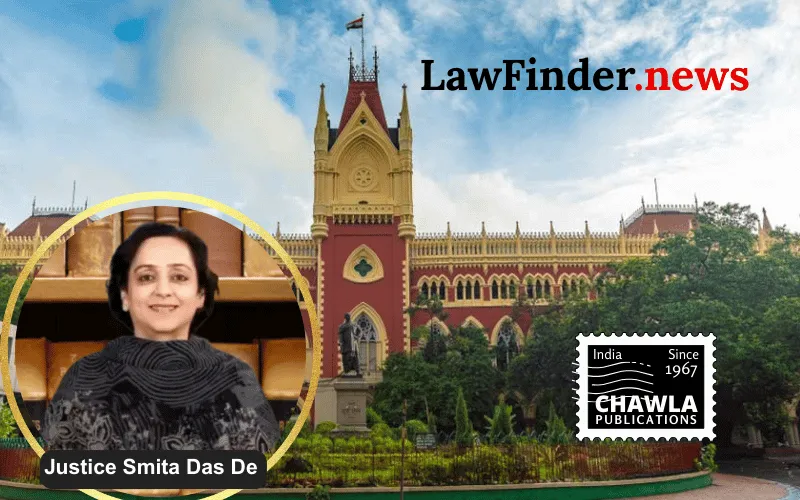
In a significant judgment delivered on September 14, 2026, the Calcutta High Court, presided over by Justice Smita Das De, ruled that a writ petition challenging the Customs authority's classification of certain "obscene adult sex toys" as prohibited goods is maintainable under Article 226 of the Constitution of India. The petition was filed by M/S. Pracha Alloy Private Limited against the Union of India and others.
The Court's decision underscores that while the Customs Act, 1962 provides an alternative statutory remedy through departmental appeals, such remedy is not an absolute bar to the High Court's writ jurisdiction when fundamental rights are at stake. The petitioner had bypassed the appeal process, approaching the High Court directly under Article 226, which was initially objected to by the revenue authorities.
Rejecting the preliminary objection, the Court relied on settled Supreme Court precedents, including the landmark Radha Krishan Industries case (2021), to clarify that the High Court exercises discretion in entertaining writ petitions despite alternative remedies, especially when statutory authorities act beyond objective legal boundaries and intrude upon fundamental rights such as the right to trade.
The crux of the dispute revolves around whether the Customs Department can classify goods as "prohibited" based purely on subjective moral considerations and vague references to Section 292 of the Indian Penal Code, without any specific statutory or notification-based prohibition. The Court held that such subjective moral biases cannot be a legitimate basis for prohibition under Sections 11 and 111(m) of the Customs Act, 1962. The Court emphasized that goods can only be prohibited if a clear statutory or notification-based bar exists.
Further, the Court noted that the petitioner raised serious issues about systematic misrepresentations of trade regulations by customs authorities across various customs houses, which warranted an authoritative judicial pronouncement rather than mere departmental appeals.
While the Court did not express any opinion on the merits of the case at this stage, it allowed the writ petition to be heard on merits and directed the respondents to file an affidavit in opposition within two weeks. The case is listed for further hearing on October 9, 2026.
This ruling reinforces the principle that the High Courts in India will intervene when statutory authorities exceed their jurisdiction and infringe upon citizens' fundamental rights, especially the right to trade, by resorting to subjective morality rather than objective law. It also clarifies the scope and limits of writ jurisdiction under Article 226 in the face of alternative statutory remedies.
Bottom Line:
Writ jurisdiction under Article 226 of the Constitution can be invoked even when an alternative statutory remedy exists, if the statutory authority acts outside the bounds of objective law and enters the realm of subjective morality, affecting the fundamental right to trade.
Statutory provision(s):
Article 226 of the Constitution of India, Sections 11, 111(m), 128, 129E of the Customs Act, 1962, Section 292 of the Indian Penal Code, 1860
M/S. Pracha Aalloy Private Limited v. Union of India, (Calcutta) : Law Finder Doc Id # 2979909