Court Holds Continuation of Criminal Case Post-Divorce and Settlement as Abuse of Judicial Process, Emphasizes Binding Nature of Undertakings in Family Court
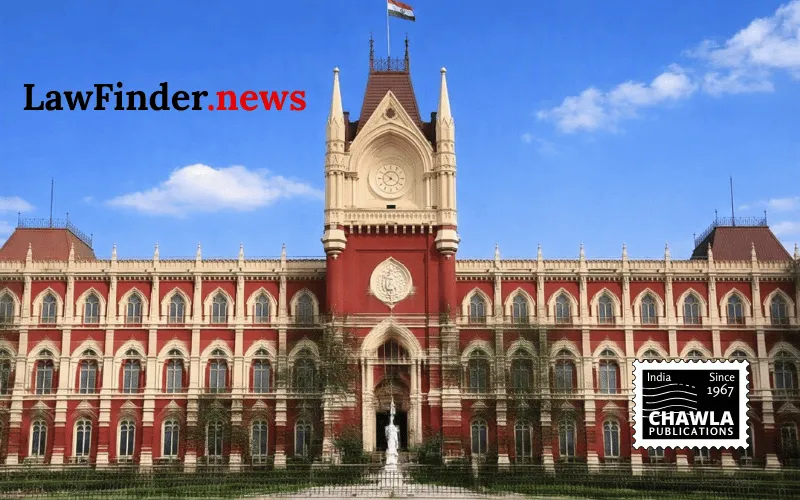
In a significant judgment delivered on 14th September 2026, the Calcutta High Court, through Justice Uday Kumar, quashed criminal proceedings initiated under Section 498A of the Indian Penal Code (IPC) against Sri Prince Bansal. The case arose from a matrimonial dispute that culminated in a criminal case filed by the petitioner's former spouse, Smt. Anamika Sarkar. The Court held that once the matrimonial disputes were amicably resolved, the marriage was dissolved by mutual consent, and all financial and dowry-related claims were settled, the continuation of criminal proceedings amounted to an abuse of the process of law.
The petitioner had approached the Court under Section 482 of the Code of Criminal Procedure, 1973 (Cr.P.C.) seeking quashing of the criminal case registered in Lake Town Police Station, Kolkata, which was pending before the Additional Chief Metropolitan Magistrate, Bidhannagar Court.
The factual matrix revealed that the petitioner and the complainant were married through a court marriage in July 2018 and a social marriage in December 2019. Due to irreconcilable differences, the couple separated in March 2020, after which criminal proceedings under Section 498A IPC were initiated by the complainant alleging cruelty.
However, after over three years of separation, the parties moved the Family Court in Dwarka, Delhi, for divorce by mutual consent under Section 13-B of the Hindu Marriage Act, 1955. The parties recorded a full and comprehensive settlement covering maintenance, dowry, permanent alimony, and stridhan. Notably, the complainant gave a solemn judicial undertaking before the Family Court to withdraw the pending criminal case upon grant of the mutual consent divorce.
The Family Court, relying on the Supreme Court's precedents, waived the six-month cooling-off period and granted the divorce decree in April 2023. Subsequently, the complainant remarried and started an independent family. Nevertheless, she reneged on her undertaking to withdraw the criminal case, refusing to cooperate with the proceedings in Kolkata, which compelled the petitioner to seek quashing of the criminal case.
Justice Uday Kumar, in his detailed judgment, underscored the inherent jurisdiction of the High Court under Section 482 Cr.P.C. to quash criminal proceedings that are an offshoot of matrimonial discord once the disputes have been amicably settled and the marriage dissolved. The Court emphasized that the non-compoundable nature of Section 498A offences does not limit the High Court's power to prevent abuse of judicial process when the ends of justice so demand.
The Court reaffirmed the binding nature of judicial undertakings given before the Family Court, drawing from landmark Supreme Court rulings such as B.S. Joshi v. State of Haryana, Gian Singh v. State of Punjab, Shlok Bharadwaj v. Runika Bharadwaj, and Ruchi Agarwal v. Amit Kumar Agrawal. The Court held that the complainant cannot approbate and reprobate by accepting the benefits of divorce while refusing to honor her commitment to withdraw criminal litigation.
Further, the Court observed that continuation of criminal proceedings where the complainant has moved on with her life, remarried, and no public interest remains, serves no societal purpose and is a clear abuse of the process of law. It is also an oppressive tool of harassment against the accused, which the Court must prevent.
Accordingly, the Calcutta High Court quashed the entire criminal proceeding registered under Section 498A IPC, along with the charge sheet and all consequential proceedings, thereby granting relief to the petitioner.
The judgment is expected to reinforce judicial prudence in handling matrimonial criminal cases, especially where parties have resolved their disputes amicably and moved forward with their lives. It highlights the judiciary's commitment to prevent misuse of criminal law provisions intended to protect women from cruelty, ensuring they are not wielded as instruments of harassment post-divorce.
Bottom Line:
Quashing of criminal proceedings under Section 498A IPC is permissible under Section 482 Cr.P.C. when matrimonial disputes have been amicably resolved, marriage dissolved by mutual consent, and all financial and other claims settled.
Statutory provision(s):
Section 482 Cr.P.C., Section 498A IPC, Section 13-B Hindu Marriage Act, 1955, Section 156(3) Cr.P.C., Section 320 Cr.P.C.
Sri Prince Bansal v. State of West Bengal, (Calcutta) : Law Finder Doc Id # 2978340