Court refuses to entertain writ petition filed after over 30 years without proof of representation submission, emphasizing need for timely legal recourse under Article 226
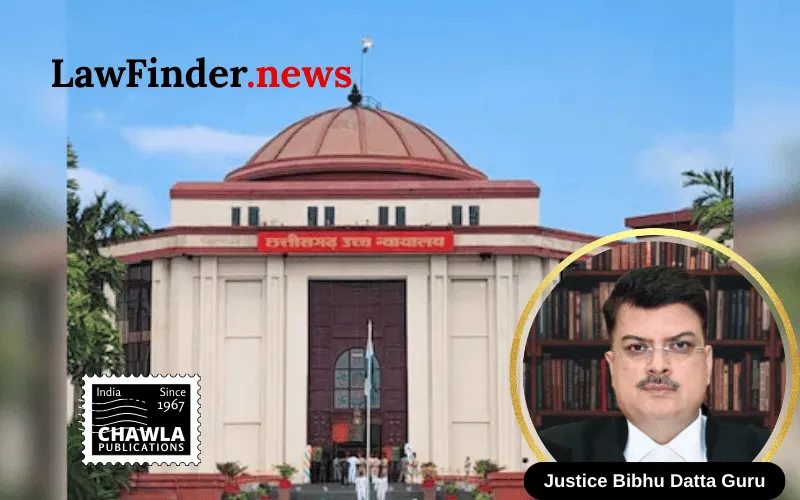
In a significant judgment delivered on October 6, 2026, the Chhattisgarh High Court, presided over by Justice Bibhu Datta Guru, dismissed a writ petition filed by Rajendra Kumar Mahant seeking payment of alleged service arrears of his late father, Ramlal Mahant, against South Eastern Coalfields Ltd. The petitioner claimed that his father, who retired in 2002 and passed away in 2015, had submitted a representation in 1996 for arrears relating to the period 1989 to 1994. However, the Court found the petition to be hopelessly stale, filed after an inordinate delay of more than three decades, without any proof of submission of the alleged representation or any explanation for the delay.
The petitioner's father was said to have been appointed as an Assistant Teacher, but the representation recorded his appointment as Peon, Category-II, indicating self-contradictory pleadings. The Court observed that the petitioner failed to provide any acknowledgment or receipt evidencing that the representation was ever submitted to the competent authority. Furthermore, the petitioner admitted to no delay in filing the petition, which the Court rejected as implausible.
Justice Guru reiterated the settled legal principle that while there is no prescribed limitation period for filing writ petitions under Article 226 of the Constitution, such petitions must be filed within a reasonable time to invoke the extraordinary and discretionary jurisdiction of the High Court. The doctrine of delay and laches is founded on the principles of repose, certainty, and finality in legal matters. The Court emphasized that a litigant who remains inactive for an unduly long period cannot revive stale claims at their convenience, as such delays may prejudice the rights of other parties and unsettle matters that have attained finality.
The Court noted that ignoring such an enormous delay without cogent explanation would be unjust and that no exceptional circumstances were brought to justify condonation of the delay. The petitioner's failure to place any foundational material supporting the alleged representation and the prolonged period of inaction led the Court to hold that no case was made out for the exercise of its extraordinary writ jurisdiction.
Accordingly, the writ petition was dismissed in limine on the grounds of delay and laches, thereby reinforcing the importance of approaching the Court with due diligence and within a reasonable timeframe for service-related claims.
Bottom Line:
Writ petition under Article 226 seeking direction for consideration of stale service claim of deceased employee's alleged arrears, filed after more than three decades without proof of submission of representation and without explanation for delay, is liable to be dismissed in limine on ground of delay and laches.
Statutory provision(s):
Constitution of India, 1950 Article 226
Rajendra Kumar Mahant v. South Eastern Coalfields Ltd., (Chhattisgarh) : Law Finder Doc Id # 2992103