Court dismisses appeal by property developer, affirms that complainant who paid Rs. 25 lakh under oral agreement is an "aggrieved person" entitled to seek relief under Section 31 of RERA, remanding case for fresh adjudication.
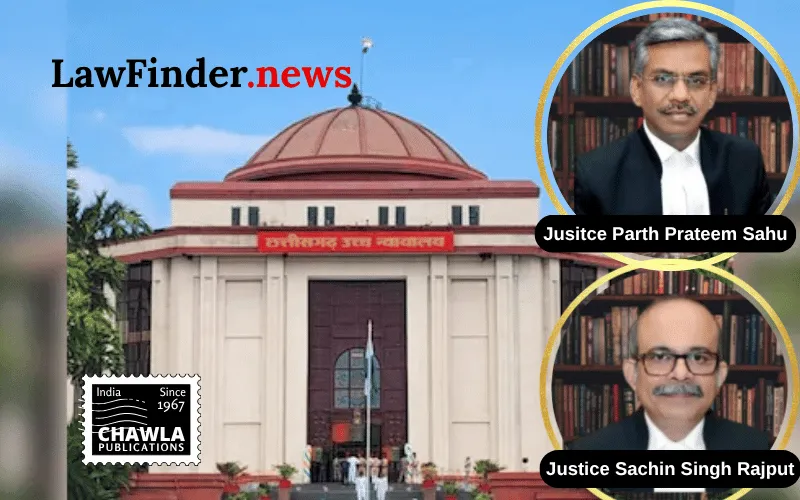
In a significant decision impacting real estate dispute resolution, the Chhattisgarh High Court (Division Bench) on August 21, 2026, dismissed an appeal filed by M/s. Fortune Resources And Properties LLP challenging a Real Estate Appellate Tribunal (REAT) order. The judgment affirms that oral agreements for sale of real estate, even in the absence of a written contract or allotment letter, can fall within the jurisdiction of the Real Estate Regulatory Authority (RERA) under the Real Estate (Regulation and Development) Act, 2016.
The case arose when Respondent No. 1, M/s. Y.P. Goel and Associates, lodged a complaint with the Chhattisgarh RERA alleging that the appellant had entered into an oral agreement to sell a shop located in "Rama World" at Raipur for Rs. 75 lakh. The complainant asserted having paid Rs. 25 lakh in installments through banking transactions over a period between 2020 and 2022. However, the appellant neither handed over possession nor executed a sale deed for the property. Instead, the complainant claimed the amount was illegally returned to him after nearly three years.
RERA initially dismissed the complaint on the grounds that no written agreement existed and that the complainant did not qualify as an "allottee" under Section 2(d) of the Act, which defines allottee as a person to whom a property is allotted, sold, or transferred by the promoter. The Authority held it lacked jurisdiction to entertain the complaint due to absence of formal allotment or sale agreement.
On appeal, the Real Estate Appellate Tribunal (REAT) reversed RERA's order, holding that the term "aggrieved person" under Section 31 of RERA is broad enough to include persons who enter into an oral agreement and make payments towards a property purchase. The Tribunal emphasized that lack of a written agreement does not oust the jurisdiction of RERA, especially when banking transactions and documentary evidence like balance sheets reflect the payment of consideration. The matter was accordingly remitted to RERA for fresh inquiry and adjudication in accordance with law.
The appellant challenged the REAT decision before the High Court, contending that mere payment without formal allotment or written contract does not confer "allottee" status or aggrieved person status. They argued that the matter involved disputed questions of fact unsuitable for summary adjudication and that the REAT's reliance on photocopies of balance sheets was misplaced.
The High Court, after hearing submissions, upheld the REAT's interpretation. The Court observed that RERA erred in dismissing the complaint on technical grounds without conducting the inquiry mandated under Rule 35 of the Chhattisgarh Real Estate Rules, 2017. The Court clarified that Section 31 allows any "aggrieved person" to file complaints, a term wider than "allottee," and that oral agreements supported by evidence of payment cannot be summarily dismissed. The High Court dismissed the appeal but emphasized that the merits of the case would be decided afresh by RERA following the Tribunal's directions.
This ruling reinforces the regulatory framework's consumer-friendly approach by recognizing oral agreements and banking evidence as valid grounds for RERA jurisdiction, ensuring that promoters cannot evade responsibility by withholding written documentation. It also highlights the procedural safeguards requiring authorities to conduct inquiries before dismissing complaints on technicalities.
Bottom Line:
Real Estate (Regulation and Development) Act, 2016 - An oral agreement for the sale of real estate can be considered under the Act, and a person who deposits money towards such a transaction may qualify as an "aggrieved person" under Section 31, regardless of the absence of a written agreement or allotment.
Statutory provision(s):
Real Estate (Regulation and Development) Act, 2016 Sections 2(d), 31, 35; Chhattisgarh Real Estate (Regulation and Development) Rules, 2017 Rule 35