Court Rules Fresh Recovery Proceeding Valid Despite Earlier Order Set Aside for Lack of Hearing; Emphasizes Need for Specific Pleading in Hardship Claims
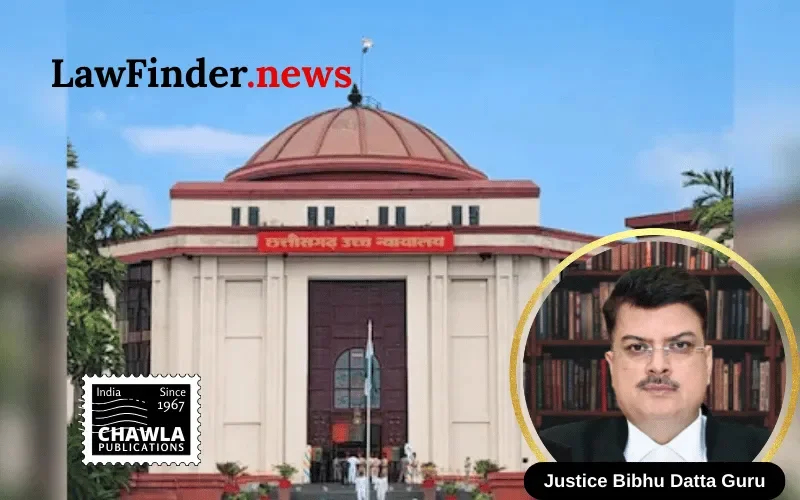
Raipur, October 29, 2026 - The Chhattisgarh High Court dismissed a writ petition filed by Umesh Pathak challenging the recovery of ₹1,56,865 from his retiral dues due to alleged excess payment arising from erroneous pay fixation. The Court reaffirmed the principle that recovery of excess public money is permissible even after an employee's retirement, provided due process is followed, including affording an opportunity of hearing and passing a reasoned order.
Umesh Pathak, who retired as Accountant Grade-I in the Higher Education Department on August 31, 2019, faced recovery proceedings initiated by the State of Chhattisgarh. The original recovery order dated July 13, 2020, was quashed by the High Court in March 2026 on the ground that it was passed without giving Pathak a hearing, violating principles of natural justice. The Court directed the respondents to reconsider the matter afresh, issue notice, provide hearing, and pass a reasoned order within three months.
Following this, Pathak submitted representations which were considered by the respondents, who passed a fresh recovery order dated June 16, 2026, confirming the recovery. Pathak then challenged this order, contending that the earlier quashing barred any further recovery and citing the Supreme Court judgment in State of Punjab v. Rafiq Masih (2015) to argue that recovery after retirement was impermissible.
The High Court rejected these contentions. It clarified that setting aside an earlier recovery order for breach of natural justice does not amount to a prohibition on passing a fresh recovery order if due process is followed. The Court emphasized that excess payment of public funds-taxpayers' money-does not become the recipient's property merely because it was paid erroneously. The petitioner's reliance on Rafiq Masih was distinguished, noting that each case must be examined based on its facts and applicable rules.
The Court further held that protection from recovery on grounds of financial hardship must be specifically pleaded and supported by evidence. Mere assertions of hardship are insufficient. Pathak failed to produce any material demonstrating exceptional circumstances that would justify withholding recovery. The Court cited recent Supreme Court decisions, including Dr. M.K. Ravi Varma v. National Institute of Technology (2026), which reaffirm the principle that recovery of excess payment is generally permissible unless proven exceptional hardship or fraud exists.
In conclusion, the High Court dismissed Pathak's writ petition, allowing the State to recover the excess salary paid due to erroneous pay fixation after retirement, reaffirming that adherence to due process and sound legal principles governs such recoveries.
Bottom Line:
Recovery of excess payment from retiral dues on account of erroneous pay fixation is not barred merely because an earlier recovery order was set aside for violation of natural justice; fresh recovery can be made after affording hearing and passing a reasoned order. Protection against recovery on ground of hardship must be specifically pleaded and proved.
Statutory provision(s):
Article 226 of the Constitution of India, Section 72 of the Indian Contract Act, 1872
Umesh Pathak v. State of Chhattisgarh, (Chhattisgarh) : Law Finder Doc Id # 3011052