Court Rules No Vested Right to Promotion Exists and Policy Decision to Alter Quota Is Within Employer’s Domain; Reduction Does Not Violate Articles 14 or 16 of the Constitution
In a significant judgment delivered on September 7, 2026, the Chhattisgarh High Court dismissed a writ petition filed by Junior Engineers challenging the reduction of the promotional quota for the post of Assistant Engineer from 70% to 40%. The petitioners contended that this reduction curtailed their promotional prospects and sought restoration of the earlier quota along with quashing of recruitment advertisements issued for direct recruitment.
The petitioners, appointed as Junior Engineers in 2018 and regularized subsequently, relied on a 2021 Board of Directors’ resolution prescribing 70% of Assistant Engineer posts to be filled through promotion. They argued that the later orders dated May 5, 2025, and July 22, 2026, which reduced the promotional quota to 40% and increased direct recruitment to 50%, adversely affected their legitimate expectations and right to promotion.
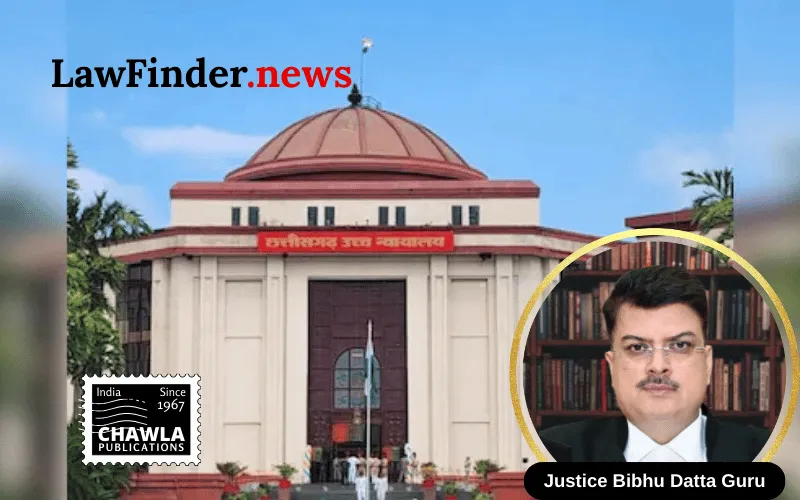
The Court, presided over by Justice Bibhu Datta Guru, extensively examined the issue and reiterated settled legal principles on service law and constitutional rights concerning promotion. The Court held that no government servant has a vested or indefeasible right to promotion. At best, an employee has a right to be considered for promotion according to the rules prevailing at the time of consideration. Mere reduction in promotional chances does not create any enforceable right.
Acknowledging that the petitioners were eligible for promotion and included in the gradation list, the Court emphasized that the earlier quota of 70%, though previously in effect, was not immutable and could be revised as a matter of administrative policy. The decision to alter the promotional quota was taken after due deliberation, considering the organization's requirements for qualified engineers for new power plants and pump storage projects.
The Court rejected the argument that the recruitment advertisement for direct recruitment should be interdicted on the ground that it affected promotion prospects. It observed that the petitioners were free to participate in the direct recruitment process if eligible. The Court also found no evidence that the decision was arbitrary, mala fide, or unconstitutional.
Relying on various Supreme Court precedents including State of Punjab v. Bandeep Singh (2016), Dwarka Prasad v. Union of India (2003), and Dr. Jaya Thakur v. Union of India (2023), the Court underscored that fixation or alteration of promotional quotas is a policy matter within the exclusive domain of the employer, warranting judicial interference only if shown to be manifestly arbitrary or violative of constitutional provisions.
Accordingly, the High Court dismissed the writ petition, upholding the impugned orders and the recruitment advertisement.
This judgment clarifies that while employees have a right to fair consideration for promotion, they do not acquire vested rights in specific promotional quotas, and policy decisions by employers regarding recruitment and promotion ratios are entitled to judicial deference unless proven otherwise.
Bottom Line:
Reduction in promotional quota from 70% to 40% does not violate Articles 14 or 16 of the Constitution, as no government servant has a vested right to promotion. Prescription or alteration of promotional quotas is a policy matter within the domain of the employer.
Statutory provision(s):
Articles 14 and 16 of the Constitution of India
Ashish Banjare v. State of Chhattisgarh, (Chhattisgarh) : Law Finder Doc Id # 2973652