Division Bench clarifies that termination based on unsatisfactory performance during probation is a straightforward administrative action, not requiring a disciplinary inquiry unless punitive or stigmatic in nature
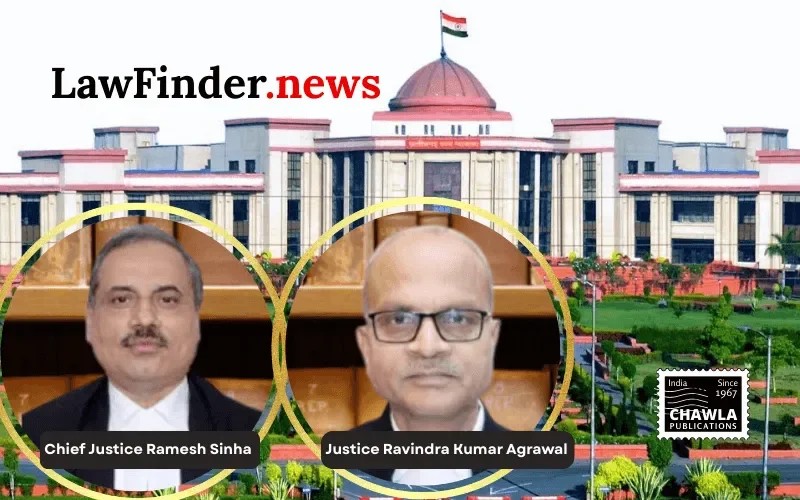
In a significant judgment delivered on September 3, 2026, the Division Bench of the Chhattisgarh High Court, comprising Chief Justice Mr. Ramesh Sinha and Justice Ravindra Kumar Agrawal, dismissed an intra-court appeal filed by Dr. Pradeep Kumar Shukla against his termination from Guru Ghasidas University during his probation period. The judgment reaffirms the principle that termination of probationary employees on grounds of unsatisfactory performance is a non-punitive administrative action and does not mandate a departmental enquiry unless it is explicitly stigmatic or punitive.
Dr. Shukla, an Associate Professor in the Department of Bio-Technology, was appointed on probation for two years starting March 5, 2012, subject to evaluation for confirmation. Despite initially satisfactory performance - including administrative roles, securing a significant research grant, and receiving commendable student feedback - a dispute arose between him and the then Vice-Chancellor. Following an alleged incident in April 2013, Dr. Shukla lodged a police complaint, after which he received multiple show-cause notices alleging misconduct and indiscipline. Although his probation was extended by one year in May 2013, his services were abruptly terminated in August 2013 on grounds of unsatisfactory performance.
Dr. Shukla challenged the termination before the High Court, contending that the dismissal was punitive and stigmatic given the prior show-cause notices and absence of a departmental enquiry or opportunity to be heard. He argued that the termination was retaliatory, linked to his complaint against the Vice-Chancellor, and that other similarly situated employees received lesser penalties. He relied on precedents including Dishan Singh Dahariya v. State of Chhattisgarh and Supreme Court rulings to assert that a departmental enquiry was mandatory under such circumstances.
The learned Single Judge had dismissed Dr. Shukla's writ petition, holding that the termination order was a straightforward administrative act based on performance and did not carry punitive or stigmatic consequences. The Division Bench affirmed this view after detailed consideration of the appointment conditions, the sequence of events, and relevant case law. The Court noted that the mere issuance of show-cause notices during probation does not convert a simple termination into a disciplinary action requiring enquiry. Citing the Supreme Court's decision in Rajasthan High Court v. Ved Priya, the Court held that termination during probation for unsatisfactory performance is simpliciter and that departmental enquiry under Article 311 of the Constitution is not compulsory in such cases.
The Court also distinguished the appellant's reliance on other cases, finding them factually different. It emphasized that no palpable error or perversity was found in the impugned order and that intra-court appeals do not warrant interference in the absence of such infirmities.
This ruling clarifies the legal position for universities and institutions regarding probationary terminations. It underscores that unless a termination order explicitly stigmatizes or punishes an employee for misconduct, the procedural safeguards of a departmental enquiry are not triggered. The judgment is expected to have wider ramifications on service law, particularly in academic and government institutions where probationary appointments are common.
Bottom Line:
Termination of a probationer based on unsatisfactory performance does not necessitate a departmental enquiry unless it is punitive or stigmatic. Mere issuance of show-cause notices during probation cannot be construed as converting a termination simpliciter into a punitive action.
Statutory provision(s):
Article 311, Constitution of India