Court orders reconsideration for students affected by conflicting timelines between CBSE exams and JoSAA admissions.
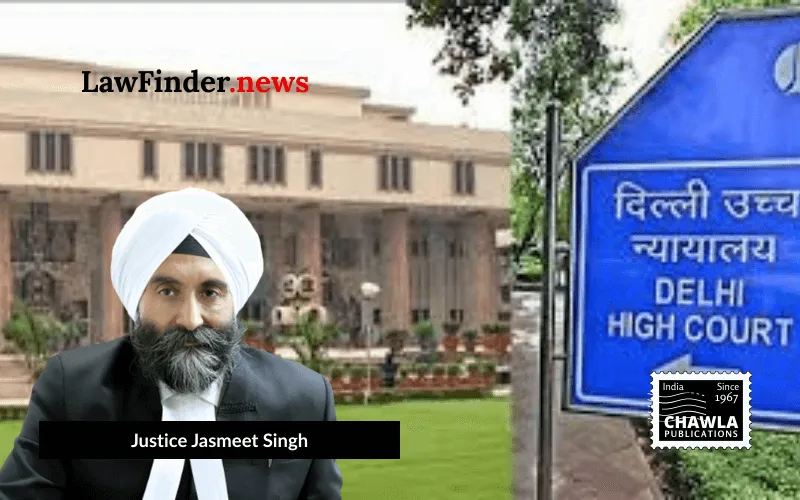
In a landmark decision, the Delhi High Court has addressed the conflict arising from the misalignment between the Central Board of Secondary Education (CBSE) compartment exam schedules and the Joint Seat Allocation Authority (JoSAA) counselling timelines. The judgment, presided over by Justice Jasmeet Singh, emphasized the need for a harmonious interpretation of the JoSAA 2026 Business Rules, particularly Rule 72(B), to ensure that students are not unfairly disadvantaged.
The case involved two petitioners, Daksh Singhal and another student, who faced the cancellation of their provisional admissions to prestigious institutions due to not meeting the minimum eligibility criteria in their Class XII exams. Both students had secured ranks in their respective categories and were provisionally allotted seats at IIT Delhi and the School of Planning & Architecture, New Delhi. However, their admissions were cancelled when they fell short of the required 65% in their Class XII results.
The crux of the issue lay in the fact that the CBSE compartment exams, which could potentially allow these students to meet the eligibility criteria, were scheduled after the JoSAA counselling deadlines. The court noted that enforcing a strict adherence to the July 15, 2026, deadline for the submission of revised marksheets would render Rule 72(B) ineffective, as it would automatically exclude students awaiting compartment results.
Justice Singh, in his judgment, highlighted the importance of a meaningful implementation of Rule 72(B), which allows for the creation of supernumerary seats for students who clear their compartment exams and meet the eligibility criteria post the initial deadline. He emphasized that the educational institutions must coordinate with examination boards to align their schedules and prevent any prejudice against students who have worked hard to secure admissions in top institutions.
The court directed that should the petitioners clear their compartment exams, they are entitled to be considered for admission with the possibility of a supernumerary seat being created. This decision underscores the court's commitment to ensuring that procedural timelines do not override the merit and efforts of students.
The judgment also distinguished itself from previous rulings that strictly upheld admission timelines, by focusing on the unique circumstances of the petitioners who were not seeking relaxation of existing rules but rather their rightful application.
In light of this judgment, educational authorities are urged to reevaluate their coordination strategies to avoid similar conflicts in future academic sessions, ensuring that students' academic pursuits are not hindered by administrative discrepancies.
Bottom line:-
Education Law - JoSAA Business Rules and CBSE compartment exam schedule - A harmonious interpretation is required to ensure students are not prejudiced due to lack of coordination between admission timelines and exam schedules.
Statutory provision(s):
Article 226 of the Constitution of India, JoSAA 2026 Business Rules Rule 72(A) and 72(B), Section 151 of the CPC, 1908.
Daksh Singhal v. Union of India, (Delhi) : Law Finder Doc id # 2946312