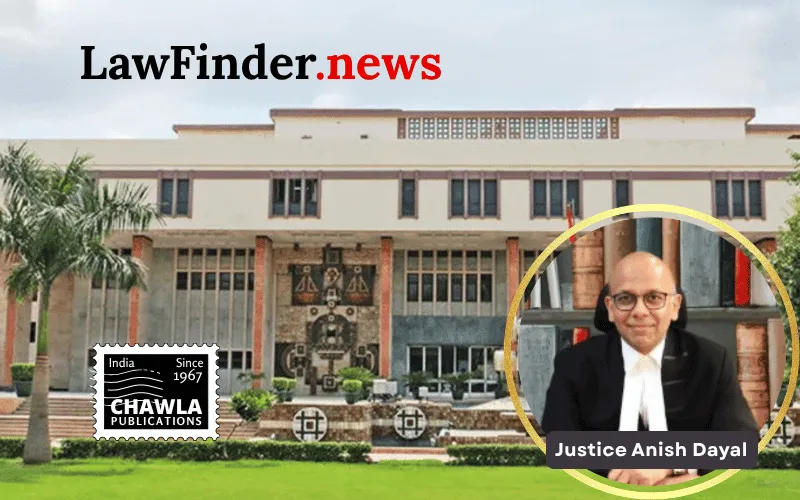
Court directs Motor Accident Claims Tribunals to adopt a considerate and flexible approach in permitting withdrawal of compensation, emphasizing claimant's genuine needs over mechanical application of guidelines.
In a landmark judgment dated 16th September 2026, the Delhi High Court, presided over by Justice Anish Dayal, has reiterated the necessity for Motor Accident Claims Tribunals (MACTs) to exercise judicial discretion with sensitivity and reasonableness when dealing with applications for release of compensation amounts awarded under the Motor Vehicles Act, 1988. The case of Sanjay Sachdeva v. Bhola Mahato and Ors. highlights the Court's firm stance against rigid and mechanical adherence to guidelines that restrict claimants' access to compensation funds, particularly when genuine needs arise.
The appellant, Sanjay Sachdeva, who suffers from a 93% permanent disability due to a motor accident, sought the release of Rs. 2,50,000 from fixed deposit receipts (FDRs) deposited pursuant to a prior judgment. The compensation was initially enhanced and deposited with the MACT with specific directions that a lump sum of Rs. 5,00,000 be released immediately, and the balance kept in FDRs to safeguard the claimant's interests.
Sachdeva's application before the MACT for partial withdrawal to repay loans was rejected on the grounds of insufficient verifiable material, despite the submission of a promissory note evidencing the loan. Challenging this refusal, the appellant approached the Delhi High Court, which criticized the MACT's "parsimonious and mechanical" approach.
Justice Dayal emphasized that it is not the role of the MACT to conduct deep investigations into the claimant's reasons but rather to assess applications on their merits and in light of the claimant's circumstances. The Court noted a troubling trend of MACTs routinely mandating investment of compensation in long-term fixed deposits without due consideration of the claimant's actual needs or ability to manage funds.
The judgment extensively referenced Supreme Court precedents, notably Kerala SRTC v. Susamma Thomas (1994) and A.V. Padma v. R. Venugopal (2012), which provided guidelines for the investment and release of compensation funds. These guidelines were intended to protect vulnerable claimants, such as minors, illiterates, and widows, from exploitation and financial mismanagement. However, the Delhi High Court clarified that these safeguards should not translate into inflexible rules that deny claimants access to their rightful compensation for legitimate purposes.
Key directions included allowing MACTs to verify claims through interactions with claimants, either in person or via video conference, to ensure funds are not misappropriated. The Court underscored the importance of balancing oversight with compassion, allowing claimants to use compensation amounts to address urgent needs such as loan repayment, medical emergencies, property purchases, or educational expenses.
Consequently, the Court allowed the application for release of Rs. 2,50,000 from the FDRs and directed the MACTs under its jurisdiction to adopt a more sensitive and reasonable approach in similar matters. The judgment mandates that this order be circulated to all MACTs in Delhi and uploaded on the Court's website to guide future cases.
This judgment marks a significant step in protecting the rights of motor accident victims, ensuring that compensation awarded as a result of their suffering is accessible and not unduly withheld by procedural rigidity or paternalistic attitudes of tribunals.
Bottom Line:
Motor Accident Claims Tribunal (MACT) - Application for release of compensation amount - MACTs are expected to adopt a considerate, sensitive, and reasonable approach in dealing with applications for withdrawal of compensation amounts. The undue paternalistic approach needs to be rationalized, ensuring judicial discretion is exercised based on the claimant's needs without rigid adherence to mechanical guidelines.
Statutory provision(s):
Motor Vehicles Act, 1988
Sanjay Sachdeva v. Bhola Mahato, (Delhi) : Law Finder Doc Id # 2981940