Court holds applicability of Hindu Marriage Act unestablished in case of foreign nationals, upholds 30-day residence rule under Special Marriage Act, and directs authorities to modify portal for foreign applicants and permit video conferencing.
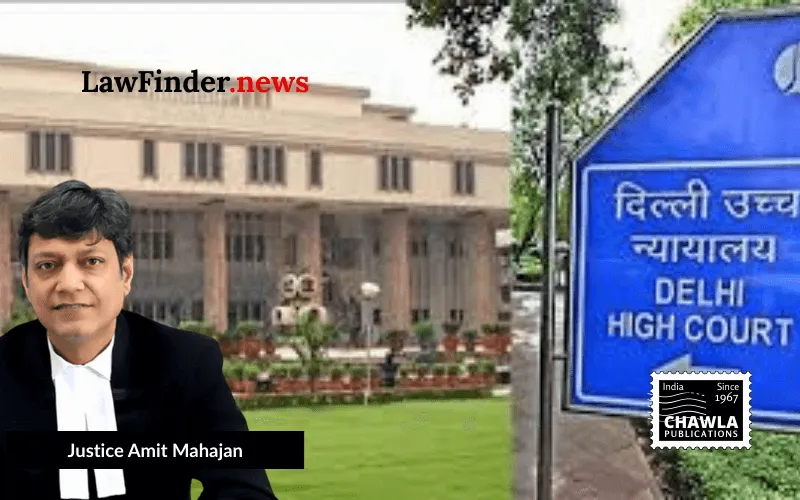
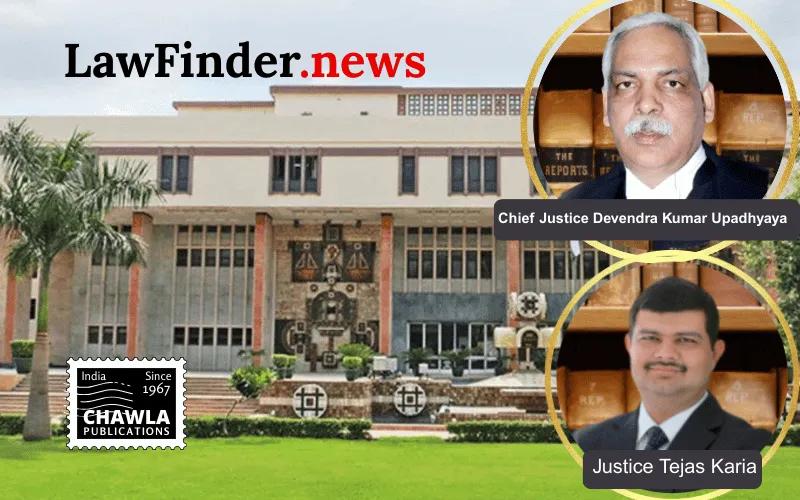
In a significant judgment dated 30th September 2026, the Delhi High Court (Division Bench comprising Chief Justice Devendra Kumar Upadhyaya and Justice Tejas Karia) dismissed a writ petition filed by Sejal Gandhi, a Swedish citizen and Overseas Citizen of India (OCI) cardholder, challenging citizenship and residence eligibility conditions for marriage registration under the Hindu Marriage Act, 1955 (HMA). The petitioner's marriage to a fellow Swedish citizen, solemnised in Delhi according to Hindu rites, remained unregistered due to these conditions.
The petitioner sought a declaration that the requirement under the Impugned Guidelines and the Delhi (Compulsory Registration of Marriage) Order, 2014, mandating at least one spouse to be an Indian citizen and permanent resident within the jurisdiction of the registering authority for marriage registration under the HMA, was invalid, arbitrary, and violative of Articles 14 (equality), 21 (right to life), and 25 (freedom of religion) of the Constitution. She also urged the court to direct amendments to the registration portal to accommodate foreign nationals and OCI cardholders, allowing alternative identity verification and appearance through video conferencing.
The Court scrutinised the applicability of the HMA, noting that the Act applies only to persons Hindu by religion, including Buddhists, Jains, and Sikhs, or those domiciled in India who do not belong to other specified religions. The petitioner's husband's purported conversion to Hinduism, based solely on an Arya Samaj marriage certificate and his assertion, lacked independent documentary evidence such as a formal affidavit or official notification. The Court referred to precedents including Perumal Nadar v. Ponnuswami (1970) and Rohit Pandey v. Union of India (2026) to hold that mere solemnisation of marriage according to Hindu rites does not establish the parties' Hindu status. Consequently, the petitioner failed to prove foundational facts for invoking the HMA, and thus lacked locus standi to challenge the citizenship-based eligibility conditions under the HMA registration framework.
Further, the Court observed that an alternative and efficacious statutory mechanism already exists under Chapter III of the Special Marriage Act, 1954 (SMA), which permits registration of marriages between foreign nationals subject to procedural requirements. Importantly, the Court highlighted the "Amended Guidelines" issued in 2023, which explicitly exempt marriages between two foreign nationals from the citizenship condition, thereby allowing such couples to apply for registration under the SMA. The couple must, however, fulfil other statutory requirements, such as a thirty-day residence within the district of the Marriage Officer, valid visa, affidavits attested by the embassy or Executive Magistrate, and appearance with witnesses.
The Court rejected the petitioner's plea to waive the thirty-day residence requirement, holding it to be jurisdictional and essential for territorial competence of the Marriage Officer. The Court stated that mere inconvenience cannot justify relaxation of this statutory safeguard designed to verify the bona fides of foreign applicants.
Addressing the petitioner's grievance about the online marriage registration portal, which currently allows only Aadhaar-based authentication and is inaccessible to foreign nationals and OCI cardholders, the Court directed the Delhi government to consider necessary modifications. These changes should enable identity verification through passports, OCI cards, or other appropriate documents. Additionally, in recognition of genuine difficulties in physical presence, the Court permitted appearance before the registering authority through video conferencing to the extent allowed by law.
The Court thus disposed of the petition with clear directions: the constitutional challenge to the Impugned Guidelines under the HMA was not maintainable due to lack of foundational applicability and locus standi; the petitioner and her husband, as foreign nationals, could avail registration under Chapter III of the SMA subject to compliance with statutory requirements including the residence condition; and the authorities must upgrade the registration portal and adopt flexible procedures to facilitate foreign applicants.
This judgment affirms the legal position that the Hindu Marriage Act is religion-specific and cannot be invoked without establishing Hindu status of parties. It also underscores the efficacy of the Special Marriage Act as a secular alternative for marriage registration, especially accommodating foreign nationals, while preserving statutory safeguards like the residence requirement. The Court's directions regarding the online portal and video conferencing reflect a progressive approach to easing procedural barriers faced by foreign nationals and OCI cardholders in accessing marriage registration services in India.
Bottom Line:
Marriage registration - Foreign nationals/OCI card holder - Challenge to citizenship and residence conditions for registration under Hindu Marriage Act held not maintainable where applicability of HMA itself not established - Marriage between two Swedish citizens can be registered under Chapter III of Special Marriage Act as per amended guidelines - Thirty days' residence requirement held jurisdictional and cannot be waived for convenience - Court directed authorities to consider portal modification for passport/OCI-based authentication and permit appearance through video conferencing as permissible in law.
Statutory provision(s):
Hindu Marriage Act, 1955 Section 2; Special Marriage Act, 1954 Chapter III, Section 15; Constitution of India Articles 14, 21, 25; Delhi (Compulsory Registration of Marriage) Order, 2014 Clause 2(a)