Court Cites Prima Facie Evidence Including CCTV Footage, Eyewitness Testimony, and Forensic Reports Against Accused Amit Khanna
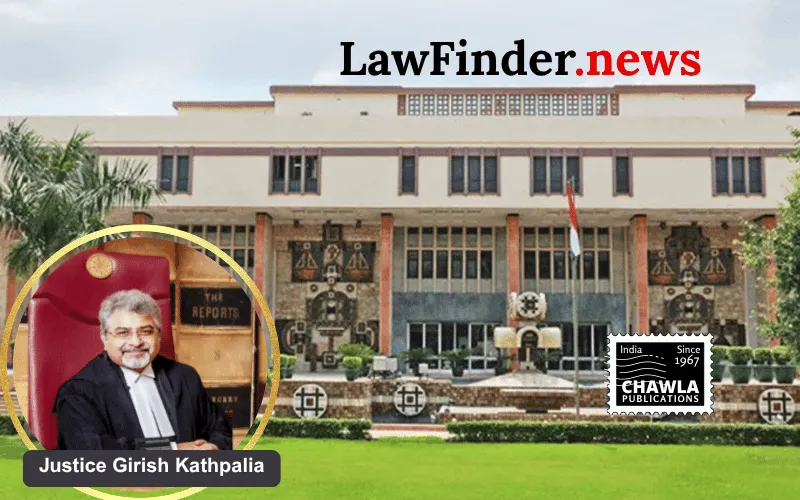
In a significant order dated September 17, 2026, the Delhi High Court, presided over by Justice Girish Kathpalia, rejected the bail application of Amit Khanna, accused in a harrowing hit-and-drag murder case registered at Sultan Puri Police Station. The accused was charged under multiple sections of the Indian Penal Code (IPC), including Section 302 (murder), 201 (causing disappearance of evidence), and others related to criminal conspiracy and causing death by rash driving.
The prosecution case revealed that the accused allegedly drove a vehicle that struck and dragged a deceased female victim for approximately 13 kilometers, resulting in her death. Initially, the FIR named Deepak, the accused's cousin, as the driver. However, further investigations, supported by CCTV footage submitted during court proceedings, eyewitness testimony from Nidhi (who was pillion on the victim's scooter at the time), and forensic DNA analysis, confirmed Amit Khanna as the driver responsible for the fatal accident.
The CCTV footage presented in court showed the accused seated in the driver's seat at the time the vehicle was handed over to him, although his face was not visible at the exact moment of the incident. The forensic report linked traces of the victim's flesh found on the vehicle to her DNA, strengthening the prosecution's case. Furthermore, the accused's associates reportedly witnessed the victim's body entangled under the car but did not intervene, compounding the gravity of the offense.
The defense argued that the accused had been in custody since January 1, 2023, without concrete evidence directly implicating him in the murder. They also highlighted inconsistencies in the eyewitness's statements and noted that the accused had not been identified through Facial Recognition System results, which were yet to be made public. Despite these contentions, the court emphasized the seriousness and horrific nature of the offense, combined with the compelling evidence on record.
Justice Kathpalia observed that the accused's actions and the circumstances surrounding the offense warranted cautious consideration. Given the prima facie material against Amit Khanna and the potential risk to the investigation's integrity, the court declined to grant bail. The judgment underscores the judiciary's approach to granting bail in grave offenses, especially where evidence such as CCTV footage, eyewitness accounts, and forensic analysis substantiate the prosecution's case.
The order also instructs the jail authorities to communicate the decision to the accused immediately, ensuring due process is followed.
Bottom Line:
Bail application in a case involving grave offences like murder and destruction of evidence must be considered with utmost caution, especially when there is prima facie evidence such as CCTV footage, eyewitness testimony, and forensic reports pointing to the accused's involvement.
Statutory provision(s): Indian Penal Code, 1860 Sections 302, 201, 212, 182, 34, 120B, 279, 304A
Amit Khanna v. State Govt of NCT of Delhi, (Delhi) : Law Finder Doc Id # 2980669