Court emphasizes that protection under Section 228A IPC (now Section 72 BNS, 2023) extends to all identity markers of victims, ordering removal of name, parentage, and address from judgments and online databases to prevent social victimization.
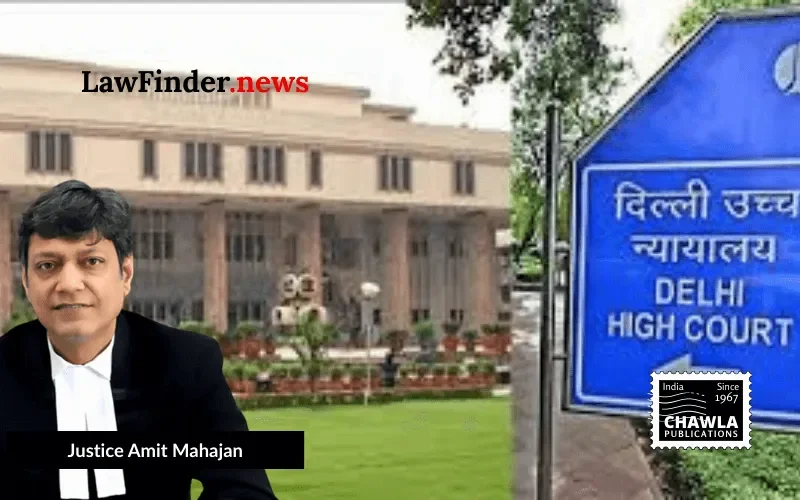
In a significant judgment dated October 29, 2026, the Delhi High Court, through Justice Amit Mahajan, has ordered the masking and removal of the identity of a victim of an alleged sexual offence from all judicial orders, judgments, and third-party online portals. The petitioner, identified as Ms. X, had approached the High Court seeking protection of her identity which was publicly available in judgments related to her complaint alleging offences including sexual assault.
The case arose from a complaint filed by Ms. X in 2007 under various sections of the Indian Penal Code (IPC), including Sections 324, 325, 376 (rape), 506(2), and 511. Although the accused were only summoned for a lesser offence under Section 323 IPC and not for rape, the petitioner argued that the protection of her identity under Section 228A of the IPC (now Section 72 of the Bharatiya Nyaya Sanhita, 2023) applies irrespective of whether the accused were summoned for the sexual offence or not. This protection bars the disclosure of identity of victims of sexual offences to prevent social ostracism and harassment.
The Court relied heavily on the landmark Supreme Court rulings in State of Karnataka v. Puttaraja (2004) and Nipun Saxena v. Union of India (2019), which underscored that the prohibition on disclosure is not limited to the victim’s name alone but extends to any information such as parentage and address from which the identity could be discerned. The Court emphasized that publishing such details in publicly accessible judicial records or online portals serves no public interest but leads to social victimization.
The petitioner’s grievance was that her name, parentage, and address were disclosed in orders dating back to 2011 and judgments passed in 2013 and 2016, which were freely accessible on the High Court and District Courts websites and on third-party portals. The accused had allegedly circulated these documents among her neighbours, subjecting her to daily taunts and violence.
Addressing these concerns, the Court directed the Registry of the Delhi High Court and the District Courts to mask and remove all identity markers of the petitioner from the impugned orders and judgments. Further, the Court ordered Respondent Nos. 2 to 5—third-party portals hosting these records—to either take down the material or mask the petitioner’s identity. Respondent No. 6, the supervisory authority, was directed to ensure compliance by these portals.
Importantly, the Court permitted the petitioner to approach any public search engines or intermediaries to host masked versions of the relevant orders or judgments. It was expected that these platforms would comply with the mandate of Section 228A IPC (now Section 72 BNS) and Supreme Court directions in Nipun Saxena to prevent disclosure of identity.
This judgment reinforces the principle that the right to privacy and dignity of sexual offence victims must be protected, and that the law’s shield is not limited by procedural technicalities such as the specific charges for which accused are summoned. The ruling also reflects the judiciary’s proactive stance in ensuring that technology and internet intermediaries adhere to legal protections for victims, thereby preventing further victimization through public exposure.
Bottom Line:
Victim/complainant of alleged sexual offence is entitled to protection of identity even where accused were not summoned for offence under Section 376 IPC - Protection under Section 228A IPC, now Section 72 BNS, attaches to allegation itself - Court directed masking/removal of victim's name, parentage and address from judicial orders and expected search engines, third-party portals and intermediaries to comply with mandate of law and directions in Nipun Saxena.
Statutory provision(s):
Indian Penal Code, 1860 Section 228A (now Section 72 Bharatiya Nyaya Sanhita, 2023), Sections 324, 325, 376, 506(2), 511; Constitution of India Article 226
Ms X v. High Court of Delhi, (Delhi) : Law Finder Doc Id # 3007038