Court emphasizes non-maintainability of repetitive petitions under Arbitration Act and underscores statutory bar on injunctions delaying infrastructure projects
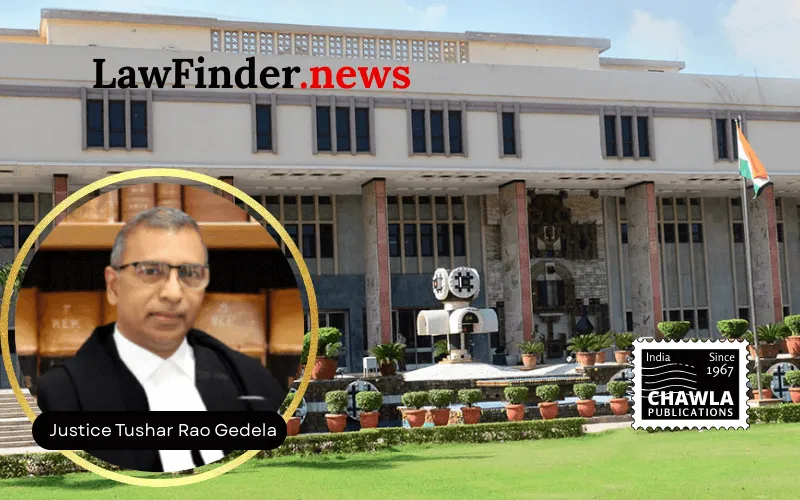
In a significant ruling on September 1, 2026, the Delhi High Court, presided over by Justice Tushar Rao Gedela, dismissed a second petition filed by DC Multi Modal Park Pvt Ltd under Section 9 of the Arbitration and Conciliation Act, 1996. The petition sought interim reliefs identical to those already declined in an earlier petition regarding the termination of a Concession Agreement for the development of a Multi Modal Logistics Park (MMLP) at Sindhi, Nagpur.
Background:
The dispute arose from the termination of the Concession Agreement dated December 12, 2023, between DC Multi Modal Park Pvt Ltd (the petitioner) and Maharashtra MMLP Pvt Ltd (respondent no.1). The project was initiated under a DBFOT (Design, Build, Finance, Operate, Transfer) framework for 45 years, with Phase I scheduled for completion by July 10, 2026. Following delays, respondent no.1 terminated the agreement on September 18, 2025, and subsequently issued a fresh Notice Inviting Tender (NIT) on October 9, 2025, leading to the selection of Maharashtra MMLP Pvt Ltd as a new concessionaire.
Legal Proceedings:
The petitioner initially filed a Section 9 petition (the First Petition) on October 4, 2025, seeking stay against the termination and related reliefs. The Court declined interim reliefs in its order dated December 2, 2025, directing parties to proceed to arbitration. Despite knowledge of the fresh bidding and selection process, the petitioner did not challenge these developments until the new contract was to be executed, when it filed the present (second) Section 9 petition seeking similar reliefs.
Court’s Observations:
Justice Gedela, after hearing arguments from senior counsels representing all parties, held that the second petition was not maintainable as it sought identical reliefs already refused in the earlier petition. The Court noted that filing repetitive petitions under Section 9 amounted to an abuse of the Court’s discretionary jurisdiction.
The Court also highlighted statutory provisions under the Specific Relief Act, 1963 — particularly Section 20A and Section 41(ha) — which prohibit courts from granting injunctions that would impede or delay infrastructure projects. The MMLP project, given its scale and public importance, falls within the ambit of such infrastructure projects where interim restraint orders should be sparingly granted to avoid hindering national development goals.
Further, the Court examined Clause 36.9 of the Concession Agreement, which allows the Authority to engage other contractors post-termination to complete the project, without prejudice to the rights of the terminated concessionaire, who may be reinstated if termination is set aside by judicial or quasi-judicial authority. This balanced approach protects both parties’ interests without impeding project progression.
The Court also criticized the petitioner for not effecting proper service on respondent no.2, Maharashtra MMLP Pvt Ltd, thus depriving them of a fair opportunity to contest interim orders, an act described as “reprehensible” and against Court rules.
Precedents Relied Upon:
The Court relied on earlier judgments, including:
- Time Cinemas and Entertainment Pvt. Ltd. v. Venus Infrastructure and Development Pvt. Ltd. (Gujarat High Court), which held that subsequent similar Section 9 applications are not maintainable once reliefs are adjudicated.
- National Highways Authority of India v. Roadway Solutions India Infra Limited (Delhi High Court), which emphasized that injunctions in infrastructure contracts cannot be granted if they delay project completion, as the contract terms must be strictly adhered to.
Conclusion and Order:
The Delhi High Court dismissed the second Section 9 petition with costs of Rs. 1 lakh payable to the Delhi High Court Staff Welfare Fund. The Court underscored that interim reliefs in infrastructure projects must be granted with utmost caution to prevent public inconvenience and developmental delays. The petitioner’s conduct was found to be malafide and vexatious in filing a repetitive petition after having knowledge of the fresh bidding process.
This judgment reinforces the principle that courts should exercise restraint in granting interim injunctions in public infrastructure projects and discourages litigants from re-litigating issues already decided, thereby protecting the sanctity of arbitration and contract law.
Bottom Line:
Arbitration and Conciliation Act, 1996 - A second petition under Section 9 seeking identical reliefs as sought in the first petition, which were declined, is not maintainable. Reliefs in infrastructure projects should be approached with caution to avoid causing delays or hindrances to public interest.
Statutory provision(s):
Arbitration and Conciliation Act, 1996 Section 9; Specific Relief Act, 1963 Sections 20A, 41(ha)
DC Multi Modal Park Pvt Ltd v. Maharashtra MMLP Pvt. Ltd., (Delhi) : Law Finder Doc Id # 2971807