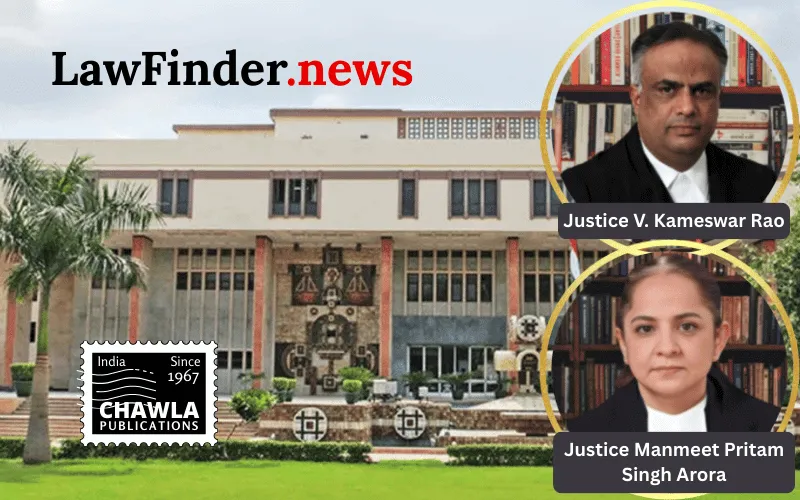
Petition Seeking Stricter Guidelines for Protecting Children Under 16 from Harmful Social Media Exposure Disposed with Direction to Authorities for Considered Decision
In a significant development concerning children's protection from harmful social media exposure, the Delhi High Court, in a Division Bench judgment dated August 20, 2026, disposed of a Public Interest Litigation filed by Ms. Kirti Dua and another petitioner against the Union of India and others. The petition sought the issuance of comprehensive guidelines and regulations to restrict and regulate social media access for children below 16 years of age, including imposing overnight curfews, stricter content filtration, and a robust verification mechanism similar to Digi Yatra linked with Aadhaar IDs.
The petitioners urged the court to direct the government and associated authorities to enforce stricter implementation of existing laws such as the Information Technology Act, 2000; Digital Personal Data Protection Act, 2023; and the Protection of Children from Sexual Offences Act, 2012. They also sought the regulation of content harmful to the psychological health of children and oversight over social media platforms to ensure adherence to privacy policies tailored for minors.
During proceedings, the court noted a similar matter pending before the Supreme Court in the case of Zep Foundation v. Union of India (W.P.(C) No. 8128/2025), where the Supreme Court had disposed of the petition by allowing the petitioner to make a representation to the Union of India, directing the authorities to consider it within eight weeks.
Respondent counsels informed the Court that the relief sought falls within the domain of policy-making and submitted that the petitioner should be granted liberty to make formal representations. The Court acknowledged this stance, highlighting that the Union of India would consider the representation in consultation with all stakeholders, including social media companies.
Consequently, the Court disposed of the petition with liberty granted to the petitioners to submit their representation and note of suggestions to the appropriate government authorities. The Union of India was directed to consider the submissions and pass a reasoned order in accordance with law. The Court also left it to the discretion of the authorities to hear the petitioners' representatives if deemed necessary during the consideration process.
This judgment underscores the judiciary's recognition that regulation of social media, especially concerning children, is primarily a policy matter best dealt with by the executive but affirms the role of the judiciary in ensuring that such representations are duly considered. The petitioners and stakeholders now await a comprehensive policy response aimed at safeguarding children's interests in the increasingly digital social environment.
Bottom Line:
A petition seeking regulation of social media access for children below 16 years of age and implementation of stricter guidelines under existing laws was disposed of with liberty granted to the petitioner to make a representation to the relevant authorities, which would be considered in accordance with the law.
Statutory provision(s): Information Technology Act, 2000, Digital Personal Data Protection Act, 2023, Protection of Children from Sexual Offences Act, 2012
Kirti Dua v. Union of India, (Delhi)(DB) : Law Finder Doc Id # 2971238