Court condemns administrative delays and unjustifiable conditions imposed by Jail Authority, affirming that judicial orders on parole must be implemented without obstruction.
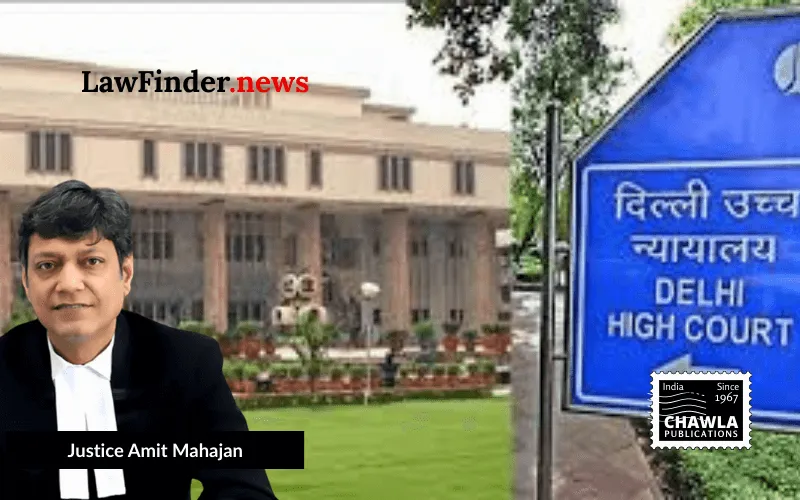
In a significant ruling dated September 15, 2026, the Delhi High Court, presided over by Justice Purushaindra Kumar Kaurav, took stern action against the Jail Superintendent of Central Jail-02, Tihar, for wilfully violating a court order granting parole to Anwar Hussain, an undertrial prisoner. The Court initiated contempt proceedings after the Jail Authority failed to comply with its directive to release the petitioner on parole, citing administrative reasons and imposing unauthorized additional conditions.
Anwar Hussain, having served over five years as an undertrial, had sought parole to pursue legal remedies before the Supreme Court against the dismissal of his criminal appeal. The High Court initially granted a four-week parole on July 30, 2026, subject to conditions to be imposed by the competent authority. However, the Jail Authority neither imposed these conditions nor released the petitioner, effectively nullifying the court's order.
Despite subsequent clarifications and a modified order dated August 11, 2026, which explicitly set parole conditions, the Jail Superintendent refused to release Anwar Hussain. The Superintendent argued an inability to verify the petitioner's residence address-a condition not stipulated by the Court-and labeled this verification "customary" and "routine." The Court rejected this justification as an unlawful addition to its order, emphasizing that such unilateral impositions violate Articles 14 and 21 of the Constitution, which protect the right to equality and personal liberty.
The Court noted the blatant disregard for judicial authority and the resultant infringement on the petitioner's fundamental rights. It underscored that administrative inefficiency or unjustifiable reasons cannot be used to frustrate the execution of judicial orders. The Jail Superintendent was summoned to appear personally and explain his conduct. Upon accepting notice of contempt, he was directed to file a response explaining why he should not be punished under the Contempt of Courts Act, 1971.
This judgment reinforces the principle that parole granted by courts is a constitutional right that must be respected and executed promptly. It also sends a clear message that any attempt by administrative authorities to override or delay judicial orders will attract penal consequences, thereby upholding the rule of law and safeguarding citizens' liberty.
Bottom Line:
Parole granted by the Court cannot be thwarted by administrative inefficiency or unjustifiable reasons provided by the jail authority. Violation of judicial orders may lead to contempt proceedings against the concerned authority.
Statutory provision(s):
Articles 14 and 21 of the Constitution of India, Contempt of Courts Act, 1971
Anwar Hussain v. State NCT of Delhi, (Delhi) : Law Finder Doc Id # 2980667