Court holds that State cannot withhold fees on fabricated disputes, directs payment with 9% interest for services rendered before Constitution Bench
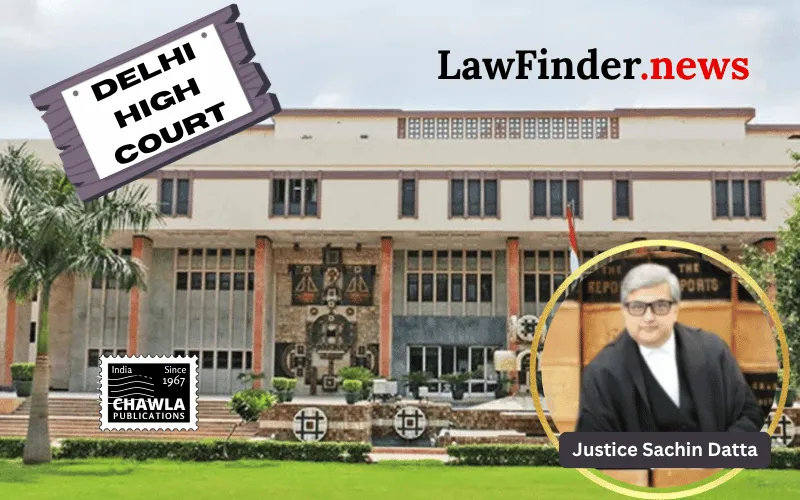
In a significant judgment delivered on August 31, 2026, the Delhi High Court directed the State of Madhya Pradesh to pay an outstanding professional fee of Rs. 78,65,000 to Senior Advocate Anoop George Chaudhari, the former Advocate General of Madhya Pradesh, for his appearances before a Constitution Bench of the Supreme Court of India. The court also awarded interest at 9% per annum from the date of filing the writ petition till the date of actual payment.
The petition filed by Advocate Chaudhari sought recovery of professional fees for fourteen dates of hearing and related conferences before the Supreme Court, in matters involving the Indore Development Authority (IDA) and the Madhya Pradesh Housing Board. The petitioner's appearances were recorded in the Supreme Court order sheets on multiple dates from October to December 2019, and the Constitution Bench judgment itself acknowledged his submissions.
Despite the clear record of engagement and services rendered, the State of Madhya Pradesh resisted payment, raising multiple contradictory stands, including denial of engagement and disputing the quantum of fees. The State even claimed the petition was not maintainable under Article 226 of the Constitution as it involved disputed questions of fact.
The Court, however, rejected these contentions, relying extensively on settled legal principles that a writ petition under Article 226 is maintainable even in cases involving monetary claims against the State, especially when facts are established by official records and do not necessitate detailed evidence. The Court emphasized that the State cannot arbitrarily deny legitimate dues by raising manufactured disputes and must act as a model litigant.
A key finding was that the petitioner's appearance before the Supreme Court was authorized and facilitated by the State's own officers, including the Standing Counsel and Advocate-on-Record, and was recorded in the Supreme Court proceedings. The Court noted that the State had accepted the benefit of the petitioner's services but later sought to repudiate the engagement, which amounted to approbation and reprobation, a principle disallowed in law.
Regarding fees, the Court accepted the rate of Rs. 6,05,000 per day of appearance claimed by the petitioner as disclosed prior to the hearings and forwarded by the State's Standing Counsel to the relevant departments. The Court disallowed duplicate fees for connected matters heard on the same day and also disallowed conference fees for lack of corroboration.
The judgment also underscored the dignified relationship between counsel and client, particularly when the client is the State. It condemned the State's conduct of withholding fees after availing senior counsel's services, stating that such arbitrary action violates Article 14 of the Constitution and undermines the legal profession's dignity. It cautioned that if States continue such behavior, it would discourage talented advocates from representing the State in important legal matters.
The Court ordered the State to make the payment within six weeks and disposed of all pending applications related to the petition.
This ruling reiterates that advocates engaged by the State are entitled to timely payment and that the courts will not allow the State to evade its financial obligations on frivolous or technical grounds, thereby upholding the rule of law and the honour of the legal profession.
Bottom Line:
Payment of professional fees to an advocate engaged by the State - Advocate's entitlement to fees established by records of Supreme Court - State cannot withhold payment on vague grounds of "disputed questions of fact" when engagement is evident.
Statutory provision(s):
Article 14 of the Constitution of India, Article 226 of the Constitution of India, Advocates Act, 1961 (Sections 16 and 23(5))
Anoop George Chaudhari v. State of Madhya Pradesh, (Delhi) : Law Finder Doc Id # 2971241