Court clarifies limitation period for setting aside arbitration awards and reinforces principle that non-signatory directors cannot be held liable without explicit guarantees; sets aside award only against directors, restoring it against the company.
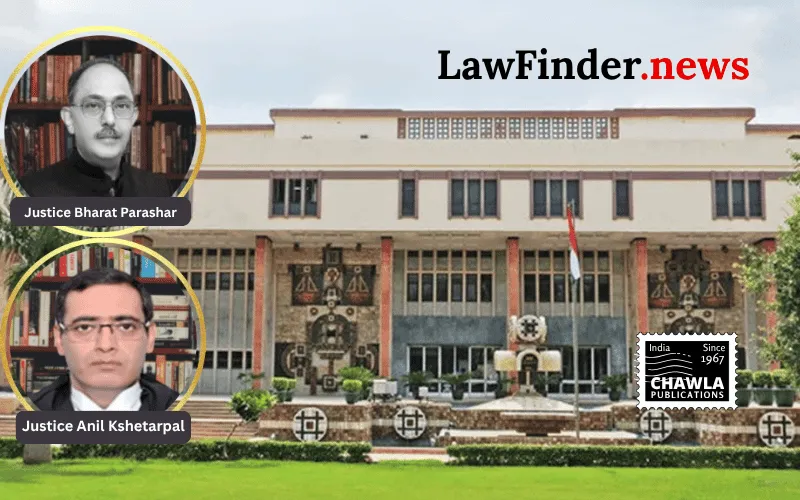
In a significant judgment dated October 9, 2026, the Division Bench of the Delhi High Court, comprising Justices Anil Kshetarpal and Bharat Parashar, delivered a nuanced verdict in the appeal filed by Small Farmers Agri Business Consortium against Vanilla India Producer Company Ltd. and others. The case, FAO (COMM) 133/2024, involved a dispute arising out of a Venture Capital Assistance (VCA) loan agreement and subsequent arbitration proceedings.
The appellant had sanctioned a VCA of Rs. 23,39,000/- to the respondent company for its agri-business project, disbursed through Union Bank of India (UBI). Following non-repayment, the appellant initiated arbitration proceedings, resulting in an arbitral award in March 2017 directing recovery of the loan amount with interest and costs from the company and its directors jointly and severally.
The respondents challenged the arbitral award under Section 34 of the Arbitration and Conciliation Act, 1996, primarily on two grounds: lack of proper notice of arbitrator appointment and proceedings, and the illegality of imposing liability on the directors who were not parties to the loan agreement. The trial court set aside the award on these grounds. The appellant appealed before the Delhi High Court.
The High Court's analysis centered on four critical issues:
1. Limitation for Filing Petition Under Section 34:
The court clarified that the limitation period commences from the date of receipt of the signed arbitral award copy by the party, not the date of pronouncement. The respondents contended they received the award only in April 2019 during execution proceedings and thus their Section 34 petition filed in June 2019 was within the prescribed time. The appellant failed to provide proof of earlier delivery. The court upheld the limitation plea in favor of the respondents.
2. Notice and Opportunity to Present Case:
The respondents had participated throughout the arbitration, filed defenses, and did not demonstrate any prejudice due to alleged lack of notice of the arbitrator's appointment. The court held that mere non-receipt of initial appointment intimation did not deny a fair hearing, especially when parties appeared and contested the claims. The award could not be set aside on this ground.
3. Liability of Non-Signatory Directors:
The High Court emphasized the settled legal principle that a company is a separate juristic entity distinct from its directors. The directors had neither signed the loan agreement nor provided personal guarantees or indemnities. Without pleadings or proof of fraud or misrepresentation, directors cannot be held personally liable. Hence, the portion of the award imposing joint and several liability on directors was found to be patently illegal and unsustainable.
4. Severability of the Arbitral Award:
The court applied the doctrine of severability, holding that the invalid portion of the award regarding directors' liability was independent and separable from the company's liability. Therefore, only the part of the award against the directors was set aside, while the award against the company was restored and declared enforceable.
Additional findings included the rejection of respondents' claims that the recovery was premature or barred by limitation, and that interest at 12% was excessive, as these were not substantiated or raised in the arbitration proceedings. The court also noted that subsequent One-Time Settlement between UBI and the respondent company did not affect the appellant's claim or the award's enforceability.
In conclusion, the Delhi High Court partly allowed the appeal by setting aside the trial court's order only in respect of the company (Respondent No.1), restoring the award against it, while confirming the setting aside of the award against the individual directors (Respondents No. 2 to 5). The executing court at Ernakulam was directed to proceed with execution against the company only.
This judgment underscores the judiciary's cautious approach in interference with arbitral awards, reiterates strict adherence to limitation timelines measured from actual receipt of the award, and safeguards the corporate veil protecting directors from personal liability in absence of explicit legal or contractual basis.
Bottom Line:
Arbitration and Conciliation Act, 1996 - Scope of interference under Sections 34 and 37 - Award cannot be set aside for want of notice of appointment of arbitrator where respondents participated in arbitral proceedings and failed to show prejudice - Limitation under Section 34(3) begins from receipt of signed copy of award under Section 31(5), not from date of award - Directors who were not signatories and had not undertaken personal liability could not be fastened with joint and several liability merely because of their office - Invalid portion of award fastening liability on directors is severable and award can be restored against company alone.
Statutory provision(s):
Arbitration and Conciliation Act, 1996 Sections 2(1)(h), 4, 13, 16(2), 21, 31(5), 34(2)(a)(iii), 34(2)(a)(iv), 34(2A), 34(3), 35, 37; Limitation Act, 1963