Court Sets Aside Framing of Charges Under SC/ST Act, Directs Reconsideration of IPC Offences
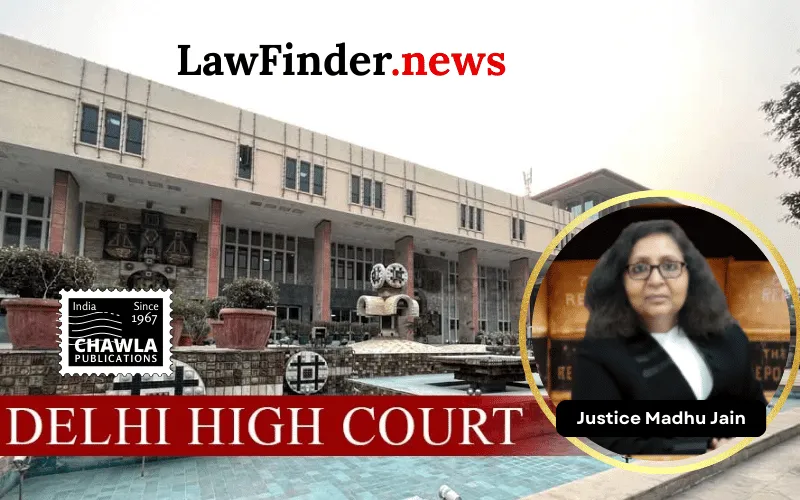
In a significant ruling, the Delhi High Court has quashed the charges framed against the management of Trans World Radio India under Section 3(1)(x) of the Scheduled Castes and Scheduled Tribes (Prevention of Atrocities) Act, 1989. The charges were related to alleged caste-based insults made within the private office premises. Justice Madhu Jain, presiding over the case, emphasized that the statutory requirement of "public view" was not satisfied, leading to the quashing of the charges under the SC/ST Act.
The case involved allegations by employees, who belonged to the Scheduled Caste community, against the management of Trans World Radio India. The complainants alleged that they were subjected to caste-based abuses and pressured to convert to Christianity. The Delhi High Court, however, found that the alleged incidents took place within the confines of private offices, without the presence of any public members, which is a necessary component for the offence under the SC/ST Act.
The judgment cited precedents, including the Supreme Court's decisions in Hitesh Verma v. State of Uttarakhand (2020) and Ramesh Chandra Vaishya v. State of U.P. (2023), which clarified that "public view" requires the presence of members of the public independent of the parties concerned.
The court also addressed the procedural aspects, stating that at the stage of framing charges, the essential ingredients of the alleged offence must be disclosed from the complaint. In the absence of such foundational ingredients, the continuation of the trial cannot be sustained.
The High Court has remanded the matter back to the Trial Court to independently consider the framing of charges under the Indian Penal Code. The court clarified that it has not expressed any opinion on the merits of the allegations concerning IPC offences. The trial court is directed to decide the charges independently, considering any submissions regarding the maintainability of a common complaint.
The petitioners, who held key management positions at Trans World Radio India, including roles such as CEO and Administrative Director, were represented by Senior Advocate Ms. Rebecca M. John. The complainants, employed as safai karamcharis, were represented by Mr. Digam Singh Dagar, APP.
The petitioners are to appear before the Trial Court on August 13, 2026, for further proceedings. This ruling underscores the importance of fulfilling statutory requirements for offences under the SC/ST Act and provides a clear directive for lower courts in handling similar cases.
Bottom line:-
Scheduled Castes and Scheduled Tribes (Prevention of Atrocities) Act, 1989 - Essential ingredient of "public view" is mandatory for the offence under Section 3(1)(x) - Allegations made inside private offices without the presence of public do not satisfy this requirement.
Statutory provision(s): Scheduled Castes and Scheduled Tribes (Prevention of Atrocities) Act, 1989 - Section 3(1)(x), Criminal Procedure Code, 1973 - Sections 482, 200, 202, 216, 221
Christine Swaroop Raj v. State, (Delhi) : Law Finder Doc id # 2944660