Court clarifies that arbitration proceedings commenced before October 23, 2015, remain governed by pre-amendment law, unless parties expressly agree otherwise, reaffirming principle of party autonomy and statutory clarity under Section 26 of the Arbitration and Conciliation Act, 2015 Amendment.
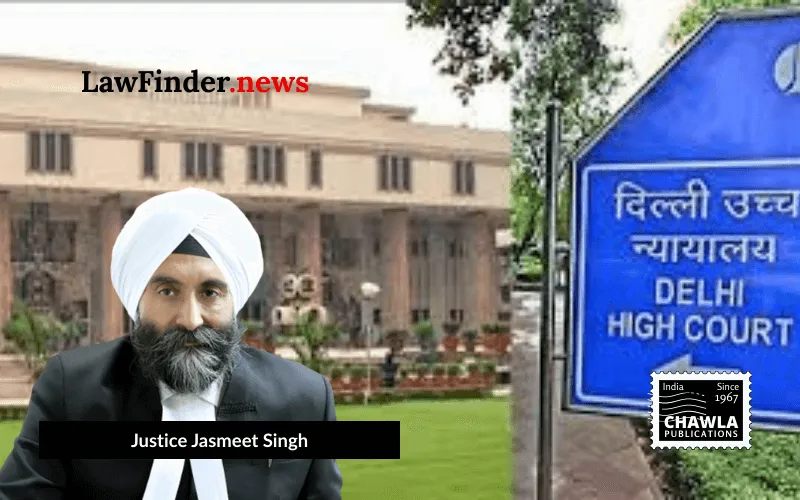
In a landmark judgment dated September 1, 2026, the Delhi High Court, presided by Justice Jasmeet Singh, delivered a comprehensive ruling on the applicability of the Arbitration and Conciliation (Amendment) Act, 2015 (“2015 Amendment Act”) to arbitration proceedings that commenced prior to its enforcement date on October 23, 2015. The decision arose from a batch of nineteen petitions challenging arbitral awards on the ground of unilateral appointment of arbitrators, an issue that has generated significant legal debate post the 2015 Amendment aimed at reinforcing independence and impartiality in arbitration.
The core legal question was whether the substantive changes introduced by the 2015 Amendment—particularly Section 12(5) which introduced statutory disqualifications for arbitrators—apply retrospectively to arbitrations initiated under the Arbitration and Conciliation Act, 1996 (“1996 Act”) before October 23, 2015, but where awards or subsequent court proceedings occurred after that date.
The Court categorized the petitions into three groups for clarity: (A) arbitrations and awards both preceding the amendment but court challenges filed after; (B) arbitrations commencing before but awards and challenges after the amendment; and (C) arbitrations commenced before the amendment but governed by agreements referencing statutory modifications including amendments.
Petitioners argued relying on the Supreme Court’s Constitution Bench decision in Central Organisation for Railway Electrification v. ECI SPIC SMO MCML (2025) (“CORE”) and other precedents that unilateral arbitrator appointments violate principles of impartiality and should be invalidated even if made before the amendment. They contended that amended provisions must govern court challenges post-amendment to uphold justice and fairness.
Respondents countered by underscoring Section 26 of the 2015 Amendment Act, which explicitly preserves the pre-amendment arbitration regime for proceedings commenced before October 23, 2015, unless parties agree otherwise. They emphasized the primacy of party autonomy in the appointment procedure recognized under the 1996 Act and submitted that retrospective application of the amendment would disrupt settled expectations and statutory clarity.
After detailed analysis, the Court held:
- 1. The 2015 Amendment Act introduced substantive changes, including statutory disqualifications under Section 12(5), which cannot be treated as mere clarifications. Consequently, the amendment applies prospectively only to arbitrations commenced on or after October 23, 2015.
- 2. The distinction drawn in Board of Control for Cricket in India v. Kochi Cricket Pvt. Ltd. (2018) between arbitral proceedings and court proceedings does not permit retrospective application of substantive amendments to the arbitral tribunal’s constitution, as Section 34 challenges arise from the arbitration itself. The arbitration’s governing law is fixed at its commencement.
- 3. Unilateral appointments made prior to the amendment, valid under the pre-amendment regime, do not become invalid merely because the award is challenged or the court proceedings commenced post-amendment. The statutory disqualification introduced by Section 12(5) applies only prospectively.
- 4. General references in arbitration agreements to “statutory modifications” or “amendments” do not automatically bind parties to the 2015 Amendment Act for arbitrations commenced pre-amendment unless the language clearly indicates an intention to adopt the amended regime and is supported by parties’ conduct.
- 5. The Supreme Court decision in Bhadra International (2026) confirms that principles of impartiality existed pre-2015 implicitly but does not hold that unilateral appointments before the amendment were void ab initio. The amended statutory disqualifications were not intended to apply retrospectively.
- 6. The Constitution Bench decision in CORE, while prospective regarding appointment procedures for three-member tribunals, does not retrospectively invalidate unilateral appointments of sole arbitrators made before the amendment.
The Court accordingly concluded that challenges to arbitral awards based on unilateral arbitrator appointments in arbitrations commenced before October 23, 2015, must be assessed under the pre-amendment law. The petitions will be listed before the Roster Bench for further proceedings, with the exception of one excluded matter.
This ruling provides critical clarity on the interplay between the 1996 Act and the 2015 Amendment Act, safeguarding the principle of party autonomy and ensuring that procedural reforms are not applied retroactively to unsettled arbitrations. It also underscores the importance of the exact wording of arbitration agreements and the parties’ conduct in determining the applicability of amended provisions.
Legal experts view this judgment as a balanced affirmation of legislative intent and judicial prudence, reconciling the need for impartial arbitration with the rule against retrospective alteration of substantive rights.
Bottom Line:
Arbitration and Conciliation Act, 1996 - Applicability of 2015 Amendment Act to arbitrations commenced prior to the amendment - The 2015 amendment was held substantive, not clarificatory, and thus applies prospectively to arbitrations commenced post-amendment unless parties explicitly agreed otherwise.
Statutory provision(s):
Arbitration and Conciliation Act, 1996 Sections 12(5), 18, 21, 26, 34; Arbitration and Conciliation (Amendment) Act, 2015 Section 26; Arbitration and Conciliation (Amendment) Act, 2019 Section 87 (struck down).
Hanson Agro Limited v. GAIL (India) Limited, (Delhi) : Law Finder Doc Id # 2971816